
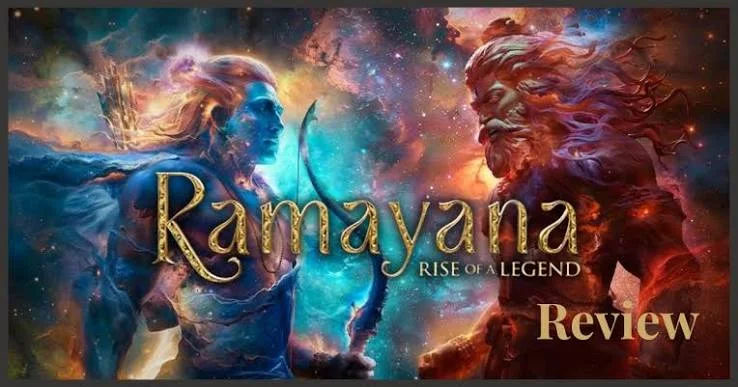

Ramayana Movie Review (2026): Is Rise of a Legend Worth Watching?
Editorial disclosure: This is an independently researched review and critics’ roundup for U.S. readers. It synthesizes official film information, published reviews, audience-tracking snapshots and U.S. exhibition listings. It does not claim that the Epicofilm writer attended a private screening. Ratings, showtimes and box-office totals can change; figures below are attributed and dated.
Ramayana Movie Review (2026): Ramayana: Rise of a Legend is one of the most ambitious Indian fantasy films to reach U.S. theaters this year. Directed by Nitesh Tiwari and led by Ranbir Kapoor as Rama, Sai Pallavi as Sita and Yash as Ravana, the film brings an ancient epic to a large international theatrical canvas. The central question behind this Ramayana movie review is not simply whether the production looks expensive. It is whether the scale, performances, music and storytelling combine into a satisfying cinematic experience for audiences who may be discovering the Ramayana for the first time.
The early critical response is mixed-to-positive rather than unanimous. Some reviewers admire the landscapes, costumes, production design, action set pieces and adventurous tone. Others argue that the effects-heavy approach, long runtime and compressed character writing make the story less emotionally involving than its source material deserves. Rotten Tomatoes displayed a 76% Tomatometer from 45 reviews and a 91% Popcornmeter from more than 100 verified ratings when checked for this article. These are dynamic snapshots, not permanent grades. The difference between critics and audience ratings is one of the most interesting parts of the current Ramayana reviews conversation.
For U.S. moviegoers, practical details matter too. The film opened in North American theaters on November 5, 2026, carries a PG-13 rating, and is listed in Hindi with English subtitles as well as in an English-language version at selected theaters. Major exhibitors list premium-format and IMAX options. Many Hindi-subtitled and IMAX listings show a runtime of 3 hours and 15 minutes, although a separate English-language listing gives a shorter duration. Check the exact version and runtime on the ticket page before booking.Table of Contents
- Ramayana Movie Review: Quick Verdict for U.S. Audiences
- What Is Ramayana: Rise of a Legend About?
- Is Ramayana a Part One Movie?
- Cast and Performances: Ranbir Kapoor, Sai Pallavi and Yash
- Nitesh Tiwari’s Direction: Can the Epic Feel Personal?
- Visual Effects, Production Design and Cinematography
- Music and Sound: Hans Zimmer Meets A. R. Rahman
- Storytelling and Pacing: Does a 3-Hour-Plus Epic Hold Together?
- How Faithful Is the Movie to the Ramayana?
- What U.S. Critics Are Saying: Ramayana Reviews Compared
- Audience Reactions: Why Viewers and Critics May Disagree
- Is Ramayana Worth Watching in IMAX in the USA?
- Language Options: Hindi, English and Subtitles
- Runtime, PG-13 Rating and What Parents Should Know
- Ramayana Box Office in North America: What the Opening Says
- Why the Film Matters for Indian Cinema in the U.S.
- What Works Best in Ramayana: Rise of a Legend?
- What May Not Work for Every Viewer?
- Who Should Watch Ramayana in U.S. Theaters?
- Should You Watch the Hindi Version or English Version?
- How Ramayana Compares With Other Fantasy Epics
- Respect, Representation and the Cultural Weight of the Ramayana
- Ramayana Movie Review: Final Verdict
- Ramayana Movie Review: Key Details
- Rotten Tomatoes, Audience Score and Review Updates
- How to Keep This Ramayana Review Updated
- Frequently Asked Questions About Ramayana (2026)
- Sources and Further Reading
Ramayana Movie Review: Quick Verdict for U.S. Audiences
Quick verdict: Ramayana: Rise of a Legend is best approached as a visually ambitious, culturally significant fantasy epic. Its strongest assets are scale, mythic imagery, production design and the contrast between Rama and Ravana. It is not a universally acclaimed masterpiece. The critical response identifies a real divide: viewers who value large-scale world-building and the emotional familiarity of the epic may find it absorbing, while viewers who prioritize tightly paced character drama, seamless visual effects and a complete standalone story may be more frustrated.
For audiences in the United States, accessibility partly depends on the version selected. The Hindi presentation with English subtitles preserves the original-language performance track and is a good choice for viewers comfortable reading subtitles. The English-language version may be easier for families or viewers who prefer dubbed dialogue, but dubbing can change the texture of performance. If the theater offers IMAX or another premium large format, the scale of the landscapes and battle imagery is a reason to consider it; a larger screen is not, by itself, a guarantee that the story will work for every viewer.
Our recommendation is conditional rather than absolute. See it in a theater if you enjoy mythological fantasy, large production design, elaborate costumes, orchestral scoring and stories that build toward a sequel. Consider waiting for a home release if you dislike long films, prefer intimate character-focused drama, or want the complete Rama-Ravana conflict resolved in one sitting. This is the fairest answer to “Is Ramayana worth watching?” It depends on what you want from a theatrical epic.
What Is Ramayana: Rise of a Legend About?
The film adapts the Ramayana, one of the foundational epics of South Asian literature and religious storytelling. Sony Pictures’ official synopsis frames the movie around Rama, a prince bound by sacrifice, Ravana, a powerful king driven by vengeance, and a prophecy connecting their destinies. The story begins in Ayodhya, where Rama’s marriage to Sita and his relationships with his family establish the moral and emotional foundation of the adventure. Political promises inside the royal household alter the succession, and Rama accepts exile rather than allow his father’s word to be broken.
Rama, Sita and Lakshmana leave the palace and enter the forest. That change of setting moves the film from royal ceremony toward danger, uncertainty and encounters with forces beyond the ordinary human world. The movie introduces Ravana’s kingdom and tensions surrounding his family and court. Shurpanakha’s encounter with Rama becomes one of the events driving the larger conflict. The film is not presented as a complete retelling of every episode in the epic; it is the first chapter of a planned multi-part cinematic adaptation.
U.S. viewers unfamiliar with the source material should know that the Ramayana exists in many literary, regional, devotional and performance traditions. The film is one contemporary adaptation, not a definitive replacement for the epic and not a documentary about ancient history. Details, emphases and character interpretations vary among versions. Watching the movie with that context helps explain why some scenes may be familiar from one retelling but unfamiliar from another.
The movie’s first chapter also makes a structural choice that matters to the review. It spends considerable time establishing characters, kingdoms, relationships and the forces shaping the larger war. That approach can make the film feel like an extended opening movement rather than a fully self-contained adventure. The benefit is a larger canvas; the drawback is that some viewers may expect a more complete dramatic payoff before the credits roll.
Is Ramayana a Part One Movie?
Yes. The 2026 release is the first installment in a planned multi-part adaptation. That matters when judging its ending, pacing and character arcs. A first chapter has to introduce a large cast, establish the rules and emotional stakes of its world, and leave enough story for a later installment. It can therefore feel different from a conventional two-hour fantasy film designed to resolve its central conflict in one sitting.
For U.S. viewers, it is worth knowing this before buying a ticket. Do not go in expecting the entire Ramayana to be covered from Rama’s birth through the conclusion of the war and every later event. The 2026 film focuses on an earlier stretch of the epic and builds toward the conflict defining the larger story. If you are comfortable with a serialized narrative, the ending may function as a deliberate handoff. If you want a complete adaptation, the unfinished structure may feel frustrating.
The planned continuation also creates a challenge for the filmmakers. Part One must be satisfying on its own while preserving enough dramatic momentum for the next chapter. A successful first installment gives viewers reasons to care about the characters, not merely reasons to wait for another battle. The mixed critical response suggests that this balance does not work equally well for every reviewer.
Cast and Performances: Ranbir Kapoor, Sai Pallavi and Yash
Ranbir Kapoor plays Rama, the prince at the center of the story. The role asks for restraint, dignity, compassion and a sense of moral responsibility rather than a conventional action-hero attitude. Rama’s strength is often expressed through decisions, patience and adherence to duty. That is a different performance challenge from playing a swaggering warrior. A viewer’s response depends on whether Kapoor’s quieter approach feels appropriately composed or too passive for a large fantasy film. Some audience reactions have praised his fit for the role, while critics have questioned how strongly the film communicates Rama’s inner life.
Sai Pallavi plays Sita. The character needs to be more than a symbol of virtue or a reason for the hero’s journey. Sita’s dignity, intelligence, emotional strength and agency are central to the epic’s enduring power. The film’s success depends on giving her enough presence and interiority within a story that also introduces Rama, Ravana, Lakshmana, royal politics and supernatural spectacle. The strongest version of this adaptation is one in which Sita is a character with a point of view, not simply a visual centerpiece.
Yash plays Ravana, Rama’s principal antagonist. Ravana is one of the most complex figures in the epic tradition: a formidable ruler, scholar and devotee in some tellings, but also a man whose pride, desire and choices lead to destructive consequences. The role gives Yash an opportunity for commanding screen presence. Several audience reactions and reviews have singled out his portrayal as a highlight. The character can be compelling when the film shows both his power and the flaws that turn power into tyranny.
Ravi Dubey plays Lakshmana, Rama’s loyal brother and companion. Lakshmana matters because he gives the story a close family relationship outside the central Rama-Sita bond. His loyalty, protectiveness and emotional reactions help translate the epic’s moral choices into personal stakes. The supporting cast also includes Sunny Deol as Hanuman, Arun Govil as Dasharatha, Lara Dutta as Kaikeyi, Adinath Kothare as Bharata, Rakul Preet Singh as Shurpanakha, Vivek Oberoi as Vidyutjihva, Kajal Aggarwal as Mandodari and Anupam Kher as Jatayu, according to published cast listings and trailer credits.
The size of the cast is both an asset and a risk. A broad ensemble gives the world a sense of scale, but a three-hour film can still struggle to give every important figure enough development. Viewers who know the epic may arrive with strong expectations about each character. Newcomers may need clearer introductions and relationships. The film’s ability to balance those two audiences is a central test of its screenplay.
Nitesh Tiwari’s Direction: Can the Epic Feel Personal?
Nitesh Tiwari’s task is unusually demanding. He is adapting a story retold for centuries, familiar to hundreds of millions of people, and carrying spiritual as well as literary significance. At the same time, the movie is designed for a global theatrical market that includes viewers who may know the Ramayana only by name. The director must make the story accessible without flattening its cultural specificity, and spectacular without allowing visual scale to replace human emotion.
The Guardian’s Peter Bradshaw responded positively to the film’s storytelling energy, large canvas and adventurous spirit. The review described it as an engaging and spectacular epic melodrama, praising its landscapes and comparisons with large-scale fantasy cinema. TheWrap also praised its costumes, sets, magical creatures and theatrical spectacle, arguing that the film’s scale makes the long runtime feel less burdensome for that reviewer. These responses suggest that Tiwari’s most successful achievement may be the creation of a world that feels expansive and designed for a theater screen.
Other critics have been less convinced. RogerEbert.com’s Simon Abrams criticized the film’s effects, editing, character development and emotional warmth. That review argues that the movie’s enormous resources do not always translate into convincing images or human drama. This is the film’s central tension: a production can be huge without every scene feeling alive. The director’s challenge is not simply to show a great deal; it is to make each image advance character, theme or story.
For U.S. viewers, Tiwari’s direction may feel closer to a mythic fantasy adventure than to a conventional contemporary drama. The movie uses a heightened world, formal character relationships and a scale intentionally larger than everyday realism. Viewers who enjoy films such as The Lord of the Rings may recognize the appeal of a world built through landscapes, kingdoms, costumes and long-form storytelling. The comparison is about scale and fantasy structure, not a claim that the films share the same tone or cultural foundation.
Visual Effects, Production Design and Cinematography
The visual presentation is one of the main reasons the film has attracted attention outside India. The production is associated with DNEG, a major visual-effects company whose credits include large international productions. Official materials emphasize the project’s scale and IMAX presentation. The movie uses palaces, forests, armies, supernatural elements, elaborate costumes and large environments to make the epic feel physically expansive. For audiences used to studio fantasy films, the visual language is familiar in some ways but rooted in Indian iconography and storytelling traditions.
Positive reviews frequently point to landscapes, sunset imagery, set design and the scale of fantasy sequences. The Guardian praised the film’s visual canvas and adventurous atmosphere. TheWrap highlighted costumes, sets and magical creatures. Audience comments collected by entertainment outlets also mention spectacle and selected action sequences as memorable elements. This is the strongest case for seeing the movie on a large screen: the world is designed to be experienced at scale.
The criticism is equally important. RogerEbert.com’s review argues that some computer-generated imagery looks artificial or lifeless and that effects-heavy scenes can weaken emotional connection. That is not a minor technical complaint. In mythological fantasy, visual effects are part of how the audience believes in gods, creatures, kingdoms and impossible events. When a digital image looks unconvincing, the viewer becomes aware of the production rather than the story.
It is useful to separate different kinds of visual work. A digital environment can be impressive while a character composite looks less convincing. A creature design can be imaginative while movement or lighting feels artificial. A battle can be large while the geography of the action is hard to follow. The best way to judge the film is not to ask whether every frame is photorealistic, but whether the visual choices support the emotional and narrative purpose of each sequence.
For U.S. viewers considering IMAX, the premium format is reasonable if large-scale fantasy is a major attraction. The film was made for large-format exhibition, and official exhibitor listings advertise IMAX presentations. However, a larger screen magnifies both strengths and weaknesses. If you are sensitive to visible CGI or prefer intimate dramas, a standard theater may be adequate.
Music and Sound: Hans Zimmer Meets A. R. Rahman
The score brings together Hans Zimmer and A. R. Rahman, a pairing that naturally attracts international attention. Zimmer is widely associated with large-scale cinematic scoring, while Rahman’s work spans Indian film music, orchestral writing and global collaborations. Their involvement signals an attempt to create a musical identity that can speak to Indian audiences while supporting a large international fantasy production. Official film materials credit both composers.
For a story like the Ramayana, music has to do more than create excitement. It can establish the sacred and ceremonial atmosphere of Ayodhya, distinguish the emotional world of Rama and Sita from the power and danger associated with Ravana, and give battles or journeys a sense of mythic scale. A score can also help audiences unfamiliar with the story understand shifts in mood and character relationships. The challenge is to make the music memorable without making every moment feel oversized.
Early audience reactions have praised the music in some cases, while other viewers have been less enthusiastic. That split is not surprising for a score with two high-profile composers and a large number of cultural expectations attached to it. Some viewers may want a recognizably Indian melodic identity; others may expect the dramatic build associated with Zimmer’s blockbuster scores. The strongest musical moments are likely to be those in which the two sensibilities serve the same dramatic purpose rather than compete for attention.
Sound design also matters in a film that uses armies, creatures, weapons, supernatural powers and large environments. The low-frequency impact of a theater mix can add physical force to a battle, while quieter moments need enough space for dialogue and emotional detail. If you attend an IMAX or premium-format screening, the sound system may be part of the appeal. Still, powerful sound cannot compensate for a scene that lacks clarity or emotional purpose.
Storytelling and Pacing: Does a 3-Hour-Plus Epic Hold Together?
Runtime is one of the most common concerns in the Ramayana movie review conversation. Rotten Tomatoes and several theater listings show a duration of 3 hours and 15 minutes. Some separate English-language listings display a shorter runtime, so audiences should confirm the exact version with the exhibitor. Even at the longer listed duration, the film asks for a substantial time commitment. That is not automatically a flaw: long epics can justify their length when the world, characters and emotional stakes develop with enough care.
The film’s episodic structure follows the needs of the source material. It must introduce royal relationships, exile, forest life, Ravana’s kingdom and the events moving characters toward a larger confrontation. That breadth can make the film feel rich and layered. It can also make the narrative feel like a sequence of introductions and set pieces rather than one continuous dramatic line. The difference depends on how effectively each episode changes what the characters want or understand.
Some positive reviewers found the film engaging across its extended length. TheWrap’s review emphasizes the amount of spectacle and argues that the experience moves quickly for a film of this scale. Other critics, including RogerEbert.com and reviewers summarized by Rotten Tomatoes, object to the pacing, compressed character development or overlong presentation. This is why a simple statement such as “the movie is too long” does not fully explain the debate. The more useful question is whether the length feels earned by the emotional and narrative material.
For viewers unfamiliar with the Ramayana, the large cast and multiple kingdoms may require concentration. Names and relationships can arrive quickly, and some scenes assume cultural knowledge. The movie provides a broad central conflict, but a newcomer may benefit from reading a short spoiler-free primer on Rama, Sita, Lakshmana and Ravana before the screening. That preparation should not be necessary to follow the basic story, but it can make the experience more rewarding.
How Faithful Is the Movie to the Ramayana?
The film is based on the Ramayana, traditionally attributed to Valmiki, but no single screen adaptation can represent every version of the epic. The Ramayana has been transmitted through Sanskrit literature, regional languages, devotional traditions, theater, dance, oral storytelling and modern popular culture. Different tellings emphasize different episodes, relationships and theological interpretations. A film must choose which events to include, which characters to foreground and how to shape the story for a particular runtime.
That means viewers should avoid judging the film against the assumption that every community has one identical version of the epic. The Valmiki Ramayana is an important classical source, but the wider tradition includes many retellings with different emphases. The movie’s choices should be discussed as adaptation choices: what it changes, what it condenses, what it leaves out and what it emphasizes. Such discussion can be rigorous without dismissing the religious significance the story holds for many people.
For American viewers, this distinction is especially useful. The Ramayana is not simply an unfamiliar fantasy property that can be judged by the same standards as a new superhero franchise. It is a living epic with religious, philosophical and cultural significance for Hindu communities and for many people across South and Southeast Asia. A respectful review can still criticize the screenplay, performances, pacing or effects. Respect does not require uncritical praise; criticism does require an understanding of what the story means to its audiences.
One useful way to approach the film is to separate three questions. First, does it communicate the central dramatic conflict clearly? Second, does it treat its characters and cultural material thoughtfully? Third, does it work as cinema, regardless of whether a viewer shares the religious tradition? Those questions allow viewers with different backgrounds to discuss the same film without pretending that a movie adaptation settles historical or theological debates.
What U.S. Critics Are Saying: Ramayana Reviews Compared
The early U.S. and international reviews are mixed-to-positive overall, but individual assessments differ sharply. Rotten Tomatoes displayed a 76% Tomatometer based on 45 critic reviews and a 91% Popcornmeter based on more than 100 verified audience ratings when checked for this article. A Tomatometer percentage measures the share of counted reviews classified as positive; it is not an average star rating and does not mean that 76% of viewers loved the film. The audience score is a separate measure and can change as more verified ratings arrive.
Peter Bradshaw’s Guardian review is strongly positive. It describes the film as an engaging, rousing and spectacular epic, praising its storytelling energy, landscapes and adventurous tone. The review sees the production’s scale as a strength and notes echoes of large-scale fantasy cinema. This is the kind of response likely to resonate with viewers who want a big-screen event and are comfortable with a heightened, mythic style.
William Bibbiani’s TheWrap review is also enthusiastic about the theatrical experience. It praises the costumes, sets, magical creatures and sheer amount of fantasy spectacle, arguing that the film’s scale keeps the long running time engaging for that critic. The review is useful for U.S. readers because it frames the movie as an event built for the big screen rather than a small, intimate drama.
Simon Abrams’ RogerEbert.com review is much more critical. It questions the visual effects, editing, character development and emotional warmth, and argues that the film’s enormous scale does not consistently produce convincing images or human drama. This criticism represents the other side of the debate: viewers who expect technical polish and a strong emotional center may find the movie less successful than its production ambition suggests.
Rotten Tomatoes also lists less enthusiastic assessments, including a 2-out-of-5 review from The Times and a 3-out-of-5 review from Empire. The broad pattern is not that every critic agrees on one verdict. Instead, reviewers tend to recognize the ambition while disagreeing about how effectively the movie translates that ambition into drama. That is a more accurate summary than calling the film either a universal triumph or a universal failure.
Audience Reactions: Why Viewers and Critics May Disagree
Audience reactions can differ from professional reviews because moviegoers bring different expectations. A viewer who has grown up with the Ramayana may respond to familiar characters, devotional associations and the emotional weight of the story. A viewer encountering it for the first time may focus more on plot clarity, visual effects and whether characters are introduced effectively. A fan of large-scale fantasy may be satisfied by production design and action even if the screenplay feels uneven. A viewer who prefers character-driven drama may judge the same film more harshly.
Mint’s coverage of early audience reactions reported praise for the film’s grand visuals and music by A. R. Rahman and Hans Zimmer, while some comments singled out Yash’s Ravana and particular action sequences. The reactions were not entirely uniform: some viewers praised the scale but identified weaknesses in emotional connection or music. This is a useful reminder that “audience reaction” is not one single opinion. Social-media posts are examples of individual responses, not a scientific survey of every ticket buyer.
North American exit-poll reporting adds another layer. A report summarizing PostTrak results stated that 86% of surveyed moviegoers placed the film in the top two response categories and 75% said they would definitely recommend it. Those figures suggest a strong response among the sampled opening audience, but they should not be treated as the same thing as Rotten Tomatoes’ verified audience score. The methods, sample sizes and timing differ.
Early box-office coverage also described a significant Asian American audience share and a strong presence among younger adults. That is consistent with a film whose cultural source material has a large diaspora audience while its fantasy scale may also attract genre fans. It does not mean the film is only for one demographic. The longer-term question is whether word of mouth reaches viewers beyond the core audience that drove the opening.
Is Ramayana Worth Watching in IMAX in the USA?
For viewers interested in the film, IMAX is a reasonable format to consider because the production was designed for large-format exhibition and the story relies on expansive environments, large-scale action and detailed production design. The official trailer credits state that the movie was filmed for IMAX, and U.S. ticketing pages list IMAX presentations. Premium large-format screens can make the scale feel more immersive, especially during wide landscape shots and large set pieces.
However, IMAX is not automatically the best choice for every viewer. Premium tickets cost more, and the movie’s length means comfort, seating and sound levels matter. If you are unsure whether you will enjoy the film, a standard screening may be a more sensible first choice. If you already enjoy epic fantasy and want to experience the image and sound at their largest, IMAX can be worthwhile.
A larger screen can magnify visual-effects shortcomings as well as strengths. Some critics praised the visual world; others criticized the CGI and compositing. Your response will depend on how sensitive you are to digital imagery and how much you value scale. The safest recommendation is to choose IMAX for the spectacle, not because it will resolve the film’s storytelling weaknesses.
Language Options: Hindi, English and Subtitles
U.S. exhibitors list the film in Hindi with English subtitles, and official materials also promote an English-language presentation. IMAX and Fandango listings identify an English version, while Cinemark lists a Hindi-with-English-subtitles version. Availability can vary by city, theater, date and format. Do not assume that every theater offers both versions or that an English-dubbed screening is available at every showtime.
If you want to hear the original Hindi performances, choose a listing that explicitly says “Hindi with English subtitles.” This preserves the original vocal texture while allowing the audience to follow the dialogue. If you prefer not to read subtitles during a long fantasy film, look for a showtime explicitly labeled English. Check the language field before checkout because ticket platforms sometimes show multiple versions under similar titles.
The difference between subtitles and dubbing is not only practical. Subtitles retain the original vocal texture, while dubbing replaces the spoken performance with another language track. Neither option is automatically superior; the right choice depends on your comfort and the kind of performance experience you prefer. For families attending together, confirm the language in advance so everyone knows what to expect.
Runtime, PG-13 Rating and What Parents Should Know
Rotten Tomatoes, IMAX and several U.S. theater listings show a runtime of 3 hours and 15 minutes. Some English-language ticket listings display a shorter duration, so there may be differences between versions or listing data. Confirm the runtime shown for the exact screening you plan to attend. For the main Hindi-with-English-subtitles and IMAX listings, 195 minutes is the commonly displayed figure.
The film carries a PG-13 rating. The rating information cites sequences of strong violence and action, along with some bloody images. PG-13 does not mean the film is suitable for every child, and parents should consider a child’s age, sensitivity to battle imagery and familiarity with mythological violence. The story includes conflict, threats, supernatural creatures and scenes of danger. Parents who want a more detailed content breakdown should consult a current parental guide before booking.
For adults, the long runtime is the more practical consideration. Plan for a substantial theater visit, including previews and any intermission policy the theater may have. Many U.S. cinemas do not provide an intermission unless specifically advertised. If you are attending with children or older family members, check the venue’s seating and accessibility options in advance.
Ramayana Box Office in North America: What the Opening Says
The film’s U.S. performance is relevant to the review because it shows how a culturally specific Indian epic can travel in a large North American release. Screen Daily reported an estimated $12.2 million in North America and $55.7 million worldwide in the opening period, while The Numbers listed approximately $12.156 million in domestic box office, $43.5 million internationally and $55.656 million worldwide in its retrieved tracker snapshot. The North American opening weekend was reported at $8.65 million from 1,433 theaters, with a four-day total including previews of about $12.1 million in coverage summarized by ComingSoon.
These figures need careful labels. In U.S. trade reporting, “domestic” usually means the United States and Canada, not India. “International” generally refers to markets outside North America. A worldwide total combines domestic and international grosses. The word “opening weekend” can refer to a three-day frame, while a four-day total may include previews or additional days. Those numbers should not be mixed as if they measured the same period.
Screen Daily reported that the film ranked second worldwide for the November 6–8 frame and took an estimated $52.2 million over the three-day weekend, with a cumulative total of about $55.7 million. It also reported that North America contributed around $12.2 million and that the international total included India. The Numbers’ database gives a slightly more exact cumulative figure of $55.656 million. Differences of this kind can occur because box-office totals are updated and reconciled over time.
For a U.S. audience, the opening suggests a meaningful event release for an Indian film, but it is not enough by itself to determine whether the film will become a major mainstream hit. The next indicators are weekday holds, theater-count changes, premium-format share, audience word of mouth and whether the film attracts moviegoers who are not already familiar with the Ramayana. A large opening from a concentrated audience can be followed by a steep drop; strong recommendations across a wider audience can help a film sustain its run.
Why the Film Matters for Indian Cinema in the U.S.
Indian cinema has built a long-standing audience in North America through diaspora communities, regional-language releases, major Hindi films, Telugu and Tamil event movies, and premium-format screenings. Ramayana: Rise of a Legend arrives with a different proposition: it adapts a widely known epic and is marketed as a global fantasy event. Its release gives U.S. audiences an opportunity to encounter a major Indian production in the same theatrical environment as large Hollywood releases.
The film’s scale may help it reach viewers who do not regularly watch Indian cinema. Its cast includes performers with major fan bases, its source material is internationally recognizable in cultural and religious communities, and its visual-effects presentation is designed for premium screens. At the same time, the film’s Hindi-language foundation and culturally specific characters may be unfamiliar to some American viewers. That is not a weakness; it is part of what makes the film distinct. The challenge is to provide enough narrative context for newcomers without simplifying the story into generic fantasy.
Opening-weekend data suggests that the film drew a significant Asian American audience. That is an important market signal, but it should not be used to reduce the audience to one demographic. Indian cinema has viewers from many backgrounds, and a film can attract people through its story, genre, music, cast or cultural interest. The film’s longer-term U.S. performance will show whether the audience expands beyond its core base.
What Works Best in Ramayana: Rise of a Legend?
The strongest argument for the film is its ambition. It attempts to put a major epic on a scale that can compete visually with international fantasy productions while retaining its Indian cultural foundation. Landscapes, palaces, costumes, supernatural imagery and large-scale staging give the story a sense of breadth. For viewers who have wanted to see the Ramayana treated as a major theatrical fantasy rather than a small-screen retelling, the film’s scale is a significant attraction.
The cast is another strength. Ranbir Kapoor, Sai Pallavi and Yash bring recognizable screen identities to roles that are already deeply familiar to many viewers. Yash’s Ravana has drawn particular attention in audience reactions, while Kapoor’s Rama requires a more restrained performance style. The supporting cast helps populate the world with family members, allies, rivals and figures from the wider epic. The ensemble creates the possibility of a rich world, even if the film cannot give every character equal space.
The musical collaboration between Hans Zimmer and A. R. Rahman is also a notable part of the film’s identity. It connects an internationally recognized film composer with one of India’s most celebrated composers. When the score supports character and atmosphere, it can help bridge the film’s cultural and cinematic registers. The film’s strongest sequences are those in which music, imagery, performance and story reinforce one another rather than simply compete for scale.
What May Not Work for Every Viewer?
The most consistent concern in negative reviews is the gap between production ambition and emotional connection. A film can show enormous palaces, armies and supernatural battles, but viewers still need to understand what the characters feel and why their choices matter. If the screenplay moves too quickly through relationships or assumes the audience already knows the source material, newcomers may find the story harder to follow and longtime readers may feel important emotional details have been compressed.
Visual effects are another point of disagreement. Some reviewers and audiences admire the scale, while others find certain CGI shots artificial or visually unconvincing. Because the film relies heavily on digital environments and fantasy action, the quality of the effects has an outsized impact on immersion. A viewer willing to accept stylized imagery may enjoy the film more than someone who expects every effect to look physically convincing.
The long runtime and two-part structure are also potential drawbacks. A first installment can establish a world and build anticipation, but it must still offer a satisfying emotional journey. If the ending feels more like a pause than a payoff, some viewers will leave excited for the sequel while others will feel they have paid for an incomplete story. This is a legitimate difference in expectation, not a sign that one group has misunderstood the film.
Who Should Watch Ramayana in U.S. Theaters?
The film is a strong candidate for viewers who enjoy epic fantasy, mythology, large-scale production design, elaborate costumes and long-form storytelling. It may also be especially meaningful for Hindu viewers and members of South Asian communities who have a personal or cultural relationship with the Ramayana. For those audiences, the film’s characters and imagery may carry layers of meaning that are not captured by a conventional genre review.
Viewers new to the epic can still enjoy the movie, particularly if they are comfortable with a large ensemble and a story that does not resolve in one installment. A short spoiler-free primer can help with names and relationships. The film should not be treated as a history lesson or a complete guide to Hindu philosophy; it is a dramatic adaptation of a much larger tradition.
It may be less suitable for viewers who dislike long runtimes, prefer naturalistic drama, are sensitive to intense fantasy violence, or want a fully self-contained story. The PG-13 rating indicates strong violence and action and some bloody images. Parents should make their own decision based on the child, not the rating alone.
Should You Watch the Hindi Version or English Version?
If you are comfortable with subtitles, the Hindi version with English subtitles is a strong option because it preserves the original-language performances. The actors’ voices, rhythm and emotional delivery are part of the performance, and subtitles allow the audience to follow the dialogue without replacing that track. For viewers who watch Indian cinema regularly, this may be the preferred version.
The English-language version is useful for viewers who prefer dubbed dialogue or want to watch with family members who do not read subtitles comfortably. It can also make the film easier to follow for younger viewers, although parents should still consider the PG-13 content. Because showtime availability varies, search the exhibitor listing for the exact language label rather than relying on the film’s general title.
Neither version should be assumed to be available at every theater. Some ticket pages separate the Hindi-subtitled version from the English presentation, and runtime listings may differ. Verify language, format, runtime and rating on the same showtime page before buying tickets.
How Ramayana Compares With Other Fantasy Epics
Comparisons with The Lord of the Rings, The Ten Commandments or other large-scale fantasy and biblical epics can help U.S. viewers understand the film’s ambition, but comparisons should not erase its distinct source material. The Ramayana has its own characters, ethical vocabulary, religious resonance and storytelling history. A useful comparison concerns cinematic scale, the use of landscapes, the presentation of kingdoms and the structure of a multi-part saga. It is less useful to expect the film to imitate the tone, mythology or moral framework of another franchise.
Unlike many contemporary fantasy franchises built from modern novels or original screenplays, the Ramayana is a long-standing epic with numerous versions and interpretations. That means viewers may arrive with expectations that differ sharply. Some want fidelity to a particular text; others want a contemporary retelling; still others want an accessible adventure that introduces the story to new audiences. The film cannot satisfy every expectation equally.
The comparison with Hollywood fantasy also raises the question of visual-effects standards. International audiences are familiar with highly polished digital environments and creature work. A large Indian production will inevitably be judged against those standards, especially when marketed globally and presented in IMAX. The film’s strongest moments show that Indian mythological imagery can occupy a global theatrical canvas. Its weaker moments, according to critical reviews, show how difficult it is to maintain consistent visual quality across a production of this scale.
Respect, Representation and the Cultural Weight of the Ramayana
The Ramayana is sacred to many people and culturally important to many more. A movie adaptation is therefore not received in the same way as an ordinary fantasy franchise. Casting, costume, dialogue, characterization and the treatment of revered figures can all attract close attention. A responsible review should distinguish between a viewer’s religious response, a critic’s assessment of filmmaking and a factual claim about the source text. Those are different kinds of judgments.
It is possible to appreciate the film’s ambition while questioning a creative decision. It is also possible to criticize the visual effects or screenplay without dismissing the epic or the people for whom it is meaningful. Reviews should avoid treating one version as the only legitimate interpretation. The Ramayana has a broad and varied tradition, and modern adaptations inevitably select and reshape material.
For U.S. audiences, cultural context can improve the viewing experience. Rama is not simply a fantasy warrior; the story often frames him through duty, responsibility and ethical conduct. Sita is not merely a plot device; her character carries moral and emotional significance. Ravana is not only a villain with extraordinary power; many tellings also portray him as learned and formidable, making his choices central to the tragedy. Understanding these layers helps viewers see why the adaptation’s choices matter.
Ramayana Movie Review: Final Verdict
Ramayana: Rise of a Legend is a major theatrical undertaking that brings one of the world’s most enduring epics to an international audience. Its scale, visual world, costumes, music and central performances give it clear attractions, especially for viewers who enjoy fantasy spectacles and have an interest in the source story. The Guardian and TheWrap reviews make a persuasive case for the film as a large-screen adventure. Positive audience tracking suggests that many opening-weekend moviegoers found the experience satisfying.
But the reservations are real. RogerEbert.com’s review and other critical responses question the visual effects, editing, pacing and emotional depth. The long runtime and first-chapter structure may test viewers who want a tighter, more complete film. The current Rotten Tomatoes snapshot shows a stronger audience score than critic score, pointing to a gap between professional assessments and the opening audience’s enthusiasm. That gap may narrow or widen as more reviews and ratings arrive.
Our recommendation for U.S. moviegoers: choose a theatrical screening if you are interested in epic fantasy, Indian cinema, the Ramayana tradition or large-format spectacle. Choose the Hindi version with English subtitles if you want the original performance track; choose an English-language showtime if that is more accessible for you. Consider IMAX if you value scale and sound, but do not expect the format to fix every storytelling issue. If you are uncertain, read the spoiler-free synopsis and check current review scores before booking.
In short, this is a film worth discussing, not a film every viewer must love. Its ambition is unmistakable, its cultural source is significant, and its critical reception is genuinely divided. That makes an honest Ramayana review more useful than a blanket five-star endorsement or a dismissive one-line verdict.
Ramayana Movie Review: Key Details
| Detail | Information |
|---|---|
| U.S. title | Ramayana: Rise of a Legend |
| Film | Ramayana (2026), Part One |
| Director | Nitesh Tiwari |
| Producer | Namit Malhotra |
| Screenplay | Shridhar Raghavan and Nitesh Tiwari |
| Principal cast | Ranbir Kapoor, Sai Pallavi, Yash, Ravi Dubey, Sunny Deol |
| Music | Hans Zimmer and A. R. Rahman |
| Production | Prime Focus Studios and Monster Mind Creations |
| Global distributor | Sony Pictures Entertainment |
| U.S. theatrical release | November 5, 2026 |
| MPA rating | PG-13 |
| Runtime | Many U.S. listings: 195 minutes; verify the specific version |
| Languages | Hindi with English subtitles; English-language screenings also listed |
| Genres | Action, adventure, fantasy and drama |
Rotten Tomatoes, Audience Score and Review Updates
At the time of research, Rotten Tomatoes listed a 76% Tomatometer from 45 critic reviews and a 91% Popcornmeter from more than 100 verified audience ratings for Ramayana: Rise of a Legend. These figures should be treated as a dated snapshot. The number of reviews and verified ratings can change, and the percentages may move as more people publish assessments. If you update this article, check the live Rotten Tomatoes page and replace the figures only after recording the date and review count.
Readers should understand what the two scores mean. The Tomatometer reports the percentage of counted critic reviews classified as positive; it is not a direct average of every critic’s star rating. The Popcornmeter reflects audience ratings under Rotten Tomatoes’ verification system. Neither number tells the full story by itself. A film can receive a positive percentage while still attracting strong negative reviews, and an audience score can reflect the expectations of people who chose to see and rate it.
For that reason, this article summarizes the substance of reviews rather than relying on a score alone. The positive camp highlights spectacle, costumes, landscapes, adventure and the theatrical experience. The critical camp focuses on effects consistency, editing, pacing, emotional depth and the difficulty of condensing a vast epic. Those are the points U.S. readers should compare when deciding whether to buy a ticket.
How to Keep This Ramayana Review Updated
Because the film is newly released, search interest and public information will change quickly. A useful review page should be updated when there is a meaningful development, not simply refreshed every few hours with a new date. Good update triggers include a substantial change in Rotten Tomatoes review count, a new review from a major publication, confirmed changes to U.S. showtimes, an official home-entertainment announcement, or a verified box-office update.
When updating, keep a short “Last updated” line near the top. Record the date, source and what changed. Do not silently replace one score with another, and do not mix a three-day weekend gross with a four-day total. If a runtime differs between language versions or exhibitor listings, preserve that context rather than choosing whichever number looks more attractive for a search snippet.
For Google and AI-powered search systems, clear attribution and consistent facts are more valuable than repeating keywords. The page should answer the user’s question quickly, explain where information came from and provide a reason to trust the review. Avoid unsupported claims such as “the best movie ever,” “100% hit,” “official five-star review” or “everyone loves it.” A credible page can still be compelling without exaggeration.
Frequently Asked Questions About Ramayana (2026)
1. What is the U.S. title of the 2026 Ramayana movie?
The U.S. theatrical title is Ramayana: Rise of a Legend. It is also commonly referred to as Ramayana or Ramayana: Part One in coverage and search queries. Use the full U.S. title when checking ticket listings.
2. Is Ramayana: Rise of a Legend worth watching?
It may be worth watching for viewers who enjoy large-scale fantasy, mythology, elaborate production design and theatrical spectacle. Reviews are mixed-to-positive overall, with praise for scale and visuals but criticism of effects, pacing and emotional depth. The best choice depends on your expectations.
3. Who directed the Ramayana movie?
Nitesh Tiwari directed Ramayana: Rise of a Legend. Official Sony film information and trailer credits identify him as director. Shridhar Raghavan and Tiwari are credited with the screenplay in official trailer information.
4. Who plays Rama in Ramayana (2026)?
Ranbir Kapoor plays Rama. The role is central to the film’s story of duty, exile and destiny. Kapoor’s performance has been discussed in positive audience reactions and mixed critical reviews.
5. Who plays Sita in the Ramayana movie?
Sai Pallavi plays Sita. The character is central to the emotional and moral stakes of the epic, and her portrayal is an important part of the film’s adaptation.
6. Who plays Ravana in Ramayana: Rise of a Legend?
Yash plays Ravana. Several audience reactions have singled out his performance and the character’s visual presentation as highlights, although individual opinions differ.
7. Who plays Hanuman in the 2026 Ramayana movie?
Sunny Deol plays Hanuman, according to Sony Pictures’ official trailer credits and film listings.
8. What is the runtime of Ramayana in U.S. theaters?
Many U.S. listings, including Rotten Tomatoes, IMAX and Hindi-with-subtitles exhibitor pages, show 3 hours and 15 minutes. Some separate English-language listings display a shorter duration. Confirm the runtime for the exact version and theater before booking.
9. What is Ramayana’s MPAA rating?
The film is rated PG-13 for sequences of strong violence and action and some bloody images. Parents should consider the individual child’s sensitivity and consult a detailed parental guide if they need more information.
10. Is Ramayana playing in the United States?
Yes. The film opened in North American theaters on November 5, 2026. Availability varies by location and showtime, so check the official film site or a major exhibitor for current tickets.
11. Is Ramayana available in English in the USA?
English-language screenings are listed by U.S. ticketing services, while Hindi screenings with English subtitles are also available. The exact language option depends on the theater and showtime. Read the listing carefully before purchasing.
12. Should I watch Ramayana in Hindi with subtitles or in English?
Choose Hindi with English subtitles if you want to hear the original-language performances. Choose an English-language screening if dubbed dialogue is easier for you or your group. The preferred version is a matter of viewing comfort and performance preference.
13. Is Ramayana available in IMAX?
Yes. IMAX and other premium-format screenings are listed in the United States. Availability varies by market and date. Check the theater’s live schedule because not every location has the same formats.
14. What is the Rotten Tomatoes score for Ramayana?
At the time of research for this article, Rotten Tomatoes displayed 76% from 45 critic reviews and 91% from more than 100 verified audience ratings. These numbers are dynamic and should be rechecked before republishing an update.
15. Are Ramayana reviews positive or negative?
The overall response is mixed-to-positive. Some critics praise the scale, landscapes, costumes and adventurous storytelling. Others criticize visual effects, pacing, editing and emotional depth. Audience reactions have been more positive in early tracking.
16. What do U.S. critics think of Ramayana?
Responses vary. The Guardian and TheWrap published positive assessments of the film’s spectacle and theatrical scale, while RogerEbert.com published a strongly negative review focused on visual effects and storytelling. The disagreement is central to the current review conversation.
17. Is Ramayana based on a true story?
The film adapts the Ramayana, a sacred and literary epic with many traditions. Whether the events happened exactly as described is a matter of religious belief, interpretation and historical debate. The movie is a dramatic adaptation, not a historical documentary.
18. Is the 2026 Ramayana movie the complete story?
No. It is the first installment in a planned multi-part adaptation. It establishes the characters and conflict for a larger story, so viewers should not expect the entire epic to be concluded in this film.
19. Does Ramayana have a sequel?
A continuation is planned as part of the multi-part project. Check official Prime Focus Studios or Sony Pictures announcements for the confirmed title and release date rather than relying on unsourced social-media dates.
20. Who composed the music for Ramayana?
The film’s music is credited to Hans Zimmer and A. R. Rahman. Their collaboration is one of the project’s most prominent creative features and has attracted attention from Indian and international audiences.
21. Is Ramayana suitable for children?
The PG-13 rating cites strong violence and action and some bloody images. Some children may be comfortable with fantasy battles while others may find them intense. Parents should review the rating details and consider the child’s age and sensitivity.
22. Does Ramayana have an end-credits scene?
Do not assume there is an additional scene without checking a current, spoiler-aware source. End-credit information can be updated after release and may differ between early screenings and later reports. If you want to avoid spoilers, remain in the theater until the credits finish.
23. Where can I find official Ramayana showtimes in the USA?
Start with the official Sony Pictures film website and follow its ticket links. You can also check IMAX, Cinemark, Fandango and Alamo Drafthouse listings. Showtimes and language formats differ by location.
24. Is Ramayana on Netflix or Prime Video in the United States?
At the time of this article’s update, the film is in its theatrical window and no confirmed U.S. streaming date or platform has been announced in the sources checked. Do not treat speculative streaming dates as official. Check Sony Pictures and the relevant streaming services for an announcement.
25. What is the final verdict on Ramayana: Rise of a Legend?
It is an ambitious, visually expansive first chapter with clear appeal for fantasy and mythology fans, but its long runtime, divided reviews and unfinished multi-part structure may not work for everyone. It is worth considering in theaters if spectacle and the source story interest you.
Sources and Further Reading
- Sony Pictures: Official Ramayana synopsis and production information
- Rotten Tomatoes: Current critic and audience review tracker
- The Guardian: Peter Bradshaw’s review
- TheWrap: William Bibbiani’s review
- RogerEbert.com: Simon Abrams’ review
- Screen Daily: Worldwide and North American opening estimates
- The Numbers: Box-office and release data
- Cinemark: Hindi with English subtitles, rating and runtime listing
- IMAX: Film details and presentation information
- Sony Pictures Entertainment: Official trailer and credits
- Mint: Early audience reactions
Related reading
Ramayana cast and characters · Release, languages and streaming updates · Box-office collection tracker · Day 6 box-office report · How to read the film’s ratings · Background to the Ramayana epic




Pingback: Ramayan Day 6 Collection (2026): ₹94.10 Cr India Net, ₹823.50 Cr Worldwide
Pingback: Ramayana 2026 Release Date: Trailer, OTT & Languages
Pingback: What Is the Ramayana? Who Wrote It, How Old Is It?
Pingback: Ramayana Movie Collection 2026: Big Day 3 & Worldwide Total
Pingback: Ramayana Day 1 Collection Worldwide (2026): Live Update