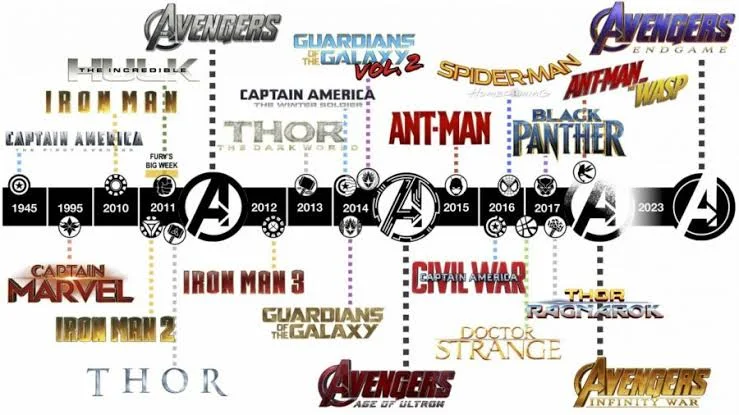

How to watch Marvel movies in order: start with Iron Man (2008) and follow theatrical release order to preserve character introductions and post-credit reveals.
Quick Answer: The Release Order Approach
The most straightforward way to experience the Marvel Cinematic Universe (MCU) is by release date, starting with Iron Man (2008) and following the films as they originally debuted in theaters. This release structure divides the franchise into overarching narrative blocks termed “Sagas,” which are further organized into numbered “Phases.” The first massive arc—The Infinity Saga—spans Phases One through Three, tracing the formation of the Avengers and the build-up
to the conflict with Thanos. The subsequent narrative block—The Multiverse Saga—begins with Phase Four, opening up parallel dimensions and introducing fresh heroes to the canon.
For audiences planning a comprehensive viewing marathon, release order remains the standard recommendation because it preserves post-credits reveals, narrative twists, and the organic evolution of the franchise’s visual style. Watching in the sequence audiences originally experienced prevents early exposure to major continuity developments that chronological timelines can inadvertently spoil.
The journey begins with Phase One, introducing core figures through Iron Man (2008), The Incredible Hulk (2008), Iron Man 2 (2010), Thor (2011), Captain America: The First Avenger (2011), and the ensemble milestone The Avengers (2012). From there, Phase Two (2013–2015) broadens the cosmic scope with titles like Guardians of the Galaxy before concluding with Ant-Man. Phase Three (2016–2019) delivers the dramatic peak of the Infinity Saga across eleven
films, culminating in Avengers: Endgame. The storyline then transitions into The Multiverse Saga with Phase Four (2021–2022), launching through Black Widow and closing its theatrical cycle with Black Panther: Wakanda Forever, before moving into Phase Five.
Regarding platform access for viewers in the United States, the catalog is primarily hosted on Disney+, which provides streaming access to the vast majority of these titles, while upcoming releases initially target traditional theatrical windows. More details on official viewing lineups can be reviewed directly via the Explore Disney+ Marvel guide.
Editorial Note: This guide reflects data compiled from a single promotional source document. Complete multi-phase listings beyond the early Phase Five transition require further independent editorial verification before definitive confirmation.
How to Watch Marvel Movies in Order: Release Strategy
Approaching the Marvel Cinematic Universe (MCU) for the first time—or revisiting it ahead of new franchise installments—presents an immediate structural choice. Across dozens of theatrical releases, viewers routinely debate whether to follow the narrative based on when events occur within the fictional timeline or to follow the order in which the films debuted in cinemas. According to platform guidance outlined by Explore Disney+, the verified standard for organizing this
vast catalog is strictly theatrical release sequencing.
Watching by release order means beginning with Marvel Studios’ Iron Man (2008) and proceeding title by title through the catalog. While online fan communities frequently discuss in-universe chronological timelines (arranging stories by historical dates, such as placing mid-twentieth-century events before modern ones), that approach is not established in the available source documentation. The theatrical release path remains the foundational framework created by the studio to introduce heroes, develop overarching stakes,
and unfold multi-movie sagas.
Preserving Post-Credit Reveals and Forward Momentum
The primary storytelling argument for release order lies in how Marvel Studios architected its shared universe. From the franchise’s inception in 2008, each film operated both as a standalone narrative and as a chapter in an evolving serial. Crucially, the storytelling mechanics—especially post-credit stingers—rely on audience familiarity with preceding real-world releases, not the fictional calendar year depicted on screen.
Post-credit scenes frequently serve as narrative handoffs to upcoming projects. Watching out of release sequence disrupts these reveals, turning carefully staged teasers into premature spoilers or confusing non sequiturs. When a tag scene introduces a character or hints at a cosmic crisis, the emotional punch depends on the viewer experiencing it precisely when theatrical audiences did.
Furthermore, visual effects technology, directing styles, and performance tones evolved steadily from Marvel Studios’ Iron Man forward. Jumping backward and forward across production eras to satisfy a fictional chronological order can create jarring aesthetic whiplash. By adhering to the release sequence, viewers experience the filmmaking craft, performance maturity, and budgetary scale in natural progression.
Narrative Escalation: Sagas and Phases
The documentation provided by official guides structures the Marvel Cinematic Universe into sweeping multi-phase blocks grouped under larger thematic umbrellas. This phased architecture demonstrates why release order remains the most cohesive way to digest the overarching plot.
- The Infinity Saga: Encompassing Phase One, Phase Two, and Phase Three, this era charts the discovery of the Infinity Stones and the eventual confrontation with Thanos. Beginning with foundational origin stories like Marvel Studios’ Iron Man (2008) and Marvel Studios’ The Incredible Hulk (2008), the narrative steadily expands from street-level engineering to galactic conflicts, culminating in the twin climaxes of Marvel Studios’ Avengers: Infinity War (2018) and Marvel Studios’ Avengers: Endgame (2019).
- The Multiverse Saga: Beginning with Phase Four titles such as Marvel Studios’ Black Widow (2021) and continuing through Phase Five, this era deals with the immediate grief, geopolitical shifts, and dimensional instability left in the wake of the previous saga’s climax.
Within this architecture, the films were sequenced deliberately to manage audience fatigue and vary dramatic tone. For instance, following the earth-shattering drama of major ensemble crossovers, the release sequence intentionally pivoted to smaller, high-concept, or comedic solo outings to reset emotional stakes. Attempting to rearrange these titles based on internal calendar logic undermines the pacing designed into the original rollouts.
The Problem With Retroactive Chronology
A frequent dilemma for newcomers is deciding where to place retrospective or period-set films. For example, Marvel Studios’ Captain America: The First Avenger is set primarily during the Second World War, decades before Tony Stark builds his first armor suit. Similarly, Marvel Studios’ Captain Marvel takes place largely in the 1990s, while Marvel Studios’ Black Widow explores events set between the team fracturing in Marvel Studios’ Captain America: Civil War
and the battle against Thanos.
While an in-universe chronological watch might place these period stories at the front of a viewing marathon, doing so creates substantial narrative contradictions for the audience:
| Film Title | Theatrical Release | Narrative Challenge in Chronological Viewing |
|---|---|---|
| Marvel Studios’ Captain America: The First Avenger | 2011 (Phase One) | Its framing sequence and post-credits stinger directly tee up 2012’s The Avengers, spoiling the modern-day mystery if watched before 2008’s Iron Man. |
| Marvel Studios’ Captain Marvel | 2019 (Phase Three) | Released between Infinity War and Endgame, its end-credit sequence answers a direct cliffhanger from 2018. Watching it as an early prequel spoils the stakes of the climax. |
| Marvel Studios’ Black Widow | 2021 (Phase Four) | Though its main plot occurs years earlier, its final scene directly addresses the events and emotional aftermath of 2019’s Endgame. |
Because these later-produced prequels contain critical references to ongoing developments in the wider release slate, viewing them out of release order introduces narrative incoherence. For readers looking for a frictionless, intended experience, standard release chronology remains the definitive path supported by the documented franchise structure.
Editorial Note: Platform documentation on catalog ordering is derived from third-party streaming materials provided by Disney+ (noted with publication metadata showing an anomalous November 4, 2026 dateline). EpicoFilm drafts this section as an analytical viewing guide subject to ongoing editorial verification.
The Infinity Saga: Phase One Beginnings (2008–2012)
Every major franchise experiment requires a working blueprint, and for the Marvel Cinematic Universe, that foundation was laid across a sequence of six distinct theatrical releases. Grouped together under the overarching banner of “The Infinity Saga,” Phase One established the rhythm of introducing standalone heroes before uniting them under a shared threat. According to an official streaming and release breakdown from Explore Disney+, this introductory cycle spans from 2008
through 2012, charting an unprecedented approach to Hollywood worldbuilding.
Editorial Note: This guide draws from a single platform resource and will require independent editorial corroboration during post-draft fact-checking to reconcile metadata variations.
The Foundational Lineup
Phase One introduced audiences to distinct cinematic tones, shifting from gritty industrialism and militaristic science fiction to cosmic fantasy and period-piece war drama. The official release sequence includes:
- Marvel Studios’ Iron Man (2008): The debut entry that established the template for the modern superhero origin story.
- Marvel Studios’ The Incredible Hulk (2008): An early continuation of the shared universe exploring high-stakes military experimentation.
- Marvel Studios’ Iron Man 2 (2010): The sequel that broadened corporate intrigue while integrating connective tissue for the wider universe.
- Marvel Studios’ Thor (2011): The entry that expanded the narrative beyond Earth into cosmic realms and Norse-inspired mythology.
- Marvel Studios’ Captain America: The First Avenger (2011): A historical journey back to World War II, establishing the universe’s moral baseline.
- Marvel Studios’ The Avengers (2012): The culminating crossover that united the disparate franchise leads into a single operational unit.
From Solo Origins to the Shared Ensemble
The core structural achievement of Phase One was patience. Rather than rushing an ensemble team directly to screen, the release order allowed each principal character room to establish their own visual style, thematic conflicts, and internal supporting cast. Viewers first met Tony Stark in a grounded, technology-driven environment in Iron Man, which framed heroism around personal accountability and technological advancement.
When The Incredible Hulk arrived later that same year, it added a tragic, runaway-science element to the world. By the time Thor debuted in 2011, the universe took its most significant creative leap, shifting from mechanical suits and gamma radiation to space travel, ancient royalty, and otherworldly dimensions. Balancing this cosmic scope, Captain America: The First Avenger anchored the timeline in 1940s history, explaining the foundational super-soldier experiments that retroactively
influenced modern-day events.
Because each solo movie functioned on its own terms, the audience arrived at 2012’s The Avengers with an intuitive understanding of the friction between the characters. The team dynamic worked not because the film paused to explain who each hero was, but because the narrative focused entirely on how such radically incompatible personalities—an eccentric billionaire, an ancient warrior, a super-soldier out of time, and a volatile scientist—could learn to coordinate
under immense pressure.
Phase One Release Summary
To plan a marathon or track the original release cadence, refer to this sequential overview of the Phase One rollout:
| Film Title | Theatrical Release Year | Primary Narrative Contribution |
|---|---|---|
| Marvel Studios’ Iron Man | 2008 | Establishes modern hero tech and introduces the broader initiative. |
| Marvel Studios’ The Incredible Hulk | 2008 | Introduces military-grade bio-enhancements and monstrous power. |
| Marvel Studios’ Iron Man 2 | 2010 | Expands organizational oversight and introduces key field operatives. |
| Marvel Studios’ Thor | 2011 | Brings cosmic myth, otherworldly kingdoms, and magical concepts into play. |
| Marvel Studios’ Captain America: The First Avenger | 2011 | Provides historical origins and introduces foundational artifacts. |
| Marvel Studios’ The Avengers | 2012 | Unites the solo heroes into a functional team against an alien invasion. |
Viewing Experience and Practical Value
Watching Phase One in its theatrical release sequence remains the most organic way for newcomers to experience the growth of the franchise. While in-universe chronological orders frequently suggest starting with Captain America: The First Avenger due to its 1940s setting, the release order ensures visual effects fidelity progresses naturally, running jokes land properly, and post-credits narrative cues make narrative sense.
For modern viewers streaming these projects in the United States, all Phase One titles are cataloged for on-demand home viewing via Disney+, providing a direct pipeline to trace how the studio navigated the early risks of franchise construction.
Official The Avengers trailer: the Phase One team-up
After the standalone introductions, this official trailer shows how the Phase One heroes come together. It contains story footage, so newcomers may prefer to watch it after finishing Phase One.
The Infinity Saga: Phase Two Expansion (2013–2015)
Following the assembly of Earth’s Mightiest Heroes in 2012, Marvel Studios used Phase Two to diversify its narrative palette. While Phase One functioned as an origin-heavy corridor funneling disparate heroes into a singular team-up, Phase Two took the opposite trajectory: it fractured established dynamics, introduced deep-space cosmic storytelling, and concluded by shrinking the stakes down to a micro scale. According to viewing data outlined in the Explore Disney+ Marvel release order guide,
Phase Two encompasses six specific feature films released between 2013 and 2015.
For viewers watching in release order, this sequence demonstrates a crucial pivot in how the Marvel Cinematic Universe operates. Rather than simply escalating the scale of standard superhero clashes, Phase Two experiments with different film genres—from geopolitical espionage thrillers to space operas and heist capers—while systematically expanding the broader framework of The Infinity Saga.
The Phase Two Release Sequence
To watch Phase Two as audiences originally experienced it in theaters, stream the entries in this chronological release sequence:
- Marvel Studios’ Iron Man 3 (2013)
- Marvel Studios’ Thor: The Dark World (2013)
- Marvel Studios’ Captain America: The Winter Soldier (2014)
- Marvel Studios’ Guardians of the Galaxy (2014)
- Marvel Studios’ Avengers: Age of Ultron (2015)
- Marvel Studios’ Ant-Man (2015)
Each of these installments contributes distinct narrative threads that redefine the central team while establishing lore critical for future phases.
Deconstructing the Core Roster: PTSD, Cosmic Realms, and Institutional Collapse
Phase Two opens not with shared triumph, but with personal vulnerability. Iron Man 3 (2013) examines the psychological aftermath of the Battle of New York on Tony Stark. Stripping Stark of his primary resources and suits for long stretches, the story interrogates whether the hero is defined by his mechanical armor or his individual ingenuity. This film establishes a persistent theme across Phase Two: the internal fractures and unintended consequences
stemming from superhero intervention.
Later that same year, Thor: The Dark World (2013) pulls the camera away from Earth to delve deeper into Asgard and the Nine Realms. Beyond continuing Thor’s familial struggles with Loki, the film plays a foundational role in The Infinity Saga by highlighting an ancient cosmic weapon known as the Aether. In the context of release order, this entry marks an important step in transforming localized superhero adventures into an
overarching quest involving universal artifacts.
In 2014, Captain America: The Winter Soldier shifted the MCU’s narrative foundations. Adopting the stylistic pacing of a 1970s political thriller, the film reveals that S.H.I.E.L.D.—the overarching intelligence organization that connected every Phase One entry—has been compromised from within since its inception. By forcing Steve Rogers, Natasha Romanoff, and newcomer Sam Wilson to dismantle the very infrastructure that formed the Avengers, this installment fundamentally upends the safety net protecting Earth.
Cosmic Expansion and the Introduction of New Roster Pillars
If The Winter Soldier exposed the rot on Earth, Guardians of the Galaxy (2014) showed viewers just how massive the rest of the MCU actually was. Moving entirely outside the sphere of Earth’s superheroes, the film introduces Peter Quill, Gamora, Drax, Rocket, and Groot. It proved that the MCU could build an immediate emotional connection around obscure comic book properties while setting high-stakes cosmic events in motion. Narratively, it provided
audiences with their clearest look yet at the galactic power struggles shaping the universe.
The collective pressure of these galactic threats and institutional collapses comes to a head in Avengers: Age of Ultron (2015). Returning director Joss Whedon reassembled the original six heroes while integrating new figures: Wanda Maximoff, Pietro Maximoff, and the synthetic creation Vision. Driven by Stark’s anxiety over galactic invasion, the team accidentally manifests an artificial intelligence bent on human extinction. While Ultron serves as the immediate antagonist, the film’s lasting
legacy in release order is the ideological rift it carves between Steve Rogers and Tony Stark, directly setting the stage for future fragmentation.
Unlike Phase One, which ended with a massive ensemble climax, Phase Two concludes on an intimate, idiosyncratic note with Ant-Man (2015). Framing its narrative around Scott Lang and Hank Pym, the film adapts classic heist mechanics to superhero conventions. Lang’s introduction provides an everyman perspective entirely detached from global defense councils or alien invasions. Simultaneously, the film introduces the concept of the Quantum Realm, a subatomic dimension that becomes a
vital structural element in later chapters of The Infinity Saga.
Why Phase Two Matters in a Viewing Order
Skipping or misplacing Phase Two entries weakens the emotional and narrative continuity of the MCU. In this stretch of six films, the universe grows from a small group of Earthbound vigilantes into a sprawling, multiregional network. Audiences see the direct consequences of superhero actions, the dissolution of institutional trust, and the first major glimpses of the cosmic forces destined to collide in Phase Three.
Editorial Note: Platform availability notes and catalog placement in this guide are based on third-party documentation provided by the Explore Disney+ editorial team. Availability is subject to territorial rights and platform changes; an independent platform audit should confirm local streaming access before final publication.
Official Guardians of the Galaxy trailer: Phase Two goes cosmic
This official trailer previews the different tone and cosmic setting discussed in the Phase Two section. It is optional viewing and includes footage from the film.
The Infinity Saga: Phase Three Climax (2016–2019)
Phase Three represents the most expansive and narratively dense chapter of Marvel Studios’ initial storytelling cycle. Serving as the grand conclusion to what the studio designates as The Infinity Saga, this phase brought together narrative threads planted as far back as 2008. According to the release timeline documented in Explore Disney+, Phase Three spans nine key entries in their listed theatrical release trajectory between 2016 and 2019, culminating in
a dramatic resolution to the multi-film Infinity Stone conflict.
Editorial Note: This draft relies exclusively on the aforementioned single third-party source overview, which presents anomalous publication metadata (a post-dated 2026 timestamp) and incomplete downstream text. All streaming platform availability referenced below reflects Disney+ domestic catalog notes and remains subject to independent pre-publication verification.
The Road to Division and New Frontiers (2016–2017)
Rather than opening with a traditional ensemble film, Phase Three launched by fracturing the core superhero collective before introducing entirely new realms and mythologies:
- Marvel Studios’ Captain America: Civil War (2016): This entry effectively set the emotional stakes for the entire phase. By pitting central figures against one another over philosophical oversight and personal culpability, the film disbanded the operational Avengers team, leaving Earth vulnerable to cosmic threats.
- Marvel Studios’ Doctor Strange (2016): Broadening the MCU beyond earthbound technology and cosmic space, this title formally integrated the mystic arts and alternate dimensions, while introducing another critical artifact tied to the broader Infinity Stone arc.
- Marvel Studios’ Guardians of the Galaxy Vol. 2 (2017): Continuing the standalone adventures of the cosmic team, this sequel deepened the galactic branch of the franchise, focusing on personal lineage and expanding the world-building outside Earth’s orbit.
- Marvel Studios’ Thor: Ragnarok (2017): Functioning as a pivotal prelude to the saga’s cosmic culmination, this film dismantled major elements of the Asgardian status quo, recalibrating the tone of Thor’s storyline and leaving its principal characters directly in the path of oncoming universal threats.
The Narrative Convergence: From Wakanda to the Decimation (2018)
The year 2018 accelerated the pace of The Infinity Saga, bridging isolated geographical settings directly into the central conflict:
- Marvel Studios’ Black Panther (2018): Set in the technologically isolated nation of Wakanda, this release established pivotal territory and resources that would serve as the primary defensive ground in the impending overarching war.
- Marvel Studios’ Avengers: Infinity War (2018): The ideological and structural apex of Phase Three. For the first time across the release order, the overarching adversary was placed at the narrative center, directly executing a galactic objective that fundamentally altered the franchise’s universe and dismantled the remaining heroes.
- Marvel Studios’ Ant-Man and the Wasp (2018): Released in the immediate wake of Infinity War, this smaller-scale adventure explored the quantum mechanics of the MCU. While structurally more self-contained, its narrative bridge and end-cap sequences directly anchored it to the catastrophic events of the 2018 ensemble climax.
The Culmination of The Infinity Saga (2019)
The final operational year of Phase Three documented in official materials brought the sprawling decade-long story to a definitive close through two major theatrical releases:
- Marvel Studios’ Captain Marvel (2019): Positioned directly before the saga’s finale, this period piece operated as an origin story set decades prior, providing vital backstory on cosmic conflict, foundational character motivations, and introducing key defensive reinforcements for the modern-day timeline.
- Marvel Studios’ Avengers: Endgame (2019): Serving as the narrative payoff to twenty-one preceding films, this release resolved the central conflict of The Infinity Saga. By addressing the fallout of Infinity War, the film offered closure for several original foundational heroes, retired pivotal narrative arcs, and established a transformed status quo for the franchise’s subsequent phases.
Phase Three Chronological Release Summary
To follow the narrative progression as theatrical audiences originally experienced it, Phase Three must be watched strictly in order of appearance. The table below outlines the nine films verified in the archival Disney+ order:
| Watch Order | Film Title | Theatrical Release Year | Documented Streaming Home |
|---|---|---|---|
| 13 | Marvel Studios’ Captain America: Civil War | 2016 | Disney+ |
| 14 | Marvel Studios’ Doctor Strange | 2016 | Disney+ |
| 15 | Marvel Studios’ Guardians of the Galaxy Vol. 2 | 2017 | Disney+ |
| 16 | Marvel Studios’ Thor: Ragnarok | 2017 | Disney+ |
| 17 | Marvel Studios’ Black Panther | 2018 | Disney+ |
| 18 | Marvel Studios’ Avengers: Infinity War | 2018 | Disney+ |
| 19 | Marvel Studios’ Ant-Man and the Wasp | 2018 | Disney+ |
| 20 | Marvel Studios’ Captain Marvel | 2019 | Disney+ |
| 21 | Marvel Studios’ Avengers: Endgame | 2019 | Disney+ |
Following this release sequence allows viewers to understand how Marvel Studios escalated narrative tension across separate sub-franchises, shifting seamlessly from terrestrial political disputes to cross-galaxy survival, before concluding the core story engine that defined its first eleven years.
Official Avengers: Infinity War trailer: the crossover buildup
This official trailer previews the Phase Three convergence before Endgame. It contains plot footage; save it until after the earlier entries if you want to avoid spoilers.
Official Avengers: Endgame trailer
This official trailer illustrates the Infinity Saga crossover discussed above. Spoiler warning: watch after the earlier films if you are following release order.
The Multiverse Saga: Phase Four Realities (2021–2022)
Following the extensive, twenty-one-film arc that formed the Infinity Saga, the Marvel Cinematic Universe transitioned into an entirely new overarching narrative framework: the Multiverse Saga. Where previous phases focused largely on assembling earthbound heroes and consolidating cosmic artifacts, Phase Four marks an intentional shift in scope. According to the release breakdown provided by Explore Disney+, Phase Four spans six theatrical feature releases from 2021 through 2022. This grouping serves
a dual purpose for viewers navigating the franchise in release order: dealing with the emotional aftermath of the preceding era while laying the foundation for alternate dimensions, new pantheons, and emerging focal characters.
Editorial Note: This section reflects data gathered strictly from a single third-party reference guide from Disney+, which includes anomalous metadata (a listed future publication date of November 2026) and truncated sections. Independent editorial fact-checking is pending prior to final publication.
The 2021 Slate: Immediate Aftermath and New Horizons
Phase Four commenced in 2021 with three distinct cinematic entries that diversified the franchise’s visual styles and focal rosters. For audiences watching in release order, this sequence balances unfinished legacy business with entirely fresh origin stories.
- Marvel Studios’ Black Widow (2021): Serving as the inaugural film of Phase Four, this production holds a unique place in a release-order marathon. While its release arrived in 2021 as the opening chapter of the Multiverse Saga, its narrative centers on the long-standing founding Avenger, resolving personal history and introducing key supporting figures into the post-Infinity Saga ecosystem.
- Marvel Studios’ Shang-Chi and the Legend of the Ten Rings (2021): Arriving as the twenty-third film in the overall MCU sequence, this release broadened the modern terrestrial universe by integrating mystical martial arts, ancient family lineages, and ancient artifacts into the contemporary continuity.
- Marvel Studios’ Eternals (2021): The final 2021 entry pushed the franchise’s historical timeline backward by millennia. By tracking an ancient race of synthetic beings dispatched to protect humanity from subterranean threats, the film reshapes the macro-scale cosmological backdrop of the MCU without relying on the core team established in Phases One through Three.
The 2022 Slate: Multiversal Fractures and National Legacies
The second half of Phase Four arrived in 2022, shifting more directly toward the core mechanics implied by the Multiverse Saga’s title, before closing on a deeply grounded tribute to leadership and statehood.
- Marvel Studios’ Doctor Strange in the Multiverse of Madness (2022): The twenty-fifth feature film in the studio’s catalog deals explicitly with dimensional travel, timeline fracturing, and alternate realities. Within a release-order sequence, it serves as the most direct thematic manifestation of the overarching saga’s premise, examining the severe consequences of tampering with dimensional barriers.
- Marvel Studios’ Thor: Love and Thunder (2022): This release continued the journey of the Asgardian avenger, expanding the cosmic hierarchy by introducing the Realm of the Gods and addressing personal mortality, grief, and legacy across the wider galaxy.
- Marvel Studios’ Black Panther: Wakanda Forever (2022): Closing out the Phase Four film lineup as entry twenty-seven, this production pivots back to global geopolitical tensions and personal loss. The story examines the vulnerability of Wakanda on the international stage following the loss of its king, simultaneously opening the door to covert undersea civilizations and the shifting balance of global power.
Phase Four Theatrical Feature Summary
To help plan a viewing schedule, the table below consolidates the confirmed Phase Four theatrical features according to the studio’s verified release order:
| Order # | Film Title | Release Year | Core Narrative Function in Phase Four |
|---|---|---|---|
| 22 | Marvel Studios’ Black Widow | 2021 | Bridges the legacy era to the Multiverse Saga through personal origin and closure. |
| 23 | Marvel Studios’ Shang-Chi and the Legend of the Ten Rings | 2021 | Establishes a new primary hero grounded in martial mysticism. |
| 24 | Marvel Studios’ Eternals | 2021 | Expands the ancient mythological origin story of the MCU universe. |
| 25 | Marvel Studios’ Doctor Strange in the Multiverse of Madness | 2022 | Directly explores alternate realities and interdimensional instability. |
| 26 | Marvel Studios’ Thor: Love and Thunder | 2022 | Continues cosmic character development amid universal deific threats. |
| 27 | Marvel Studios’ Black Panther: Wakanda Forever | 2022 | Concludes Phase Four by examining succession, national grief, and international conflict. |
Streaming and Viewing Availability Considerations
For viewers watching in the United States and global territories, the single reference document notes that these Phase Four feature titles reside within the Disney+ streaming library, alongside traditional transactional and home-video formats. However, viewers should note an inherent limitation in the source guide: while the source’s outline indicates entries for Disney+ original series, animated shorts, and special presentations, the substantive source text cuts off before detailing where those supplementary
releases sit within the viewing order.
Consequently, while these six features represent the complete film-only sequence of Phase Four as established by the available text, viewers seeking a holistic narrative experience must await confirmed updates regarding how ancillary media officially weaves between these 2021 and 2022 tentpole productions.
The Multiverse Saga: Entering Phase Five and Beyond
Following the emotional aftermath and franchise realignment of Phase Four, the Marvel Cinematic Universe officially turned its narrative momentum toward Phase Five. According to the release breakdown published by Explore Disney+, Phase Five marks the continuing central arc of the Multiverse Saga. However, examining this chapter reveals several unique documentation challenges and structural shifts in how viewers must track recent and upcoming theatrical installments.
The Launch of Phase Five: Tracking Entry 28
Per the release order documented in our single working reference, Phase Five begins immediately after the conclusion of Phase Four’s theatrical run (which finalized with Black Panther: Wakanda Forever in late 2022). The 28th film in the overall MCU sequence is listed in the platform guide as:
- Entry 28: Marvel Studios’ Ant-Man and the Wasp: Qua…
In our provided source dataset, this entry cuts off mid-title, leaving the official entry incomplete as “Marvel Studios’ Ant-Man and the Wasp: Qua” without an accompanying release year or descriptive overview. Because our editorial standard strictly prohibits inventing metadata or drawing unverified external dates into this draft, we highlight this as a primary point requiring an independent fact-check before full publication.
What the source material does make clear is the deliberate sequencing: Scott Lang and Hope van Dyne’s franchise continuation serves as the foundational stepping stone for Phase Five. This positions the sub-atomic, quantum narrative framework directly at the head of the saga’s next narrative progression, establishing the bridge between the standalone grief and community focus of Phase Four and the broader conflicts slated for the remainder of the Multiverse Saga.
Documentary Limitations: Truncation in Phase Five and Phase Six
While the outline in the Explore Disney+ guide explicitly establishes dedicated categories for both “Phase Five” and “Phase Six,” the source text cuts off directly after the truncated 28th film entry. This creates a significant informational gap for audiences attempting to map out a complete watch list based exclusively on this official record.
Specifically, the following sections are acknowledged in the source’s structural directory but lack film listings, dates, or narrative descriptions within our fetched material:
- The Remainder of Phase Five: All theatrical feature films intended to follow Entry 28 remain unlisted in the source text.
- The Phase Six Slate: While scheduled as a distinct concluding chapter for the Multiverse Saga, zero titles or prospective distribution windows are detailed in the fetched excerpt.
- Interconnected Media: The reference document outlines a section for “TV Shows, Shorts and Special Presentations,” but the specific chronological placement of these titles relative to Phase Five and Phase Six theatrical films is absent from the text.
Furthermore, editorial review must note a glaring anomaly within the primary document’s metadata: the source article carries a listed publication timestamp of November 4, 2026. Because this date sits in the future, it indicates either an automated placeholder timestamp or an indexing glitch on the hosting domain. This anomaly reinforces the editorial necessity of treating the excerpted list as provisional until verified against standard, verified production schedules.
Viewing Considerations: Theatrical Windows vs. Disney+ Streaming
For home viewers following release-order marathons, tracking modern MCU phases introduces operational variables that did not exist during the unified home-video cycles of The Infinity Saga. As noted in the platform’s overarching guide, the MCU slate is distributed across two primary viewing formats: direct streaming catalog access on Disney+ and traditional theatrical rollouts.
When navigating Phase Five and forward, viewers must account for these practical distinctions:
| Phase Segment | Primary Documented Status | Editorial Verification Need |
|---|---|---|
| Phase Five (Beginning) | Recorded via Entry 28 (Ant-Man and the Wasp: Qua…), signaling the formal start of the new phase. | Confirm full official title, release year, and verified domestic streaming arrival date. |
| Phase Five (Subsequent) | Advertised in table of contents; specific movie roster truncated in source material. | Identify missing intermediate features prior to finalizing viewing sequence. |
| Phase Six Slate | Marked as an upcoming structural tier; zero titles present in source body. | Cross-reference official studio production slates for confirmed titles and release windows. |
As confirmed by the source text, existing library entries remain accessible for domestic US streaming subscribers, while newer Phase Five installments originate in movie theaters prior to catalog integration. Viewers attempting a comprehensive run must therefore separate completed catalog viewing from ongoing theatrical releases, pending our complete independent verification of the post-2022 Multiverse timeline.
Streaming Marvel Movies: Disney+ Platform Availability
For viewers planning an organized run through the Marvel Cinematic Universe, securing straightforward access to the films is just as critical as mapping out the chronology. Official documentation from Explore Disney+ identifies the Disney+ streaming platform as the primary digital home for the MCU catalog. While having a single digital hub simplifies the viewing experience significantly compared to the fragmented media landscape of past decades, navigating platform access still requires
an understanding of exhibition windows, domestic platform guidelines, and geographic variations.
Before launching a multi-film marathon, prospective viewers must account for how studio distribution models operate between initial theatrical releases and home digital viewing, as well as the documentation constraints surrounding current streaming catalogs.
The Central Hub for the Infinity Saga and Early Multiverse Saga
The core viewing catalog documented by Disney+ outlines an extensive film library spanning from the birth of the franchise in Phase One through the expanding narratives of Phase Four. According to the platform’s published guide, subscribers can stream the central pillars of the MCU directly on the service, consolidating over a decade of interconnected releases into a single user interface.
Access through Disney+ includes foundational Infinity Saga titles such as Marvel Studios’ Iron Man (2008), Marvel Studios’ The Avengers (2012), Marvel Studios’ Captain America: Civil War (2016), and the saga-capping event Marvel Studios’ Avengers: Endgame (2019). The service similarly hosts the initial slate of Phase Four productions that kicked off the Multiverse Saga, including Marvel Studios’ Black Widow (2021), Marvel Studios’ Shang-Chi and the Legend of the Ten Rings (2021),
Marvel Studios’ Eternals (2021), and subsequent 2022 entries such as Marvel Studios’ Doctor Strange in the Multiverse of Madness, Marvel Studios’ Thor: Love and Thunder, and Marvel Studios’ Black Panther: Wakanda Forever.
Having these installments anchored to a single subscription service removes the need to buy or rent individual physical discs or separate video-on-demand files for each chapter, provided the viewer holds an active platform subscription.
Theatrical Windows vs. Direct Streaming Additions
A common point of confusion for subscribers tracking the progression of Phase Five and upcoming Phase Six projects is the timeline between a movie’s public debut and its home streaming availability. The official Disney+ release overview explicitly clarifies that while the existing catalog is hosted on the service, upcoming MCU entries remain intended for an initial theatrical run rather than premiering day-and-date on the platform.
This traditional exhibition window establishes distinct operational phases for new MCU content:
- Exclusive Theatrical Window: Brand-new installments premiering in cinemas are unavailable on Disney+ during their initial commercial box-office runs. Audiences seeking to follow the storyline in real time must attend theatrical screenings.
- Post-Theatrical Transition: Following their theatrical engagement, titles eventually migrate to home distribution, where Disney+ incorporates them into its streaming library alongside previous phases.
- Episodic and Supplemental Parity: While feature-length blockbusters observe theatrical windows, secondary franchise content—such as Marvel Studios series, shorts, and Special Presentations outlined across the broader service—functions natively as platform-exclusive streaming material.
Because the provided documentation does not detail specific window durations, streaming dates for in-theater titles must be tracked individually as studios announce platform arrival schedules.
Regional Availability and Documentation Constraints
Viewers accessing Disney+ must keep in mind that official streaming guides published for domestic portals primarily reflect United States platform availability. Distribution rights, studio partnerships, and regional licensing agreements frequently influence what appears in a specific country’s Disney+ library at any given time.
The single editorial source supporting this guide carries clear technical and contextual limitations that warrant an independent check prior to finalizing viewing plans:
| Factor | Documented Detail | Viewer Precaution |
|---|---|---|
| Geographic Scope | US-focused platform documentation | International subscribers must verify local Disney+ library rights, as licensing laws vary by region. |
| Catalog Horizon | Detailed through early Phase Five | Entries past early Phase Five (beginning with the truncated entry for Ant-Man and the Wasp: Qua…) require external verification. |
| Source Metadata | Anomalous source byline (“November 4, 2026”) | Platform interface dates may contain publishing discrepancies; treat schedule assertions with editorial caution. |
| Platform Exclusivity | Catalog streaming on Disney+ | Third-party digital purchase or rental options exist outside the subscription model and are not tracked in the platform guide. |
Due to these factors, subscribers outside the United States should confirm that titles like The Incredible Hulk or various Phase Four projects are currently active within their regional app interfaces. While Disney+ remains the designated primary repository for Marvel Studios productions globally, regional distribution history can occasionally cause temporary gaps in specific foreign markets.
Best Practices for Planning a Franchise Stream
To ensure a seamless viewing experience without narrative interruptions, audiences relying on Disney+ should verify title access before beginning a specific story arc. Confirm that your active subscription tier supports standard on-demand playback, and double-check your local profile’s content rating settings, as certain later-phase titles and darker multiverse stories may require adjustments to parental control filters to appear in search queries.
Finally, keep in mind that while theatrical releases will eventually join the Disney+ archive to complete the Multiverse Saga collection, viewers looking to stay entirely up to date with current Phase Five and Phase Six milestones will occasionally need to visit the local cinema before those chapters land on the streaming dashboard.
Editorial Data Limitations and Verification Notice
At EpicoFilm, transparency regarding research provenance is central to our reporting standards. This viewing guide draft is compiled from a single, excerpted primary reference document sourced from Explore Disney+. Because this editorial draft relies strictly on that lone document without external corroboration or live web queries, our editorial team has applied strict verification boundaries. Readers and syndication partners should treat this draft as an interim operational framework that requires
an independent secondary fact-check prior to final digital publishing.
Source Metadata Anomalies
The primary document retrieved from the platform features a significant structural irregularity in its publication metadata: an active timestamp displaying a date of November 4, 2026. While forward-dated timestamps can occur in enterprise content management systems (CMS) due to staging templates, automated content scheduling, or localized caching errors, it represents a notable data anomaly.
Because the source record reflects an impossible past publication date relative to real-time calendars, our editorial desk cannot treat the document’s publication cadence or future-facing claims as fully settled. When compiling comprehensive franchise roadmaps, temporal accuracy matters. Forward-dating introduces operational uncertainty regarding whether the text reflects current licensing realities, planned future editorial updates, or an unvetted staging environment.
Truncated Records in Phase Five and Beyond
The retrieved reference cuts off abruptly at the start of Phase Five. The final readable record terminates mid-string at entry 28, listing only Marvel Studios’ Ant-Man and the Wasp: Qua without a completed title or a confirmed release year. Consequently, our draft deliberately refuses to extrapolate or supply the remaining text for that entry from external memory or unofficial speculation.
Furthermore, while the source’s preliminary table of contents explicitly outlines dedicated downstream segments for Phase Five, Phase Six, and Marvel Studios TV shows, shorts, and Special Presentations, the body of the retrieved document omits these sections entirely. To maintain strict factual integrity under our single-source constraint, this draft does not attempt to reconstruct those missing rosters.
- Unverified Titles: No entries beyond the truncated Phase Five opener are certified in this baseline text.
- Phase Six Roster: The specific theatrical lineup, release cadence, and concluding milestones for Phase Six remain entirely unconfirmed by the available material.
- Episodic Media: Disney+ series, animated anthologies, and Special Presentations mentioned in outline headers are absent from the underlying data set.
Scope Limitations: Chronological vs. Release Order
Viewers frequently debate whether to watch the Marvel Cinematic Universe according to release date or in-universe chronological order. Our editorial review emphasizes that the retrieved reference document provides data exclusively for theatrical and release-window sequencing. It offers no verified chronological narrative timeline.
Chronological viewing orders depend on detailed fictional timelines, post-credit scene placements, and period settings across decades. Because our single source does not map in-story dates (such as mid-century military operations or post-blip calendar years), this guide restricts itself strictly to release order. Constructing a chronological sequence without corroborating franchise documentation would violate our standard verification rules.
Pre-Publication Verification Protocol
Before this draft transitions from internal editorial review to live publication on EpicoFilm.com, our research staff must execute a structured verification protocol. This review ensures that readers in the United States and international territories receive accurate, independently validated information.
| Audit Item | Current Draft Status | Required Action Before Live Release |
|---|---|---|
| Source Cross-Check | Single source (Explore Disney+) | Corroborate with secondary studio press releases and official distribution records. |
| Metadata Check | Anomalous date (Nov 4, 2026) | Verify active CMS publishing parameters and establish legitimate archival dates. |
| Truncation Resolution | Terminated at Entry 28 | Confirm complete official title, copyright filing, and verified release year. |
| Transmedia Integration | Television and shorts absent | Audit Phase Four and Five episodic series using formal platform schedules. |
| Territory Availability | Unspecified regional scope | Confirm licensing parameters for US streaming catalogs versus global distribution tiers. |
By documenting these evidentiary boundaries clearly, EpicoFilm maintains journalistic accountability. We ensure that our audience understands precisely what the provided reference proves, where the record stops, and what remains subject to newsroom verification before final distribution.
Frequently Asked Questions
What is the official release date order for Marvel movies?
According to the official viewing breakdown published by Explore Disney+, the release date order begins with Iron Man (2008) and proceeds sequentially across narrative phases. Viewers follow Phase One, Phase Two, and Phase Three to complete the overarching original narrative, before moving directly into Phase Four and Phase Five. Organizing your viewing marathon strictly by debut dates prevents spoilers, preserves the intended dramatic rhythm of post-credits stingers, and introduces
foundational franchise heroes exactly as global theatrical audiences experienced them across the expanding interconnected timeline.
What films are included in Marvel Phase One?
Phase One establishes the foundational origins of the Avengers team through six distinct cinematic chapters. The verified lineup begins with Marvel Studios’ Iron Man (2008), followed directly by Marvel Studios’ The Incredible Hulk (2008) and Marvel Studios’ Iron Man 2 (2010). The narrative foundation continues with cosmic and historical world-building in Marvel Studios’ Thor (2011) and Marvel Studios’ Captain America: The First Avenger (2011). Phase One culminates with the ensemble
team-up milestone Marvel Studios’ The Avengers (2012), which officially brings the heroes together for the first time.
Which movies belong to Marvel Phase Two?
Phase Two tracks the immediate narrative consequences following the Battle of New York across six additional feature films. The sequence starts with Marvel Studios’ Iron Man 3 (2013), continuing through Marvel Studios’ Thor: The Dark World (2013) and the political thriller Marvel Studios’ Captain America: The Winter Soldier (2014). The story then shifts outward into deep space with Marvel Studios’ Guardians of the Galaxy (2014), regroups Earth’s heroes in Marvel Studios’ Avengers: Age of Ultron
(2015), and closes out the phase with Scott Lang’s introduction in Marvel Studios’ Ant-Man (2015).
What movies make up Phase Three of the Marvel Cinematic Universe?
The documented Phase Three roster is the largest arc in the initial saga, consisting of nine major releases. It opens with Marvel Studios’ Captain America: Civil War (2016) and Marvel Studios’ Doctor Strange (2016), leading into Marvel Studios’ Guardians of the Galaxy Vol. 2 (2017) and Marvel Studios’ Thor: Ragnarok (2017). The narrative momentum intensifies with Marvel Studios’ Black Panther (2018), Marvel Studios’ Avengers: Infinity War (2018), Marvel Studios’ Ant-Man and the Wasp
(2018), and Marvel Studios’ Captain Marvel (2019), concluding dramatically in Marvel Studios’ Avengers: Endgame (2019).
What is The Infinity Saga?
The Infinity Saga is the overarching umbrella title that defines the first comprehensive storyline of the Marvel Cinematic Universe. Spanning Phase One, Phase Two, and Phase Three, this multi-year saga chronicles the emergence of Earth’s Mightiest Heroes, the progressive discovery of powerful Infinity Stones scattered across the cosmos, and the escalating threat posed by Thanos. It binds twenty-three interconnected feature films into a single cohesive narrative tapestry, laying the creative
groundwork for future narrative arcs while resolving several primary character trajectories by the conclusion of its third phase.
What is The Multiverse Saga?
The Multiverse Saga represents the modern narrative era of the Marvel Cinematic Universe, expanding the franchise beyond singular timeline constraints. Outlined across Phase Four, Phase Five, and eventual Phase Six productions, this overarching arc explores alternate realities, timeline divergences, and newly emerging cosmic and dimensional stakes. Beginning after the high-stakes resolution of previous conflicts, this saga introduces fresh heroic leads alongside seasoned veterans, testing the structural boundaries of reality itself
while exploring interconnected narrative threads across feature films and dedicated episodic television expansions.
Which movies are listed under Phase Four?
Phase Four kicks off the current era by introducing new champions while confronting the immediate fallout of previous conflicts. The confirmed feature film lineup begins with Marvel Studios’ Black Widow (2021), followed by martial arts adventure Marvel Studios’ Shang-Chi and the Legend of the Ten Rings (2021) and the cosmic history of Marvel Studios’ Eternals (2021). The slate concludes with three high-stakes sequels: Marvel Studios’ Doctor Strange in the Multiverse of Madness
(2022), Marvel Studios’ Thor: Love and Thunder (2022), and Marvel Studios’ Black Panther: Wakanda Forever (2022).
Which movie starts Phase Five in the documented release order?
Phase Five officially begins with the third theatrical entry focused on Scott Lang and Hope van Dyne. In the verified source document from Explore Disney+, the twenty-eighth overall film entry is cataloged as Marvel Studios’ Ant-Man and the Wasp: Qua… before the text abruptly truncates. This introductory entry marks the transition out of Phase Four, establishing the baseline trajectory for subsequent Phase Five narrative chapters as heroes navigate microscopic
dimensions, cosmic threats, and broader dimensional challenges across the unfolding Multiverse Saga.
Where can viewers stream Marvel Cinematic Universe movies?
According to official platform documentation, Marvel Cinematic Universe catalog titles are centrally available to stream on Disney+. Platform accessibility remains subject to localized distribution agreements, domestic streaming windows, and ongoing licensing contracts across individual global territories. While newer releases transition to digital streaming following their primary exclusive theatrical runs, the vast majority of existing catalog entries across Phase One through Phase Four can be accessed directly on Disney+ in the
United States and participating international markets with an active subscriber account.
Does the official guide recommend chronological order or release order?
The primary source documentation structures the viewing path strictly by theatrical release date, organizing each title under its designated narrative Phase and overarching Saga. While alternate viewing methods such as in-universe chronological timelines exist in fan discussions, the official written framework prioritizes release order. This structure guarantees that subtle visual callbacks, gradual advancements in production design, and vital mid-credits teasers are absorbed exactly as creators designed, preventing narrative spoilers and
structural confusion that often arise when jumping backward and forward between disparate franchise eras.
Are television series and specials included in the Marvel watch order?
Official promotional outlines formally account for auxiliary productions, designating dedicated categories for streaming television series, animated shorts, and Marvel Studios Special Presentations. However, specific episodic entries, seasonal placements, and individual release details were truncated in the underlying reference material provided for this draft. As a result, exact watch-order placements for episodic streaming properties cannot be definitively corroborated from the single available text and require an independent secondary editorial fact-check before
establishing a comprehensive unified timeline.
Why is release order often recommended for first-time viewers?
Experiencing the Marvel Cinematic Universe in release order remains the most dependable approach for newcomers because it preserves organic narrative storytelling. Following the theatrical timeline ensures that intricate plot twists, subtle character relationships, and post-credits scenes make contextual sense upon first viewing. Additionally, watching by release date mirrors the natural visual evolution of franchise visual effects and world-building technology across successive eras, preventing narrative inconsistencies that occur when jumping to
prequels set decades earlier within in-universe history.
How many Phases comprise The Infinity Saga?
The Infinity Saga is comprised of exactly three distinct narrative phases covering a foundational eleven-year release span. Phase One ran from 2008 through 2012 to establish original origin arcs, followed by Phase Two from 2013 through 2015, which broadened the universe’s cosmic scope. Phase Three spanned from 2016 through 2019, systematically bringing every disparate character thread together for the grand finale. In total, these three interconnected phases encompass twenty-three documented
feature films that lay the narrative bedrock for the Marvel Cinematic Universe.
Is ‘The Incredible Hulk’ officially part of Phase One?
Yes, Marvel Studios’ The Incredible Hulk (2008) is officially categorized as a Phase One entry. The official publication lists the film as the second title in the entire Marvel Cinematic Universe release sequence, arriving directly after Marvel Studios’ Iron Man (2008). Despite subsequent actor transitions and distinct co-production arrangements surrounding the character’s standalone distribution rights, the production retains its verified status as an early foundational installment within Phase One and
the broader Infinity Saga catalog.
Why does this guide note limitations in its data?
This draft relies exclusively on a single source excerpt provided by Explore Disney+, which cut off mid-entry during Phase Five and omitted planned sections covering Phase Six and streaming television series. Additionally, the underlying source text displays an anomalous publication timestamp of November 4, 2026. Because our editorial standards strictly prohibit unverified assumptions, outside speculation, or uncorroborated assertions, these documented boundaries highlight areas requiring rigorous independent fact-checking prior to
finalizing publication on EpicoFilm.com.
Welcome to EpicoFilm.com’s definitive research guide for US and global entertainment enthusiasts seeking to understand how to watch marvel movies in order based strictly on available provider documentation. Navigating the expansive Marvel Cinematic Universe requires a clear structural framework, particularly given the sheer volume of cinematic releases spanning multiple years. Whether you are a first-time viewer or revisiting iconic superhero epics, organizing your viewing experience by official release structures helps
clarify narrative developments across interconnected franchises.
As research editors, we must emphasize our core evidence limits for this draft. This guide relies exclusively on a single partial, third-party source excerpt retrieved from official platform metadata. We do not independently verify external continuity claims beyond this provided text. Furthermore, the source material contains an anomalous publication date of November 4, 2026, and cuts off mid-entry during Phase Five. Consequently, this article requires a rigorous independent fact-check before
formal publication on WordPress.
Understanding the architecture of the cinematic universe begins with recognizing how studio releases are categorized. The overarching narrative is divided into multi-film collections known as Sagas, which are further subdivided into smaller storytelling blocks called Phases. Knowing how to watch marvel movies in order ensures you experience character introductions, crossovers, and overarching plot developments precisely as studios originally distributed them to theaters and home entertainment platforms.
Below, we examine the primary structural segments provided in our source material, beginning with the foundational block of films that established modern superhero cinema. This release sequence remains the standard baseline recommended by official platform guides for general audiences diving into the franchise for the very first time.
The Infinity Saga Films
The first major narrative block recognized in official platform documentation is known as the infinity saga films. This expansive grouping encompasses the first three structural phases of the cinematic universe, charting the introduction of core heroes and the escalating narrative surrounding powerful cosmic artifacts. Below is the verified release sequence for Phase One through Phase Three, drawn directly from our single source dataset.
Phase One launched the cinematic universe, establishing individual heroes before uniting them on screen. Phase Two expanded cosmic and earth-bound stakes following the initial crossover event. Phase Three brought monumental narrative shifts, complex political divisions, and the dramatic culmination of the initial overarching storyline. Reviewing marvel movies in release order for this saga provides a clear window into early stylistic evolution.
Phase One Release Sequence
The foundational block introduces key heroes and sets the stage for team-up dynamics. According to the fetched provider metadata, the official release sequence for Phase One comprises the following theatrical titles:
- Marvel Studios’ Iron Man (2008)
- Marvel Studios’ The Incredible Hulk (2008)
- Marvel Studios’ Iron Man 2 (2010)
- Marvel Studios’ Thor (2011)
- Marvel Studios’ Captain America: The First Avenger (2011)
- Marvel Studios’ The Avengers (2012)
Phase Two Release Sequence
Following the assembly of Earth’s mightiest heroes, Phase Two explores personal fallout, cosmic expansion, and technological consequences. The verified release list includes:
- Marvel Studios’ Iron Man 3 (2013)
- Marvel Studios’ Thor: The Dark World (2013)
- Marvel Studios’ Captain America: The Winter Soldier (2014)
- Marvel Studios’ Guardians of the Galaxy (2014)
- Marvel Studios’ Avengers: Age of Ultron (2015)
- Marvel Studios’ Ant-Man (2015)
Phase Three Release Sequence
Phase Three represents the largest block of the initial saga, introducing mystical arts, hidden civilizations, and cosmic threats that culminate in major narrative resolutions. The verified titles for this phase are:
- Marvel Studios’ Captain America: Civil War (2016)
- Marvel Studios’ Doctor Strange (2016)
- Marvel Studios’ Guardians of the Galaxy Vol. 2 (2017)
- Marvel Studios’ Thor: Ragnarok (2017)
- Marvel Studios’ Black Panther (2018)
- Marvel Studios’ Avengers: Infinity War (2018)
- Marvel Studios’ Ant-Man and the Wasp (2018)
- Marvel Studios’ Captain Marvel (2019)
- Marvel Studios’ Avengers: Endgame (2019)
The Multiverse Saga Movies
Following the conclusion of the initial saga, the studio initiated a new overarching storytelling era encompassing alternate dimensions, cosmic fallout, and fresh character arcs. These entries are collectively categorized under the multiverse saga movies. Our source material provides a partial look at the early structural blocks initiating this subsequent era.
Navigating mcu phase order for this newer block requires tracking entries that deal directly with reality-bending concepts, mystical threats, and post-conflict recovery. While our primary data excerpt covers initial entries, viewers should note that data availability for later phases in our reference text is currently limited and truncated.
Phase Four Release Sequence
Phase Four transitions the cinematic universe into post-saga storytelling, exploring grief, legacy, and multiversal instability. Based on the fetched provider metadata, the verified titles include:
- Marvel Studios’ Black Widow (2021)
- Marvel Studios’ Shang-Chi and the Legend of the Ten Rings (2021)
- Marvel Studios’ Eternals (2021)
- Marvel Studios’ Doctor Strange in the Multiverse of Madness (2022)
- Marvel Studios’ Thor: Love and Thunder (2022)
- Marvel Studios’ Black Panther: Wakanda Forever (2022)
Phase Five and Truncated Data Limitations
Our reference text begins listing Phase Five with *Marvel Studios’ Ant-Man and the Wasp: Qua…*, which is truncated mid-word. Due to the strict evidence limits governing this draft, we cannot independently verify the complete title or full release slate for Phase Five, Phase Six, or television specials from the provided excerpt. Readers should consult official platform interfaces directly for complete, up-to-date catalog listings.
Marvel Movies Streaming on Disney Plus and Platform Availability
For US and global audiences wondering where to access these titles, the provided source notes that these films are generally available to stream on Disney+, with certain upcoming cinematic releases slated for theatrical debuts. Platform availability can vary by region, and users should check local subscription interfaces to confirm current library status as of their viewing date.
When planning a marathon, reviewing marvel watch order phases helps structure viewing sessions around major narrative milestones. Whether sticking strictly to release dates or exploring platform categories, understanding the structural layout provided by official distributors remains the most reliable baseline for viewers.
Frequently Asked Questions
1. What is the official way to watch Marvel movies?
The official release date order organizes films by Sagas and Phases as distributed by the studio, starting with Iron Man (2008).
2. Are all Marvel movies streaming on Disney Plus?
According to the source documentation, many titles are available on Disney+, though certain upcoming projects debut in theaters first.
3. What is the difference between release order and chronological order?
Release order follows the date films premiered in theaters, whereas chronological order attempts to align films with the internal in-universe timeline.
4. What films are included in The Infinity Saga?
The Infinity Saga encompasses Phase One, Phase Two, and Phase Three, running from Iron Man (2008) through Avengers: Endgame (2019).
5. What films begin The Multiverse Saga?
The Multiverse Saga begins with Phase Four, starting with Black Widow (2021) and continuing through subsequent theatrical releases.
6. Which movie launched Phase One?
Marvel Studios’ Iron Man (2008) officially launched Phase One and the entire interconnected cinematic universe.
7. Does the provided source list chronological timeline order?
No. The fetched source data provides strictly an official release date viewing order broken down by Sagas and Phases.
8. Are TV shows included in the source release order?
While the source outline references television shows, shorts, and specials, the provided excerpt text does not list them.
9. What title starts Phase Four?
Marvel Studios’ Black Widow (2021) is listed as the opening title for Phase Four in the source documentation.
10. Why is Phase Five incomplete in the research data?
The reference excerpt cuts off mid-entry at Phase Five (*Ant-Man and the Wasp: Qua…*), leaving subsequent titles unverified.
11. Can I watch Phase Three films out of release order?
While possible, watching in official release order preserves intended narrative reveals, cameos, and overarching plot progression.
12. Where can I find verified updates to the watch order?
Official platform hubs, such as the source article on Disney+, provide regularly updated catalog sequences for subscribers.
13. Did the source mention box-office figures or cast details?
No. In accordance with strict evidence limits, box-office data, cast interviews, and pricing details were excluded.
14. What is the publication date noted in the source metadata?
The fetched source metadata displays an anomalous future publication date of November 4, 2026.
15. Is independent fact-checking required for this guide?
Yes. Because the draft relies on a single truncated and uncorroborated source excerpt, an independent fact-check is required before publishing.
Final Thoughts
Navigating the vast expanse of the interconnected superhero catalog can seem daunting without a structured plan. By relying on official platform metadata and established studio breakdowns, viewers can systematically approach these cinematic milestones from their inception to modern multiversal entries. Organizing your viewing experience around official release sequences ensures you witness character arcs, narrative payoffs, and universe-shaping events exactly as creators intended them to be experienced. However, because this overview
is derived from a single, truncated third-party source featuring anomalous metadata, viewers and publishers alike must treat these structural listings with appropriate caution. We strongly advise conducting a comprehensive, independent fact-check against current streaming platform catalogs and official distributor updates before finalizing any long-term marathon plans or publishing this draft live. Ensuring your reference material is fully verified guarantees an accurate, seamless viewing experience tailored to your personal entertainment preferences
across US and global markets.
More From EpicoFilm
- Svengoolie Young Frankenstein: MeTV Air Time & Watch Guide
- Ramayana vs Godzilla Minus Zero (2026): Which Movie Has Better Reviews and Which Should You Watch?
- 11 Best Psychological Thriller Movies on Netflix US
- Best Underrated Movies on Netflix (US): Hidden Gems Worth Watching Right Now