
Updated November 11, 2026. This report separates official announcements, attributed industry reporting, and editorial analysis. It contains no major Season 1 story spoilers.
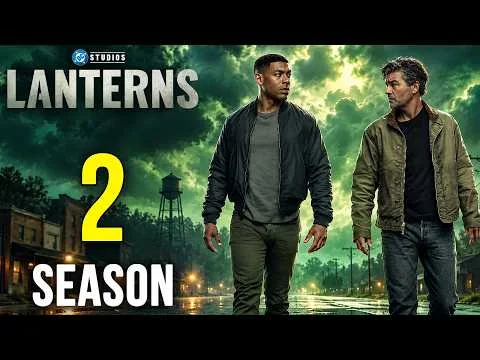
Lanterns Season 2 has not received a verified official renewal in the sources checked for this article, and a network-confirmed cancellation was not established either. Cancellation headlines are circulating, but the wording and sourcing behind them matter. There is no confirmed second-season release date, episode schedule, or full returning cast to report.
The most useful question is therefore more precise than whether the show is “safe” or “dead”: what has HBO actually announced, what have journalists reported, and what remains a possibility? Here is the evidence behind the uncertainty, what it means for John Stewart’s wider future, and how U.S. viewers can approach the completed first season without being misled by an invented release calendar.
Lanterns Season 2 status: the quick answer
Current status: no verified official Season 2 order; cancellation reporting remains distinct from a formal HBO announcement. Tbreak’s November 11 coverage reports that Variety’s wording was softened from a definitive-sounding non-renewal to an unresolved renewal status. That correction is attributed to Tbreak’s account of IGN’s update, rather than presented here as a personally inspected version history of Variety’s U.S. article. Read the update account.
What is confirmed, reported, and still unknown?
| Question | Answer at the research cutoff | Evidence category |
|---|---|---|
| Has HBO announced Season 2? | No official order established in this research | Unconfirmed production status |
| Are there cancellation reports? | Yes, alongside updated coverage describing an unresolved renewal | Attributed reporting |
| Is there a Season 2 release date? | No verified date | Unknown |
| Did Season 1 receive an order? | Yes, an eight-episode series order | Official HBO press material |
| Where was Season 1 released in the U.S.? | HBO and HBO Max | Official distribution information |
| Does a possible film appearance renew the show? | No; the two are separate production decisions | Editorial distinction |
That last distinction is especially important for an interconnected franchise. A television title, a character, a performer, and a film can each have a different status. News about one should not silently be used as confirmation of the others.
Is Lanterns canceled, or has it simply not been renewed?
Those descriptions can overlap in everyday conversation, but they should not be treated as interchangeable in a status report. A formal cancellation communicates a decision to stop a series. A statement that a show has not yet been renewed describes the absence of a new order at a particular time. It does not, on its own, reveal whether that absence is temporary or final.
Variety’s licensed Australia/New Zealand edition carries reporting about an insider’s dissatisfaction with the show’s cultural impact and uses non-renewal language. That is relevant industry reporting. An insider’s assessment, however, is not the same document as an HBO release announcing the future of the series.
The current complication is a reported wording change. Tbreak says IGN noted that “didn’t get renewed” became “has yet to be renewed.” The difference is small in length and large in implication. The first can sound like a closed decision; the second leaves the timing unresolved. Different editions, cached snippets, and older social posts may not update together.
Our conclusion is deliberately narrower than a dramatic headline. There is credible reporting of uncertainty and pessimism, but this research did not establish an official cancellation notice. That does not mean renewal is likely. It means the evidence does not justify converting uncertainty into a network announcement.
Why are the Lanterns Season 2 headlines so different?
Entertainment news often moves through a chain: an interview or trade report appears, another publication summarizes it, a social account compresses that summary, and a screenshot circulates after the wording has changed. At each step, a qualifier can disappear. “An insider doubts a return” can become “the show will not return” even though the underlying evidence has not grown stronger.
The solution is to follow the claim back to its source and identify what kind of source it is. An on-the-record executive statement, an anonymous insider’s opinion, a production order, and a journalist’s forecast do not carry the same meaning. All can be newsworthy, but none should be mislabeled as another.
Pay attention to the object of a sentence, too. A report might describe the current absence of an order, expectations under a new executive, or a specific project being discontinued. A reader who sees only the headline may reasonably miss that distinction. A careful explainer should restore it rather than make the headline louder.
Finally, watch the date attached to each claim. October optimism can remain relevant as background while no longer representing the complete November picture. A newly published story can also quote an old interview. The date of the article and the date of the statement are two different pieces of information.
What did Chris Mundy actually say?
The Playlist’s direct interview report supplies an important piece of context. Its journalist asked Chris Mundy whether the DC Studios shake-up could help a second season move forward sooner. Mundy’s response expressed uncertainty about how people might react after the merger and leadership changes.
That question matters. A comment about whether change will accelerate progress is not a statistical forecast of whether a season will exist. Treating conversational uncertainty as a mathematically calculated probability would imply knowledge the interview does not provide.
A useful reading is that the creative team did not offer a firm timetable or production commitment in that exchange. The comment helps explain why confident calendar predictions are premature. It does not establish a cancellation, and it should not be converted into a promise that a decision will arrive immediately.
There is also a practical limit to what a showrunner can announce. Creative intent and a distributor’s order are separate. Somebody can be willing to tell another story and still be unable to name a production start. That distinction is not evasive by itself; it reflects the different decisions required to make a season.
Does a writers’ room mean Season 2 is happening?
Earlier coverage described work on potential continuation ideas. Radio Times’ October status guide distinguished that work from a green light, noting that story development was taking place without an official HBO order. It is useful background, but its October cutoff should not be mistaken for a fresh November announcement.
Development is a way to find out whether a project is worth making. It can involve considering character directions, outlining a mystery, estimating scale, or preparing a pitch. An investment in that work can be meaningful without guaranteeing that all later stages will follow.
Think of a proposed season as a sequence of decisions rather than a single switch. A workable story must become an approved project. An approved project must become a producible plan. Casting, schedules, locations, budgets, and post-production then have to align. Different productions can move through those decisions differently; this is a general explanation, not a leaked Lanterns production schedule.
That is why a headline about writers discussing ideas should not be followed by an invented premiere year. It demonstrates activity, not a completed chain of approvals. The stronger update would be language naming the order itself, rather than only the people exploring possibilities.
What was the creative condition for a second season?
TVLine’s account of Peter Safran’s Collider remarks identifies the earlier stated test: a continuation needed a story worthy of following the first season. Meristation’s October report also records an expectation of an update before the end of the year. Those were conditional comments, not an order.
From a storytelling perspective, that is a more demanding question than whether the setting has unused villains. A continuing drama needs another reason to bring its characters together. A new case should challenge something the first story established, rather than simply repeat a successful pattern with new names.
For a detective series within a superhero universe, the balance is particularly delicate. Escalating the scale can create spectacle, but it can also weaken the local detail that made the mystery distinctive. Staying grounded can preserve that detail, but it must still reveal something new about the characters and their responsibilities.
This is editorial analysis of the creative problem, not a proposed plot attributed to the writers. No specific Season 2 case, villain, location, or adaptation was verified for this article. The important point is that the existence of a large comics library does not remove the need for a coherent next story.
How does the DC Studios leadership change affect the situation?
Variety’s November leadership report describes James Gunn and Peter Safran stepping down from their executive roles and Jeremy Latcham taking over as president and chief creative officer. That provides context for the uncertainty. It does not serve as an individual cancellation notice for every project associated with the earlier leadership.
A change in decision-makers can lead to reassessment, but it does not tell outside observers the result of every reassessment. A company can keep a title, alter its scale, postpone a decision, or stop it. Without project-specific evidence, selecting one of those outcomes is prediction rather than reporting.
The same restraint applies to explanations for the executive change. This article does not claim that one unreleased film caused a firing, that a secret mandate bans a category of stories, or that a new executive has already rejected every existing plan. Those claims would require evidence beyond the existence of a transition.
For Lanterns viewers, the practical implication is a need for a current, specific update. A statement about the slate in general may be important business news while still leaving the show’s order status unanswered. The responsible next step is to watch for a title-specific announcement, not to treat every corporate headline as a verdict on the series.
Were the Lanterns ratings actually poor?
The publicly reported numbers do not support a simple claim that nobody watched. TheWrap reported on October 8 that the finale reached 10.5 million global viewers and 7.2 million U.S. viewers over three days of crossplatform viewing, citing Nielsen and Warner Bros. Discovery internal figures. It also reported a 19.3 million global series average.
Those are different measures: global versus U.S., and a three-day finale window versus a series average. They should not be swapped in a headline. The U.S. finale figure is approximately 68.6% of the reported global finale total, but that calculation applies only to the same three-day figures. It does not reveal the show’s lifetime U.S. share, profit, or future renewal probability.
A renewal decision can involve information the public does not have. Cost, audience retention, future commitments, and strategic goals cannot be reconstructed from one announced viewing total. Strong reported viewing and an unresolved order can coexist without either fact being fraudulent.
Why a Nielsen chart and a studio audience announcement can disagree
A chart position and a cumulative audience announcement are not necessarily answers to the same question. One can be limited to a reporting window, a platform category, a territory, a device universe, or a measurement unit. Another can combine several outlets or use a different time horizon. Before comparing two figures, check those definitions.
For example, a viewer count and a total of minutes watched cannot be treated as equivalent. A long program and a short program can generate different minute totals from similar audiences. A finale with one episode available also presents a different viewing opportunity from a library series with many seasons available at once.
These are general measurement principles, not a claim that any particular uninspected chart has been reconciled here. We have not audited the full Nielsen methodology or Warner Bros. Discovery’s internal accounting. The published figures should remain labeled with the window and sources supplied by the reporting.
The useful conclusion is modest: a missing chart entry does not, by itself, prove a show has no audience, and a large audience announcement does not, by itself, prove a new season is economically inevitable. Each claim needs the evidence appropriate to it.
Is there a Lanterns Season 2 release date?
No verified Season 2 release date was established. There is also no confirmed second-season weekly schedule, premiere time, or episode count in the material reviewed. A predicted year on a fan page should not be presented as an HBO scheduling announcement.
It is tempting to estimate a return by counting the time between earlier production milestones. That can create a plausible-looking date while ignoring the most important missing step: an approved season. A production pipeline is not a clock that starts automatically when a finale airs.
Even after an order, the sequence can vary. Writing, scheduling performers, filming, visual effects, editing, and delivery can overlap or change. A grounded mystery may have different demands from a large cosmic story, but no verified second-season scale was established either. A precise estimate would therefore rest on assumptions about both approval and content.
Until scheduling news exists, the useful calendar is a news calendar: the date of the latest official statement and the date of the last reliable reporting. That keeps readers oriented without asking them to plan around a premiere that has not been announced.
Which cast members are confirmed for Lanterns Season 2?
No full Season 2 cast announcement was verified. The established Season 1 leads are Aaron Pierre as John Stewart and Kyle Chandler as Hal Jordan, as identified in HBO Max’s official teaser release. Kelly Macdonald also appears in the first-season cast. Those credits establish the existing series, not contracts for another season.
A returning-cast prediction can accidentally spoil a finale or turn a character’s unresolved fate into a production claim. This guide avoids doing either. A familiar performer in promotional material for Season 1 is not proof of a new season, and an old cast list should not be relabeled as a confirmed future lineup.
The same applies behind the camera. Reports of planning, collaborators being discussed, or a creator’s willingness to continue are relevant but different from a final credit list. A title-specific order can still arrive before all casting details are public; there is no need to fill that gap with guesses.
Could John Stewart return even if the series does not?
Yes, a character can continue in another production without the original series receiving a new order. GamesRadar’s October report discusses Aaron Pierre’s planned John Stewart appearance in Man of Tomorrow. That is a separately reported path for the character, not a substitute Season 2 announcement.
The distinction also works in the other direction. A character’s appearance in a film does not automatically explain the future of every relationship or location from a television series. A crossover has its own central story and limited time. Some television threads may remain specific to the show, regardless of whether a familiar face travels between formats.
For viewers, this means the question “will we see him again?” should be separated from “will this show return?” A positive answer to the first does not resolve the second. Marketing an interconnected universe can make those questions feel identical, but production orders remain title-specific.
We are not using this report to guarantee an unchangeable future release plan. Projects can evolve. The point is to identify the nature of the announced or reported connection, rather than let it become misleading evidence about a different production.
What is Lanterns about, without finale spoilers?
HBO’s official series material describes a new recruit, John Stewart, and veteran Hal Jordan investigating a murder in the American heartland. Its initial order covered eight episodes. Chris Mundy, Damon Lindelof, and Tom King are identified as co-creators, with Mundy serving as showrunner.
DC’s introduction to the town’s characters locates the investigation in Rushville, Nebraska, and presents a local community with secrets. That is useful context for viewers expecting a series set entirely in outer space. The show’s premise combines the Lantern concept with the scale of an Earth-based investigation.
As a viewing decision, that distinction matters more than a generic promise of superhero action. Someone looking for a mystery about people, institutions, and hidden motives may respond differently from someone seeking uninterrupted cosmic spectacle. Neither preference is wrong; knowing the premise helps avoid choosing a show on the basis of the logo alone.
Where can U.S. viewers watch Lanterns Season 1?
The official HBO Max August programming announcement lists Lanterns’ first season, with eight episodes released weekly beginning August 16, 2026. DC’s television directory directs viewers to HBO Max. Check the live U.S. service listing through an authorized account for current access.
This guide does not promise a free trial, a fixed subscription price, or access through every television provider. Offers and bundles can change, and a plan name used in another country may not describe the U.S. service. Confirm the title and plan before subscribing specifically to watch it.
If you already have access through a bundle or provider, use the legitimate sign-in route for that arrangement. A search result labeled “free episodes” is not evidence that an upload is authorized. This article supplies no piracy links or downloadable copies.
There is also no new Season 2 schedule to convert into Eastern or Pacific time. First-season premiere times in old promotional material should not be recycled as a future weekly slot. A return would need its own dated scheduling information.
Should you wait for renewal before starting the show?
That depends on what you need from a viewing experience. Some people are comfortable with a completed season even when a wider character story might continue. Others prefer to know that every long-term thread has a production plan. A status guide can clarify the uncertainty, but it cannot decide that preference for you.
One practical approach is to separate the season’s central story from its franchise possibilities. Ask whether the premise interests you and whether you are willing to encounter unresolved future potential. You do not need an imagined multi-season plan to enjoy a mystery, but you should not be promised a guaranteed continuation either.
This is not a firsthand quality review or a claim that every viewer will find the ending satisfying. It is a way to make the decision with accurate expectations. If uncertainty itself would spoil the experience, waiting for a formal status announcement is reasonable. If you enjoy following a character’s first chapter, the existing season is the relevant work to consider.
What would count as a meaningful next update?
| New information | What it would establish | What it would not establish alone |
|---|---|---|
| HBO announces a Season 2 order | The series is renewed | A premiere date unless supplied |
| HBO announces the series has ended | A formal cancellation or ending | Every character’s future elsewhere |
| Writers discuss ideas | Creative development or interest | An approved production |
| A performer mentions another DC project | A claim about that separate project | Renewal of Lanterns |
| An insider predicts a decision | Attributed reporting or expectation | An official network statement |
The strongest update would identify the title, the decision, the source responsible, and the date. If it includes a production window or release date, those details can then be reported on their own terms. A vague promise that “more is coming” is not enough to populate every missing field in a Season 2 guide.
Readers can also distinguish an old link being recirculated from a new announcement. Check the underlying article and statement date before sharing a screenshot. A repeated claim is not automatically a newly verified claim, even when a large account reposts it.
Our take: uncertainty deserves a clear answer, not a fictional deadline
Lanterns Season 2 is a case where precision is more useful than optimism or pessimism. The evidence describes a television continuation without a verified official order, reports that raise doubts, and a wider franchise in transition. None of those facts should be hidden to produce a more comforting answer.
Equally, uncertainty is not permission to describe every possible bad outcome as a completed decision. The job of a status report is to show the boundary between what has happened and what somebody expects to happen. That boundary protects readers from false hope and false finality alike.
Our editorial position is to keep the status open until stronger project-specific evidence changes it. If a renewal arrives, the release date and cast still need separate confirmation. If a cancellation is announced, the story should identify the actual announcement rather than retroactively treating every earlier rumor as proven.
For now, U.S. viewers can make a clear decision about the first season and follow verified updates about the second. There is no need to invent a trailer, return date, or villain to make the unresolved situation understandable.
Lanterns Season 2: frequently asked questions
1. Has Lanterns Season 2 been officially renewed?
No official second-season order was verified in the sources checked as of November 11, 2026. Development reports and supportive comments should not be presented as a completed HBO renewal. The status needs a new title-specific announcement to change.
2. Has HBO officially canceled Lanterns?
This research did not establish an official HBO cancellation announcement. There are pessimistic reports and cancellation headlines, but those should remain attributed reporting. An absent renewal and a public cancellation are different kinds of information.
3. Why did the reported Variety wording change matter?
Tbreak’s account of IGN’s update describes a shift from a closed-sounding statement to an unresolved status. This guide attributes that account and notes that syndicated editions may preserve earlier wording. It does not claim access to an unavailable revision history.
4. Is there a Season 2 release date?
No verified premiere date, production schedule, or weekly slot was established. An estimated year is not an HBO announcement. First-season release dates should not be copied into a supposed future schedule.
5. Is the second season already filming?
No verified Season 2 filming start was established here. Reports about developing a story are different from evidence of principal photography. A reliable production update would need a current source identifying the season and the stage of work.
6. Does a writers’ room guarantee renewal?
No. Story development can help a company decide whether a continuation should be ordered. It is a meaningful activity, but it does not complete the later decisions about approval, production resources, casting, or release.
7. Did Chris Mundy give a calculated renewal probability?
The cited direct interview concerned whether the leadership change could help the show progress sooner. Conversational uncertainty should not be treated as a statistical estimate. The context of the question is necessary to understand the answer.
8. Was a decision promised before the end of 2026?
October reporting conveyed an expectation of a year-end update. That was not a season order, premiere date, or guaranteed deadline. Later corporate changes are another reason to keep the statement attached to its original context and date.
9. Were the first-season viewing numbers zero or negligible?
No. The cited ratings report describes substantial audiences. The figures still need their territory and measurement windows attached. Public audience totals alone do not reveal all costs, profitability, or the likelihood of another order.
10. Are global and U.S. viewing figures interchangeable?
No. Nor are viewer counts, viewing minutes, premiere windows, and series averages. Compare figures only after checking their definitions. Mixing measures can make two compatible reports appear to contradict each other.
11. Are Aaron Pierre and Kyle Chandler confirmed for Season 2?
They are established first-season leads, not a verified second-season cast announcement. This spoiler-light guide avoids treating story possibilities or old promotional credits as future contracts. A new season would need its own production information.
12. Can John Stewart appear in a film without another Lanterns season?
Yes. A character’s separately reported film appearance does not require the television title to have a new order. The two production statuses should be checked independently, even when the stories share a fictional universe.
13. Where can I watch the existing season in the United States?
HBO and HBO Max are the official first-season release outlets identified in the cited material. Check the live U.S. listing and your authorized account for current access. This article does not guarantee a particular bundle or promotional offer.
14. How many episodes were ordered for Season 1?
The official series order and programming information identify eight episodes. That number describes the first season. It should not be reused as an announced episode count for a continuation that has not received a verified order.
15. Does this article spoil the season finale?
It avoids major finale outcomes and focuses on production status, sourcing, and viewing information. Linked external articles may contain spoilers. This is a researched status guide, not a claimed firsthand screening review.
Sources, cutoff, and corrections
Research cutoff: November 11, 2026. Official HBO/Warner Bros. Discovery and DC materials establish the existing series, its creators, premise, and first-season distribution. Direct and attributed interviews establish what participants said about uncertainty. Trade reporting is identified as reporting rather than a network order. Interpretive explanations of production, measurement, and viewing choices are editorial analysis.
- HBO/Warner Bros. Discovery: Lanterns press materials
- HBO Max: August programming announcement
- DC: introducing the series and Rushville characters
- The Playlist: direct Chris Mundy interview report
- Tbreak: reported wording update and November status
- Variety Australia/New Zealand: industry report
- TheWrap: first-season finale audience report
For more viewing information, visit Epicofilm’s Streaming Guides and News & Buzz. Factual corrections with supporting sources can be sent through Contact Us. Our Editorial Policy and Corrections Policy describe how we handle sourcing and updates.