

What is the Ramayana? The Ramayana is one of the great Sanskrit epics of South Asia, traditionally attributed to the sage Valmiki. Its central story follows Rama, Sita, Lakshmana, Hanuman and Ravana through questions of duty, exile, loyalty, separation and justice. For many Hindus, it is also a sacred account whose characters are integral to worship and everyday religious life. For historians of literature, it is a layered text and an extraordinarily influential tradition of storytelling. Both perspectives deserve to be described accurately, without pretending that religious conviction and historical dating answer precisely the same questions.
This guide examines who wrote the Ramayana, when its Sanskrit text may have been composed, how old it is, what happens in its seven books, how its story traveled beyond India, and what researchers can—and cannot—establish about when the events happened. It also distinguishes the ancient epic from the 2026 film adaptation, which is a separate work with its own cast and release schedule. The discussion draws on Oxford Academic, Columbia University’s World Epics project, the University of California at Berkeley, UCLA and museum collections rather than repeating an unsupported exact date.
Quick answers: what, who, when and how old?
| Reader question | Evidence-based short answer |
|---|---|
| What is the Ramayana? | A Sanskrit epic and a vast living family of retellings about Rama and Sita. |
| Who wrote the Ramayana? | The Sanskrit Valmiki Ramayana is traditionally attributed to the sage Valmiki. |
| When was it written? | Scholars propose different broad ranges; it was composed and transmitted over time rather than on a documented publication day. |
| How old is it? | Its literary traditions are well over two millennia old, but no single exact age is established. |
| Did Ramayana really happen? | It is sacred history for many believers, while the full sequence of narrated events is not independently verified by current historical methods. |
| When did Ramayana take place? | Religious accounts associate Rama with Treta Yuga; there is no universally established calendar date for the narrative events. |
| Is it the same as the Ramayana movie? | No. A film is a modern adaptation of the wider story. |
What is the Ramayana, exactly?
The word Ramayana is often explained as the journey or course of Rama. That description is useful, but the work is more than a travel narrative. It combines royal succession, family obligation, life in forests, alliances between communities, supernatural encounters, battle and the consequences of kingship. Its central dramatic movement begins with Rama’s life in Ayodhya and changes when exile interrupts his expected position as heir. The ensuing story gives particular importance to Sita, who is much more than a prize to be recovered, and to Lakshmana, whose commitment accompanies Rama through enormous personal hardship.
A literary definition describes a long Sanskrit poem presented through carefully patterned verse and remembered across generations. A religious definition recognizes its devotional importance, moral teaching and the sacred status of Rama for many Hindus. Neither definition alone fully describes the work’s cultural role. The Ramayana lives in household recitation, public drama, songs, sculpture, festival performance, television and cinema. Berkeley’s educational Ramayana materials emphasize that its earliest transmission involved oral performance and that its later history includes manuscripts, dance and visual art. Source: UC Berkeley ORIAS.
The term can also refer to a family of related narratives rather than a single identical text read everywhere. When someone asks what the Ramayana says about a character or episode, a careful answer first asks which telling is under discussion. Valmiki’s Sanskrit epic, the Ramcharitmanas associated with Tulsidas, Kamban’s Tamil rendering and Southeast Asian traditions share recognizable narrative relationships, but they do not have to agree on every scene, speech or emphasis. This diversity is part of the story’s historical importance, not a reason to dismiss it.
Who wrote the Ramayana? The role of Maharishi Valmiki
The conventional answer is Maharishi Valmiki, revered in the tradition as the adikavi, or first poet. Oxford Bibliographies identifies Valmiki’s Sanskrit epic as the earliest known major textual telling of Rama’s story. Calling Valmiki the author is therefore appropriate when discussing the Valmiki Ramayana. It is less precise when referring to the hundreds of later local, regional and performance traditions, whose creators and communities differ. Source: Oxford Academic.
The opening tradition about the poem connects creativity with grief. Berkeley’s discussion of the text recounts the story of Valmiki witnessing the killing of a bird and responding in a metrically formed utterance; the narrative then associates the poem’s creation with the sage’s inspiration and the telling of Rama’s life. This is an account within the literary-religious tradition, not a modern archival record of the day the poem was written. The distinction matters when speaking to international readers who might otherwise mistake an origin legend for a precisely datable biographical episode.
Ancient epics are not generally produced or preserved in exactly the way a modern novel is. A work may have passed through oral composition, memorization, recitation, manuscript copying and later editing. Different recensions may preserve variations. That helps explain why asking for a single author’s exact birth year, exact completion date or original signed manuscript often leads to claims that cannot be independently demonstrated. Respect for Valmiki’s place in the tradition is compatible with scholarly honesty about the transmission of a very old poem.
When was the Ramayana written? Why dates differ
There is no single universally accepted calendar year for the composition of the Sanskrit Ramayana. Different serious educational sources give different ranges. Oxford Bibliographies describes a probable dating in the neighborhood of 750–500 BCE according to the views it summarizes. UCLA’s South Asia resource discusses a fourth-century BCE dating of the Sanskrit composition. Columbia’s World Epics project gives a deliberately broad approximately 500 BCE to 500 CE range for composition and development. The Getty vocabulary record places the Sanskrit poem at 300 BCE or later. These are not four exact dates that can all be added together; they reflect differing methods, definitions and stages of textual history. Oxford · UCLA · Columbia · Getty.
One reason dates differ is that scholars may be referring to different things: the beginnings of oral stories about Rama, the earliest recognizable Sanskrit composition, editorial strata of the text, or surviving manuscripts. None of these events necessarily happened at the same time. A manuscript copied centuries after a poem was composed does not prove the poem originated in the copy’s century. Similarly, the existence of an older oral legend does not tell us exactly when all the verses in a surviving version were composed.
For a trustworthy blog post, the best answer is a range with an explanation. It is reasonable to say that the Ramayana’s Sanskrit literary tradition is more than two thousand years old, while explaining that some proposed dates extend earlier and the text has a layered history. It is not responsible to publish a precise year or even an exact calendar day as historically proven unless there is an appropriately strong source and the claim is presented as the source’s interpretation rather than a settled consensus.
How old is the Ramayana in 2026?
If a reader wants a simple calculation, a composition discussed in the broad centuries before the Common Era makes the textual tradition roughly two to nearly three millennia old by 2026, depending on which phase of its history is being counted. But this is only an approximate way of explaining antiquity, not an archaeological birthday. In a work transmitted over time, the phrase “the Ramayana was written 2,500 years ago” can be a shorthand, whereas “the original was completed on this precise date” goes beyond established evidence.
The story may also have predated the form in which the surviving Sanskrit epic developed. UCLA notes the possibility of an older oral tradition. Berkeley explains how the story moved from oral performance to manuscript culture and other forms. A responsible answer should distinguish the age of the story from the age of a specific preserved text. They are related but not interchangeable measures.
Modern printed editions, scholarly translations and digital versions add yet another layer. A hardcover printed in 2026 is of course newly manufactured; the historical literary work it represents is ancient. A seventeenth-century illustrated painting is evidence of that period’s reception, not evidence that the epic was first invented in the seventeenth century. This simple distinction prevents many misleading online timelines.
What happens in the Ramayana? The broad storyline
The narrative begins within the royal household of Ayodhya, where Rama’s expected path changes when the throne is denied to him and he accepts an extended exile. Sita accompanies him, as does Lakshmana. The forest journey becomes a crucible for their relationships and decisions. Ravana’s actions then propel the story toward a search and a large conflict. Hanuman becomes one of the best-known figures in that search, remembered for courage, intelligence and devotion.
For a first-time reader, the plot is not reducible to a contest between a hero and a villain. It asks how commitments to family, a ruler’s promise, marital loyalty and public duty can come into conflict. A person can do what is expected according to one obligation and still cause pain under another. Many episodes are remembered because they make those tensions visible rather than because they offer a simple answer.
The events are familiar in outlines to people raised with the story, but the balance of narrative attention changes between tellings. Some emphasize Rama’s ideals, some Sita’s perspective, some Hanuman’s devotion, and others the ethical complexities of rulership. A good beginner’s guide should not imply that one film’s edited plot provides a complete substitute for reading a literary version.
The seven kandas: how the Sanskrit epic is organized
The Valmiki Ramayana is conventionally arranged in seven books, called kandas: Bala, Ayodhya, Aranya, Kishkindha, Sundara, Yuddha and Uttara. In introductory terms, these move from Rama’s early life and marriage through Ayodhya’s succession crisis, forest exile, alliance and search, Hanuman’s journey, conflict and aftermath. Berkeley’s presentation of the epic describes its seven-book organization and the associated performance tradition. Source: Berkeley.
The division makes it easier to understand why the Ramayana is not merely one long sequence of battles. The Ayodhya material concerns political and family choices; the Aranya material changes the dramatic setting and stakes; the Kishkindha and Sundara sections bring new allies and modes of action; the later narrative reflects on war and the costs of power. Scholars also study the history of the text’s component parts and their relationship to different manuscript traditions. A table of contents is a useful reading aid, not proof that every part reached its present form at the same moment.
| Kanda | Broad subject |
|---|---|
| Bala | Early life, education and marriage-related episodes |
| Ayodhya | Royal succession, promises and exile |
| Aranya | Forest life and the development of the central crisis |
| Kishkindha | New alliances and the search for Sita |
| Sundara | Hanuman’s extraordinary mission |
| Yuddha | Conflict, confrontation and resolution |
| Uttara | Later narrative and questions of rule and family |
Who is Rama?
Rama is the central figure of the epic and is revered by many Hindus as an avatar of Vishnu. In the narrative he is associated with Ayodhya’s royal family and with difficult decisions about duty. He is not presented merely as a figure of supernatural power; the importance of his choices helps explain why the story has been used for moral reflection, devotion and debates about the responsibilities of public life.
Readers should be cautious about modern slogans that compress a multidimensional character into a single trait. Rama’s relationship with his father, brothers, Sita and allies creates conflicts that generations of commentators and performers have interpreted differently. Explaining those choices carefully is more useful than claiming every community understands each episode in exactly the same way.
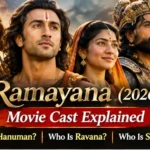
In the 2026 screen adaptation, Ranbir Kapoor plays Rama. That casting is a contemporary production fact and should not be confused with the identity of Rama in the source tradition. A page about the ancient epic should mention the actor only briefly and link to a separate film-cast guide, preserving the primary informational purpose of the article.
Who is Sita?
Sita is indispensable to the Ramayana. She is Rama’s wife and a major moral and emotional center of the narrative. Her experiences of exile, separation and public scrutiny have inspired devotional interpretations, literary retellings, theater and modern debates about agency and justice. Treating her only as a character whom a hero must rescue would overlook much of the tradition’s richness.
Many retellings illuminate the story differently through Sita’s perspective. That is one reason modern audiences should be prepared for distinct representations in the Sanskrit epic, vernacular poems and films. Differences among versions are not necessarily simple mistakes. They may reflect the purposes of poets, performers and communities working in different times and languages.
For general readers, it is helpful to say both that Sita holds a sacred place in Hindu traditions and that scholars examine how the figure has been represented in different cultural settings. Those statements concern different kinds of questions and can coexist in a careful introduction.
Who is Lakshmana?
Lakshmana is Rama’s brother and a central companion during the exile. His relationship to Rama illustrates commitment, familial obligation and the tensions that can emerge when loyalty and intense emotion meet. In many popular retellings he is associated with vigilance and a strong protective response to threats. Understanding Lakshmana helps make sense of why the epic’s early forest material depends on more than the decisions of Rama alone.
Some episodes involving Lakshmana differ in their details across literary and regional traditions. It is therefore important not to attach every familiar television moment to the earliest Sanskrit text without checking the relevant passage. Film versions often combine source material and later cultural memory; that creative process is worth acknowledging rather than hiding.
Who is Hanuman in the Ramayana?
Hanuman is one of the epic’s most enduring figures, celebrated for devotion to Rama, extraordinary courage, speed, practical intelligence and service. He matters not merely because he can perform spectacular feats, but because he consistently directs his abilities toward a purpose beyond personal glory. His role in the search for Sita is among the most widely known elements of the entire Ramayana tradition.
Hanuman also lives beyond the literary epic through prayer, temples, seasonal festivals, oral narratives and artistic performance. Readers who recognize him only from action sequences in a contemporary movie may miss that broader devotional role. When explaining the character, one should distinguish the source-story function, the religious understanding and the particular emphasis chosen by a film adaptation.
The 2026 movie lists Sunny Deol as Hanuman in its official Sony Pictures trailer description. That is a verified casting fact, but it belongs to the modern film’s production information rather than the ancient text’s authorship or dating. Sony Pictures trailer.
Who is Ravana?
Ravana is associated with the kingdom of Lanka and functions as Rama’s formidable adversary in the central conflict. His character is more complex than the generic phrase “evil monster.” In different tellings, he is associated with learning, royal power, religious practice, pride, desire and disastrous judgment. The contradiction between his capacities and his actions makes him a subject of repeated interpretation.
Some audiences encounter Ravana primarily through annual performances of the story or festival imagery; others through classical literature and regional narratives. These depictions do not always have identical emphases. A careful article should discuss what the story’s central conflict means without pretending that one modern image settles every literary question about the character.
The actor Yash plays Ravana in the 2026 film. That fact comes from the studio’s materials. It should not be mistaken for evidence about any historical person who may or may not have inspired the character. The epic’s literary role and a film’s casting are fundamentally different kinds of information.
What is dharma, and why does it matter here?
The concept of dharma is often rendered in English as duty, righteous conduct or moral order, but no single short translation communicates every context in which it appears. In the Ramayana, characters confront obligations that may overlap or conflict: commitment to a parent’s promise, protection of loved ones, responsibility to subjects and the maintenance of personal integrity. The story’s enduring attraction partly lies in showing that these obligations can be difficult to reconcile.
A reader unfamiliar with Indian religious and philosophical vocabulary may initially interpret the epic through a simple Western fantasy framework of heroes defeating villains. That approach can make the plot easy to follow, but it misses many of its central moral tensions. Recognizing dharma does not require the reader to subscribe to a particular interpretation. It does mean acknowledging the ethical vocabulary from which the narrative developed.
Public discussion also benefits from avoiding claims that the epic provides one direct and uncontested answer to every modern question. Commentators and communities have debated its events for centuries, sometimes valuing different principles in the same episode. That history of interpretation is itself an important aspect of the Ramayana’s cultural significance.
When did the Ramayana happen? Treta Yuga and historical chronology
In Hindu religious chronology, Rama is traditionally associated with the Treta Yuga, one of the ages in a cyclical understanding of time. Asking “when did Ramayana happen?” may therefore invite a religious answer grounded in that traditional chronology. Such an answer should be identified as a matter of scriptural or devotional interpretation, not quietly converted into an independently confirmed Gregorian calendar date.
Modern historical chronology works differently. Historians ask what can be established through datable inscriptions, material remains, textual layers, language history and evidence that other researchers can examine. This does not make religious meaning disappear. It simply identifies which question a specific kind of evidence is able to answer.
No universally accepted archaeological or documentary record fixes every major event of the Ramayana to an agreed historical year. Some people propose precise dates through astronomical interpretations or traditional calculations, but those are not a settled scholarly consensus. A responsible article can describe such approaches as interpretations while keeping their evidentiary limits visible.
Did the Ramayana really happen?
This question combines at least three different meanings of “really.” The first is religious: many devotees accept the story as sacred history and find its importance inseparable from faith and inherited practice. The second is literary: the Ramayana demonstrably exists as an ancient work that has shaped communities and art for a very long time. The third is historical: can every described person, journey and event be independently confirmed by modern historical methods? For that third question, the answer is no; there is not conclusive independent verification of the complete narrative as told.
That distinction is not intended to ridicule belief or impose an artificial choice between reverence and study. Sacred texts are frequently important to communities in ways that cannot be reduced to archaeological verification. At the same time, a website claiming to offer factual information must not label every traditional account as experimentally or archaeologically proven when the evidence does not support that statement.
The Ramayana’s cultural reality is undeniable. Its literary history, repeated performance, visual representation and widespread influence can be investigated through manuscripts, objects and living practice. The question of its narrated events belongs to another discussion. Presenting those two kinds of reality separately gives readers a clearer answer than an exaggerated yes-or-no headline.
What can archaeology tell us—and what can it not?
Archaeology can establish that settlements existed in particular periods, that people used certain materials, and that cultural and religious practices developed in specific places. It can also help identify the historical settings in which literary traditions circulated. But identifying an old city or a structure with a familiar name does not, by itself, verify every action in a complex epic.
Likewise, artworks showing Rama, Sita, Hanuman or Ravana demonstrate that those subjects mattered to patrons and artists in the period when the artworks were created. They do not prove the events depicted happened in the way they are painted. The Metropolitan Museum of Art’s public-domain Ramayana folios, for example, are invaluable evidence of visual interpretation centuries after the presumed ancient composition. The Met collection.
Modern readers should watch for articles that blur these categories of evidence. A photograph of a modern location can be highly relevant to a continuing pilgrimage tradition; it should not be captioned as a verified image from the time of the epic. A discussion that names its sources and explains their limits is more trustworthy than one that declares every longstanding legend “scientifically established.”
Is the Ramayana history, mythology or literature?
The answer depends on the kind of description being offered. It is undeniably literature: a major epic tradition studied in universities, translated, published and performed. It is religious scripture or sacred narrative for many devotees. Scholars also examine its mythological structures and its role in shaping ideas of kingship, relationships and moral life. None of those descriptions requires dismissing the others.
For an international publication, terms should be used with care. “Mythology” is a scholarly category for traditional sacred narratives; in casual speech it can be heard as meaning something untrue. An article aimed at global readers can avoid needless misunderstanding by saying explicitly what it means and by treating devotees and scholars with the same basic intellectual respect.
What should not happen is the conversion of a scholarly text date into a confident date for the narrative’s events. The age of a written version and the period in which a story says its characters lived are separate questions. That single distinction resolves many confused search results.
How many versions of the Ramayana are there?
There is no single useful exact count of all Ramayana tellings, because a telling can be a complete poem, a local performance, a shorter retelling, a translation, a stage production or a film. Oxford Bibliographies notes hundreds of versions across languages and regions. Scholars study how these different works influence one another and what changes as the story crosses cultural boundaries. Oxford Bibliographies.
Valmiki’s Sanskrit epic is an important textual reference, but it should not be treated as the sole form in which every audience has encountered the story. Tulsidas’s Ramcharitmanas holds enormous importance in northern India; Kamban’s Tamil literary adaptation offers another major tradition. Southeast Asian courts and performance cultures also reshaped the narrative in their own contexts. The shared characters create recognition even when particular episodes change.
Understanding this diversity is especially helpful when a movie changes a character’s emphasis or chooses a particular scene. Before accusing an adaptation of simply getting an episode wrong, critics should ask which source and tradition its filmmakers were drawing from. The answer may still support criticism, but it produces a more informed argument.
Ramayana beyond India: a global literary tradition
The Rama story has reached far beyond the Indian subcontinent, influencing Southeast Asian literary and performance traditions as well as modern global media. Researchers study the movement of stories through trade, religion, artistic exchange and local adaptation. Different communities sometimes connect the epic to language, monarchy, public performance or religious practice in distinctive ways.
That international history makes a modern English-language film adaptation particularly interesting. For some audiences, the movie is an introduction to an unfamiliar source; for others, it is another chapter in a story they already know through family or regional practice. A single global review cannot assume all viewers bring the same memories or expectations to the screen.
For a credible entertainment website, the opportunity is to connect film coverage with informed background material rather than pretend the ancient story begins with a 2026 theatrical release. Well-sourced evergreen context can continue helping readers long after a particular film stops trending.
What are the earliest manuscripts and illustrations?
An ancient text can survive through copies rather than an author’s original document. Columbia’s World Epics resource notes a wide composition and manuscript chronology, reminding readers that written transmission continued over centuries. The age of the oldest surviving manuscript does not equal the age of the poem’s earliest composition. Manuscript scholarship also distinguishes textual recensions and copying histories from modern printed editions. Columbia World Epics.
Illustrated Ramayana manuscripts and paintings give a window into how people pictured the story in later centuries. The Met’s eighteenth-century Kangra painting of Rama, Sita and Lakshmana at the hermitage of Bharadvaja is specifically designated public domain. It can therefore be a practical and historically honest featured image for a literary guide, provided the caption identifies its approximate date rather than pretending it depicts an actual film scene or a photograph from antiquity. The Met object record.
A well-labeled artwork supports both reader understanding and visual accuracy. A caption stating “Kangra painting, circa 1780, illustrating a Ramayana episode” informs readers what the image is. A caption that calls the artwork “the original Ramayana poster” would be misleading. This is a small but important example of the editorial standards an educational website should maintain.
How is Valmiki’s Ramayana different from Ramcharitmanas?
Valmiki’s Ramayana is a Sanskrit epic traditionally associated with early classical literary culture. The Ramcharitmanas is a much later devotional retelling associated with the poet Tulsidas and written in an Awadhi literary register. Both are deeply important, but they are not interchangeable copies of the same words. Their poetic forms, languages, devotional emphases and cultural reception differ.
Modern searches often use “the Ramayana” to refer generally to the best-known version a reader grew up with. This makes answers to detailed character questions tricky: a familiar dialogue, scene or moral interpretation may come from a later telling rather than the particular Sanskrit passage a reader assumes. Identifying the source is not pedantry; it lets readers find the relevant account.
For introductory study, a reader can begin with a reputable translation of the Valmiki text and then encounter later regional and devotional tellings as distinct literary works. Comparing them opens a richer understanding than trying to decide that every variant must be corrected into one uniform script.
What is the significance of the Ramayana today?
The Ramayana continues to shape language, religious life, literature, painting, festivals, film and family storytelling. It also serves as a continuing source of debate about leadership, personal obligation, friendship, gender, justice and governance. Its influence cannot be measured only by the number of modern films it inspires. The story’s capacity to be retold across different periods is a significant part of what makes it an enduring cultural work.
For some readers, its chief importance is devotional. For others, it provides a literary map of ethical choices. Others study the changing ways a society has interpreted its characters. A trustworthy guide does not insist that everyone must approach it in the same way. It offers enough context that readers can understand the claims being made and decide which questions they want to explore more deeply.
It is also worth remembering that a major media adaptation can introduce new audiences while creating new confusion about source material. The film can be discussed on its own cinematic terms, and the epic can be explained through serious scholarship and cultural context. Each is more informative when its boundaries are respected.
Ramayana and the 2026 movie: what is the connection?
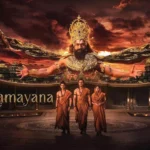
Ramayana: Part One opened worldwide on November 5, 2026, according to Prime Focus Studios. It is directed by Nitesh Tiwari and stars Ranbir Kapoor as Rama, Sai Pallavi as Sita and Yash as Ravana. It is a modern cinematic adaptation, not the original authorship of the Sanskrit epic. The official studio announcement and Sony Pictures’ trailer provide direct evidence for the release and principal cast. Prime Focus Studios · Official trailer.
The question “when is Ramayana releasing?” therefore has two different meanings. Asked about the ancient work, it is not a new release at all; asked about the 2026 movie, the theatrical release has already occurred. Similarly, the question “who wrote Ramayana?” refers traditionally to Valmiki if it concerns the Sanskrit epic, while the movie has an identifiable modern screenplay team. Keeping those queries separate is essential for accurate search content.
For further cinematic context, readers can visit Epicofilm’s Ramayana: Rise of a Legend review. This historical guide should not copy or replace the movie review. It offers cultural and literary background so that readers encountering the film can understand what the source represents.
How to study the Ramayana using reliable sources
A good research pathway begins with direct academic and institutional materials. Oxford’s reference entry provides an overview of the Ramayana as a many-version tradition. UCLA discusses literary history and the uncertainties of dating. Columbia’s World Epics project introduces the text’s long historical span. Berkeley’s educational materials examine oral transmission and how the story appears in performance. Museum records show what later artists actually produced and identify the dates and rights of surviving objects.
These sources answer slightly different questions. That is their value. A museum record can establish when a particular painting was made; it cannot establish the date of Rama’s life. A university lecture can summarize scholarly debates about composition; it does not necessarily speak for every religious community. An official film trailer proves the studio’s public casting announcement; it is not authority on the antiquity of the epic.
Before sharing a viral exact date, identify whether it comes from religious chronology, astronomy-based reconstruction, historical linguistics, archaeology or a modern promotional campaign. Then state the kind of evidence and its limitations. Clear distinctions help a reader understand why credible sources sometimes disagree without assuming that one disagreement invalidates the entire tradition.
Final explanation: who wrote it, how old it is, and whether it happened
The shortest accurate response is that the Valmiki Ramayana is traditionally attributed to Maharishi Valmiki, but scholars date its composition and development differently. The work belongs to a literary tradition that is well over two thousand years old, and its story and retellings have reached many parts of Asia and the world. Its religious significance is profound, while its full narrative is not established as a dated historical record through independent modern evidence.
A serious answer should resist the urge to invent exact dates. The Ramayana’s importance does not depend on an SEO headline claiming a certainty that specialists do not possess. Readers deserve an explanation of how a sacred narrative, an ancient poem and a modern film adaptation relate—and how they differ. That is a stronger foundation for lasting search visibility than a sensational promise of a definitive historical answer.
Frequently Asked Questions
1. What is the Ramayana in simple words?
The Ramayana is an ancient Sanskrit epic about Rama, Sita and other major figures whose journeys raise questions about duty, loyalty, separation and justice. It is also a living sacred and cultural tradition for many communities. The term can mean the Valmiki text specifically or the larger family of retellings.
2. Who wrote the Ramayana originally?
The Sanskrit Valmiki Ramayana is traditionally attributed to Maharishi Valmiki. That attribution is a central feature of the literary and religious tradition. Many later versions were written or performed by other people, so Valmiki is not the author of every Ramayana retelling.
3. When was the Ramayana written?
Scholarly sources differ. Some discuss composition in centuries before the Common Era, while others emphasize a much broader period of development. There is no reliably established exact calendar year for the complete work. It is best to cite the specific scholarly range and explain which textual phase is meant.
4. How old is the Ramayana?
Its written literary history is more than two millennia old, but an exact age cannot be stated without defining whether one means oral narratives, the Sanskrit epic, a later recension or an existing manuscript. Different university and academic sources present different dating ranges.
5. Did the Ramayana really happen?
Many believers regard it as sacred history. Academic historians do not have conclusive independent verification of every narrated event and character in the form described by the epic. The existence and influence of the literary tradition are well established; the historical status of its entire story is a separate question.
6. When did the Ramayana take place?
Religious chronology traditionally places Rama in Treta Yuga. No universally accepted modern historical date fixes the events described in the narrative. Proposed astronomical or traditional dates should be labeled as interpretations rather than established consensus.
7. Who is Ramayana?
Ramayana is not the name of a person. It is the title of an epic and the broader tradition of Rama’s story. Rama is the principal figure, while Valmiki is the sage traditionally credited with the Sanskrit epic.
8. What language was the original Ramayana written in?
The Valmiki Ramayana is a Sanskrit epic. Later retellings appeared in many Indian and Southeast Asian languages, sometimes changing details or emphasis to serve local literary, devotional and performance traditions.
9. How many books are in the Valmiki Ramayana?
The traditional organization contains seven kandas, including Bala, Ayodhya, Aranya, Kishkindha, Sundara, Yuddha and Uttara. The books cover different stages of Rama’s life and the larger narrative.
10. Is the Ramayana the same as the Mahabharata?
No. They are two distinct great Sanskrit epics, with different principal characters and narrative structures. Both have had an enormous influence on South Asian literature and culture, and scholars examine relationships between their traditions.
11. Is Hanuman a god in the Ramayana?
Hanuman is revered in Hindu devotional traditions and is a central heroic ally of Rama in the epic. Descriptions of his status and worship vary among religious communities. His story emphasizes devotion, courage, service and extraordinary ability.
12. Who is Ravana in the Ramayana?
Ravana is the powerful ruler of Lanka and Rama’s adversary in the central conflict. Different retellings portray a complex mixture of power, knowledge, pride, devotion and destructive decisions.
13. Is Sita the main female character of the Ramayana?
Sita is one of its principal characters and essential to its moral and emotional stakes. Many later literary traditions explore her experiences and perspective in distinctive ways. Reducing her to a passive plot device misses much of the text’s interpretive richness.
14. Is the Ramayana a religious book or a story?
It is both a major literary epic and a sacred narrative for many Hindus. Scholars also study it as a body of mythological and cultural tradition. The categories describe different aspects of the same enduring body of storytelling.
15. Why are there different Ramayana versions?
The story circulated through oral performance, manuscripts, vernacular poetry, theater and other art forms across centuries. Creators and communities reinterpreted characters and events according to their languages, beliefs and artistic goals.
16. How do historians date the Ramayana?
They use methods such as textual criticism, linguistic history, relationships to other ancient works and manuscript evidence. These methods do not yield a single universally agreed publication date for an ancient layered epic.
17. Can archaeology prove every Ramayana event?
No. Archaeological evidence can illuminate settlements, material culture and historical contexts, but it does not independently establish every action, dialogue or supernatural episode narrated in a literary work.
18. Is Valmiki the same as Tulsidas?
No. Valmiki is associated with the ancient Sanskrit Ramayana, while Tulsidas is associated with the much later Ramcharitmanas in Awadhi. The works are related through the Rama story but are distinct texts.
19. Is the 2026 Ramayana movie the original Ramayana?
No. The 2026 film is a contemporary cinematic adaptation. The Sanskrit epic and its retellings long predate modern filmmaking. For the film’s cast and release information, consult official production and distribution sources.
20. Where can I see an authentic historical Ramayana illustration?
The Metropolitan Museum of Art provides online records of public-domain Ramayana paintings, including an approximately 1780 Kangra illustration of Rama, Sita and Lakshmana. Museum records identify the object’s creator, period and public-domain status rather than mislabeling it as a film still.
Sources and editorial methodology
- Oxford Bibliographies — Rāmāyaṇa in the Hindu Tradition
- UCLA South Asia — Ramayana
- Columbia University — World Epics: Ramayana
- UC Berkeley ORIAS — Ramayana
- Getty CONA — Ramayana object and dating terminology
- The Metropolitan Museum of Art — Public-domain Ramayana painting
- Prime Focus Studios — 2026 worldwide film release
Editorial note: Literary scholarship, historical evidence, faith traditions and promotional movie information have been identified separately. This article does not claim that an exact date for Rama’s life or the complete epic’s composition has been proved.
Related reading
Mandakini River and Chitrakoot guide · The adaptation’s cast and characters · Ramayana film review