
Ramayana: Rise of a Legend Review: This is Epicofilm’s research-based, source-attributed guide updated November 5, 2026. It distinguishes verified facts from opinions, preliminary reports and changing figures.
Review overview: Ramayana: Rise of a Legend, released internationally under that title and identified by Prime Focus Studios as Ramayana: Part One, is one of 2026’s most ambitious Indian film productions. Nitesh Tiwari directs Ranbir Kapoor as Rama, Sai Pallavi as Sita and Yash as Ravana. Professional reactions available on November 5 are sharply divided: Screen Rant praised its technical and visual accomplishments with a 7/10 rating; IndieWire gave it a B; Next Best Picture awarded 5/10; and IGN was critical at 4/10, including criticism of CGI and AI-assisted English lip synchronization. This article offers a researched analysis of those reviews, production information and the film’s creative challenges. It is not a first-person report of a theatrical screening.
That distinction matters because a major release can generate more opinions than there are people who have actually watched it. In the first hours of a blockbuster’s rollout, publicity, fan anticipation, social-media reactions and professional criticism can become hard to separate. A headline that declares a film a masterpiece because it has an expensive cast is not criticism. Nor is dismissing a culturally significant production on the basis of a few selective negative comments. Readers need a careful account of the work’s intentions, what reviewers have observed and where the evidence remains incomplete.
The new Ramayana is especially challenging to discuss fairly. It adapts a tradition that has immense literary, religious and cultural significance, while asking audiences around the world to accept a highly modern and technically complex presentation. People who grew up with the epic may focus on interpretation and emotional authenticity. Others may encounter the story as a large fantasy adventure. Those experiences can be different without either being illegitimate. Our aim is to explain the disagreements rather than manufacture a false consensus.
Ramayana: Rise of a Legend Review — Film details and confirmed information
| Detail | Verified information |
|---|---|
| Title | Ramayana: Part One; also listed as Ramayana: Rise of a Legend |
| Worldwide release | November 5, 2026 |
| Director | Nitesh Tiwari |
| Producer | Namit Malhotra |
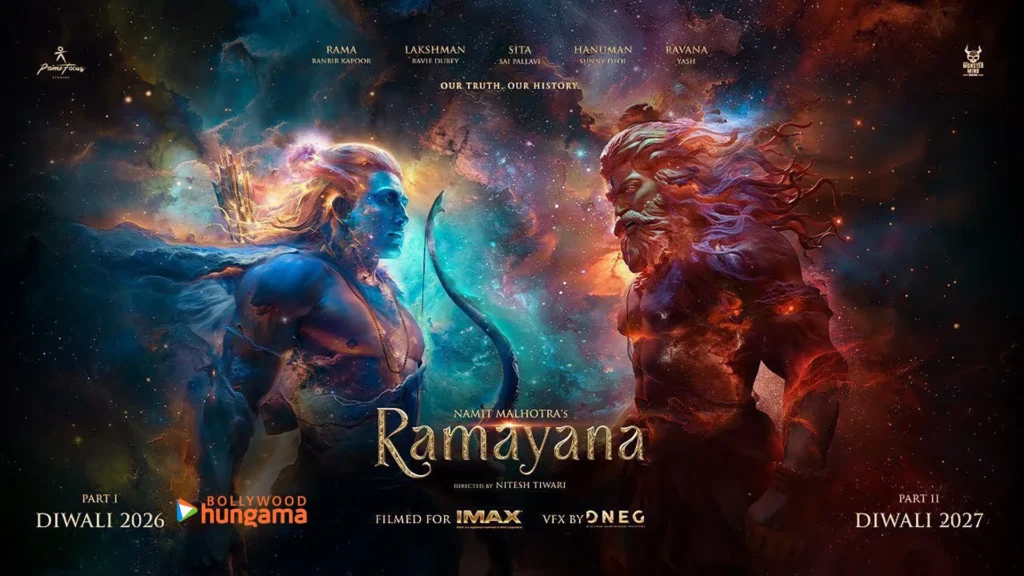
| Main cast | Ranbir Kapoor (Rama), Sai Pallavi (Sita), Yash (Ravana) |
| Other announced cast | Ravie Dubey (Lakshmana), Sunny Deol (Hanuman) |
| Languages announced by the studio | Hindi, Tamil, Telugu, Kannada, Malayalam, English |
| Rotten Tomatoes listed runtime | 3 hours 15 minutes (specific versions may differ) |
| US classification | PG-13 |
| Production | Prime Focus Studios in association with DNEG and Monster Mind Creations |
| Sequel timing | 2028 target, according to the producer; exact date not established |
Prime Focus Studios announced that Ramayana: Part One premiered in Los Angeles on October 27 and releases worldwide on November 5, 2026, in Hindi, Tamil, Telugu, Kannada, Malayalam and English. The studio lists Prime Focus Studios, DNEG and Monster Mind Creations as associated with the project. Rotten Tomatoes identifies Nitesh Tiwari as director; Ranbir Kapoor as Rama; Yash as Ravana; Sai Pallavi as Sita; Ravie Dubey as Lakshmana; and Sunny Deol as Hanuman. It lists a PG-13 US classification and a 195-minute runtime. IMDb has displayed a different international-length listing, so one duration should not be claimed for every version. Official studio release statement.
The title difference is not trivial. Google queries for ‘Ramayana Part 1 review’ and ‘Ramayana Rise of a Legend review’ may refer to the same production. A trustworthy article should clarify this once rather than invent two separate movies. For readers checking local cinemas, the relevant detail is which title and language version the theater is screening. Critical reactions to an English presentation may not match an original-language version in every respect.
The project is positioned as a large-scale mythology-based feature rather than an ordinary star vehicle. Its technical partners and international theatrical ambitions explain why comparisons with global event cinema appear so frequently. Yet production scale is a description of resources and creative ambition, not proof that a film has succeeded artistically. The next task is to examine the particular qualities that critics found moving, overextended or artificial.
The story: a familiar epic in a new cinematic form
The Ramayana is an ancient epic traditionally attributed to Valmiki, with centuries of retellings across languages, regions and performance traditions. Its central figures include Rama, Sita, Lakshmana and Ravana. Themes of responsibility, loyalty, exile, love, power and the consequences of moral decisions run through many versions. A contemporary film does not create these characters; it chooses how to translate a deeply established body of storytelling into the visual and dramatic language of cinema.
The official Rotten Tomatoes synopsis introduces a young prince and princess whose marriage and subsequent exile mark the beginning of a larger journey shaped by love, duty and destiny. That description is purposefully broad, and this article does not invent individual scenes beyond it. The movie is framed as the opening part of an extended adaptation, so viewers should not assume the whole epic is resolved in one installment.
The challenge for a filmmaker adapting such material is partly structural. An epic contains many relationships and events that matter because of their place within a much larger moral universe. Feature films must condense. Every minute allocated to an elaborate introduction or battle is a minute unavailable for a quiet conversation or a difficult character choice. Neither kind of scene is automatically preferable; the question is whether the final balance gives the audience a sense of consequence.
A divided critical reception, not one unanimous verdict
| Review outlet | Published score | Character of review |
|---|---|---|
| Screen Rant | 7/10 | Favorable toward the technical presentation |
| IndieWire | B | Positive about scale, with reservations |
| Next Best Picture | 5/10 | Mixed; questions narrative density |
| IGN | 4/10 | Critical of CGI, action and English-version lip-sync |
The Rotten Tomatoes listing consulted for this article displayed seven professional reviews and zero verified audience ratings at the time checked. Some reviews were positive, some mixed and others sharply negative. Screen Rant gave 7/10 and described the technical and visual achievement favorably. IndieWire graded the film B, recognizing its grand scale while expressing reservations about dramatic distinctiveness. Next Best Picture gave 5/10 and questioned whether the material was too densely packed to give characters sufficient space.
IGN’s 4/10 review took a much harsher view of the action, visual effects and the English version’s AI-assisted lip-sync treatment. Rotten Tomatoes also displayed criticisms from Culture Mix and NYC Movie Guru, including complaints concerning performances, dialogue and emotional engagement. It would be misleading to replace this range with a single word such as ‘acclaimed’. At the same time, it would be equally unfair to ignore the favorable reactions simply because the negative ones are more pointed.
The difference is valuable information. It suggests that the film succeeds, for some critics, as a monumental piece of audiovisual filmmaking while falling short, for others, as cohesive drama. That does not mean the argument is settled. Seven published reviews form a small sample, and additional international and Indian responses can change the visible pattern over time. Our assessment remains a transparent reading of the published evidence at the stated cutoff.
Ramayana: Rise of a Legend Review — New Indian criticism adds important context
Early international criticism is only one part of the reception. Reviews published in India on November 5 expand the picture considerably. India Today’s Vineeta Kumar was broadly enthusiastic about the visual worlds and the integration of music with action, while explicitly criticizing certain artificial-looking creatures and the conspicuous quality of some computer-generated imagery. This is useful evidence precisely because it is not a blanket endorsement: its favorable conclusion coexists with specific, observable reservations. India Today review.
Outlook India’s Aishani Biswas reached a much less favorable conclusion, awarding 2.5/5. Its review argued that the scale of the mythological world and Yash’s forceful portrayal of Ravana had not been matched by sufficient philosophical or emotional richness. It raised specific objections to the treatment of Rama, Sita and Bharat. This matters because it demonstrates disagreement among Indian critics too, not a simple geographical split in which India praises the film while international reviewers reject it. Outlook review.
The Guardian’s review, published November 4, was positive about the film’s sense of adventure, expansive scenery and engagement with the familiar story. It is a useful counterpoint to the more critical responses collected by Rotten Tomatoes. Together, these reports support a measured editorial conclusion: the movie’s scale is evident across the review spectrum, but the artistic value attached to that scale differs considerably. The Guardian review.
It would be tempting to invent an average score from these heterogeneous reviews. That would mislead readers. A letter grade, an out-of-ten score and an out-of-five score are products of different critical standards; their numerical conversion does not create an authoritative consensus. The question is not which publication should win an argument, but which criticisms are relevant to a reader’s preferences. Someone who prizes visual immersion may share India Today’s enthusiasm, while someone especially concerned with character depth may find Outlook’s concerns more compelling.
This section was updated using reviews available on November 5. Additional reviews may alter the visible balance, so a dated summary is more credible than announcing a permanent or universal verdict.
Ranbir Kapoor as Rama: the difficulty of restrained heroism
Rama is not a conventional action protagonist whose moral identity can be communicated only through defeating enemies. His place in the epic involves restraint, duty, difficult commitments and the responsibilities of an ideal figure. For an actor, that presents an unusually difficult challenge. Emotional volatility can create immediate dramatic excitement; composure requires subtler methods to convey conflict.
Ranbir Kapoor’s casting puts a recognizable contemporary star in a role that many viewers already carry in their imaginations. The creative question is not simply whether he looks convincing in costume, but whether the performance communicates dignity and feeling without becoming static. A well-written restrained character can be deeply compelling when the audience sees the cost of their decisions. If the screenplay moves too quickly past important relationships, even a careful performance may struggle to create that sense of intimacy.
Published reviews disagree about the overall effectiveness of acting and characterization in the film, and this article does not pretend to resolve the matter by describing specific facial expressions or dialogue from a viewing that never occurred. The grounded conclusion is that casting Rama demands a different kind of screen presence from a conventional modern action role. Viewers deciding whether to attend can use critics’ detailed observations to judge whether the adaptation’s style matches their preferences.
Yash as Ravana: scale, authority and characterization
Yash became widely recognized beyond Kannada cinema through the KGF films, in which his imposing screen identity was a major attraction. Ravana offers opportunities for similar visual authority, but the character has a longer and more complex history than a standard antagonist. Across retellings he may be depicted as powerful, learned and deeply flawed, with pride playing a central role in his downfall. An adaptation that emphasizes power alone risks flattening that complexity.
In a film featuring a restrained protagonist, a forceful antagonist can naturally command attention. This is not proof that the villain is better written. It reflects the dramatic contrast between modes of performance: authority and excess are often immediately theatrical, while ethical struggle can depend on quieter scenes. Strong criticism should look beyond whether a character makes an impressive entrance and ask whether the decisions that follow are understandable and meaningful.
Yash’s presence is a major part of the movie’s publicity and audience anticipation, but the available evidence does not justify inventing scene-by-scene praise or claiming that one actor ‘steals every scene’ as a verified fact. Those statements belong to attributed reviews where made. For prospective viewers, the value of the role lies partly in seeing how a contemporary blockbuster performer interprets a complex figure from a major storytelling tradition.
Sai Pallavi as Sita: why the relationship is central
Sita is a central character, not a decorative motive for male conflict. Her importance in the Ramayana encompasses personal conviction, dignity, resilience and the ethical questions surrounding family and responsibility. Different literary and cultural traditions emphasize those qualities in distinctive ways. A film that aims to reach a global audience must make her significance legible without collapsing it into a single simplistic description.
Sai Pallavi is widely associated with an expressive, comparatively naturalistic acting style. That reputation makes the role interesting in a production built around visual magnitude. Emotional connection in a vast epic often arises from the smaller interpersonal moments: trust, vulnerability, disagreement and the weight of shared decisions. A large set cannot substitute for such development, and a beautiful costume cannot by itself create a believable relationship.
Several critics’ broader concerns about dense storytelling are relevant here. If important relationships are compressed in order to accommodate many events, viewers new to the mythology may not fully understand why later developments carry such emotional force. Conversely, audiences already attached to the original epic may supply meaning from their own familiarity. That gap between groups helps explain why a film can feel deeply moving to some and insufficiently developed to others.
Directing an epic: what Nitesh Tiwari had to decide
Nitesh Tiwari’s earlier well-known films include Dangal and Chhichhore, works associated with human relationships and accessible emotional storytelling. His Ramayana involves far larger visual and narrative ambitions. In a huge production, a director must coordinate performances, effects, costumes, music, pacing and story structure. The achievement of organizing that scale deserves recognition without exempting individual creative choices from scrutiny.
The key directorial problem is selection. A feature cannot give equal attention to every person and event in an immense epic. The filmmaker must decide what is essential to this chapter, which conflicts should be emphasized and what material can wait for later installments. If too many major beats arrive in rapid succession, an audience may grasp the outline while missing emotional texture. If the film pauses too often, it risks losing momentum.
That tension appears repeatedly in published reactions. Some reviewers find the result thrillingly expansive, while others find it exhausting or overstuffed. Neither description can be reduced to a personal bias against the genre. They refer to how much information and spectacle the film asks viewers to absorb. The editorially useful question is whether that density supports the characters or overwhelms them.
Visual effects: achievement and inconsistency can coexist
DNEG’s involvement and the production’s elaborate fictional world place visual effects at the center of its identity. A mythological epic asks digital artists to help construct spaces, imagery and phenomena that cannot be photographed conventionally. Visual-effects artistry can make such a world convincing, but success depends on more than the number of impressive shots.
Scale, lighting, physical interaction, editing and continuity are crucial. A digital environment can feel tangible when people behave naturally within it and the camera gives viewers a coherent sense of space. Conversely, a polished computer-generated image can feel distant if it lacks physical weight or exists primarily to announce its own sophistication. Cinematic immersion is a relationship among visual design, performance, sound and story.
Published reviewers have praised Ramayana‘s design and technical scale while others have criticized some CGI. This is not an irreconcilable contradiction: one movie can contain exceptional sequences and weaker ones. A fair account should acknowledge both. Without personal access to the appropriate theatrical prints, it would be inappropriate to manufacture a technical breakdown of specific frames. The sources support a more cautious conclusion: the visual effects are an important attraction, but their consistency is contested.
The English-language version and AI-assisted lip-sync
The film’s official worldwide release includes English among its languages. That supports accessibility for audiences who may not be comfortable with Hindi or subtitles. It also creates another layer of adaptation: vocal performance, dialogue rhythm and cultural meaning must be transferred across languages. A dubbed or modified version is not always artistically identical to the original presentation.
IGN criticized AI-assisted lip synchronization in the English version. The criticism matters because audiences judge a performance partly through the relationship between voice and face. Technology that adjusts mouth movement may make speech look more closely synchronized in one sense while creating a feeling of artificiality in another. This does not prove that every audience member will notice or dislike the effect, but it is a legitimate issue to investigate when evaluating international localization.
For readers, the practical advice is to check what version local theaters offer. Someone comfortable with subtitles might prefer the original Hindi presentation, while another viewer may prioritize English dialogue. A review that does not identify the version watched can unintentionally generalize a localization-specific concern to every presentation. That distinction should be part of responsible global film coverage.
What the director confirmed about AI dubbing and lip movements
There is an important technical distinction in the discussion of artificial intelligence. Some online descriptions loosely suggest that AI generated the English performances. Director Nitesh Tiwari gave a more limited explanation at the Los Angeles premiere: the spoken dialogue was recorded by real voice artists, while AI was used to help synchronize the actors’ visible lip movements with the dubbed language. Mid-day reported that clarification on October 28. Read the director’s clarification.
That distinction is not a defense of the finished effect; it is a factual description of the filmmakers’ stated method. A critic can still find the lip movements distracting, artificial or counterproductive. IGN’s published negative assessment raised that concern, while other reviewers focused more on the ambition and spectacle than on localized dialogue. Readers should therefore separate three questions: Was synthetic voice acting used? What did the director say? And did the adapted lip movements work aesthetically in the version a critic saw?
International localization deserves this precision. A performance combines an actor’s image, dialogue rhythm, body movement and voice. A second-language version may involve new performances from dubbing artists and potentially changes to mouth motion. It can increase accessibility, yet it may also change how an audience perceives acting. The existence of this process is confirmed by the director’s statement; the assessment of its quality remains a matter of criticism and audience experience.
For a reader choosing tickets, our recommendation is practical rather than ideological. Check whether the screening is Hindi with subtitles or an English dub. If understanding the original spoken performance is your priority, a subtitled original-language screening may be more appealing. If following the story without reading subtitles matters more, the English version may be preferable. Neither choice guarantees a better movie, and an article should never describe a review of one language version as though it proves exactly what every viewer will experience in every territory.
Music and the expectations surrounding the score
Prime Focus Studios identifies a collaboration between A. R. Rahman and Hans Zimmer. The pairing is striking because both composers have substantial international reputations, yet their names do not guarantee that any individual cue will be memorable. A film score must complement dramatic rhythm and help characters’ emotional experiences register. In a mythology-based project, music may also carry religious or cultural associations that differ from the expectations of international fantasy audiences.
For viewers familiar with prior Ramayana adaptations, certain musical idioms may feel especially natural, while a modern orchestral approach may be experienced as an interpretive choice. For new viewers, the score may serve as a primary guide to the emotional stakes. Those responses can differ without implying that one is more sophisticated. The challenge is to create music that feels connected to this cinematic world rather than merely signaling that the production is expensive.
Because the published critical sample is small and the sources reviewed do not provide a complete cue-by-cue music analysis, this article avoids unsupported claims about specific songs, instruments or standout scenes. A credible review can discuss the importance of the collaboration and the criteria by which music should be assessed without pretending to have heard and evaluated each composition firsthand.
Production design and the meaning of a cinematic world
The visual design of kingdoms and characters is especially important in a story that moves between distinct moral and political environments. Costumes, architecture, color and spatial scale can tell viewers a great deal about status and authority before any dialogue begins. Such design decisions are not merely decorative. They can communicate the kind of society a character inhabits and the values that shape daily life.
Several published reviews appreciated the film’s sets and costumes, even while expressing dissatisfaction with other elements. That split is revealing: excellent craft departments can produce striking images within a screenplay that a particular critic finds uneven. A film should be evaluated as a whole without erasing the contributions of specialists. It is possible to praise design achievements while being critical of a story’s rhythm.
The question for international audiences is whether the images carry understandable narrative information or require outside familiarity. Rich visual symbolism can reward knowledgeable viewers, but an adaptation also needs to orient newcomers. Effective production design supports both by making a world coherent and emotionally expressive. Poorly integrated design, however elaborate, risks becoming an exhibition instead of a setting for drama.
Pacing and the cost of a long runtime
Rotten Tomatoes lists the movie at three hours and fifteen minutes. IMDb has displayed a shorter listing, which is one reason to verify local versions before using an exact duration in ticketing guidance. A long runtime is not inherently a defect; many epic films use length to create complex relationships and a sense of historical or mythological scale. The issue is whether that time is allocated in ways that sustain attention and reward viewers.
A film can feel rushed and slow at the same time. It may introduce many events rapidly, leaving characters underexplained, then pause for prolonged action or exposition. Some of the reviews suggest precisely this tension in Ramayana. The statement is about critical interpretation, not a stopwatch measurement made by this article’s author.
For viewers, the practical consequence is simple. If they enjoy elaborate world-building and extended event cinema, the length may be part of the attraction. If they prefer concise drama, the criticisms about narrative density deserve attention. Premium seating, subtitles and the need for a break may also affect how comfortable the screening feels, but none of those variables turns the movie into a different piece of storytelling.
Does Part One work as a standalone film?
Multi-part adaptations create a special challenge. A first installment must introduce its world and prepare future conflict, but it also needs to provide enough internal development that viewers feel they have watched a meaningful story rather than an expensive introduction. Franchise structure can be a creative advantage when it allows characters to grow slowly. It can also become an excuse to postpone narrative satisfaction.
The movie’s title makes its position in a larger project explicit. That helps set expectations, but it does not remove the obligation to shape a coherent first chapter. Critics concerned about overcrowding or an incomplete dramatic voice are responding partly to this balance. Other reviewers may be more willing to accept deferred resolution as a necessary feature of adapting a vast epic.
For readers deciding whether to attend, the safest advice is to expect an opening chapter rather than a complete presentation of every event traditionally associated with the Ramayana. Avoid social-media threads promising precise endings or cliffhangers if they provide no trustworthy evidence. We have not inserted invented scene descriptions into this spoiler-light analysis.
How international viewers might experience the story
Many international viewers will know relatively little about the Ramayana, even though it has profoundly influenced storytelling and culture across South and Southeast Asia. The film therefore serves two audiences simultaneously: people emotionally invested in familiar characters and people discovering them. The same scene may be experienced differently by those groups because prior knowledge supplies expectations, associations and historical context.
Universal themes can help bridge the difference. A story about family responsibilities, difficult choices and the misuse of power does not require all viewers to share the same beliefs. Yet cultural specificity should not be stripped away merely to fit a conventional Hollywood fantasy template. The Ramayana has its own philosophical framework and a history of interpretation that deserves to remain visible.
A responsible global review should neither exoticize that tradition nor assume every viewer shares one interpretation. It can explain why characters matter, name the creative choices documented by critics and acknowledge that emotional connections differ. Such framing produces a more useful introduction than portraying the film as simply an ‘Indian Lord of the Rings’, a comparison that can obscure more than it clarifies.
Family viewing and content guidance
Rotten Tomatoes lists the film as PG-13 in the United States for violent and bloody imagery. Parents should check the classification and content notes in their local market, where ratings can differ. The Ramayana’s broad familiarity as a cultural story does not mean every filmed action sequence will be comfortable for all children. Individual sensitivities and the film’s substantial length matter as much as the general subject.
Families may find value in discussing the characters’ choices after watching. The epic provides opportunities to talk about loyalty, responsibility, courage and the consequences of pride. However, the cinematic adaptation should not be treated as the sole or definitive source for understanding a tradition with many textual and performance versions. Reading about the epic or comparing interpretations can make the movie a starting point for thoughtful conversation rather than a final authority.
International families who prefer subtitles, dubbing or specific theater formats should confirm availability before attending. The experience can change depending on the language presentation, particularly when a film has prompted technical discussion about localization. Such practical guidance is more helpful than a blanket declaration that every child or adult will enjoy the film equally.
Box-office excitement does not settle critical quality
Pre-release reporting showed substantial advance-ticket demand. Hindustan Times cited approximately ₹105 crore in worldwide advance bookings by November 3, including around $5 million overseas. Those figures demonstrate commercial anticipation, but they are not a substitute for film criticism. A movie can open strongly and still divide reviewers; a modest commercial performer can later become highly regarded. Revenue and artistic merit are related only indirectly.
Advance bookings across future dates also should not be mistaken for final opening-day collection. On the morning of November 5, a completed full-day worldwide box-office figure was not yet available. This article therefore avoids inventing a commercial record or suggesting that the entire production budget has already been recovered.
The relevant question for a viewer is whether the film’s strengths align with personal interests. Box-office records may indicate public enthusiasm, but they cannot tell someone whether the screenplay will feel compelling or whether a particular performance will move them. A nuanced review respects both the industrial significance of a big production and the independent question of artistic achievement.
The comparison with earlier Ramayana screen adaptations
Previous adaptations form part of the expectation around the new film. Indian audiences have encountered the Ramayana through television, animation, theater and cinema, and their memories of those works may influence reactions. Some may prioritize fidelity to a beloved version’s dialogue, visual iconography or emotional rhythm. Others may welcome a newly imagined cinematic scale. The mere fact of difference does not automatically constitute either an improvement or a betrayal.
The 2023 film Adipurush also became a point of reference in discussion of the effects, dialogue and choices involved in retelling the epic. Yet comparisons must be specific. One adaptation may have more sophisticated effects while another has moments a particular audience finds emotionally memorable. Calling the newer film superior in every aspect solely because its production is larger would be a weak argument.
For a global audience, explaining that a major story has many prior tellings is important. Adaptations are artistic interpretations. They should be evaluated for clarity, dramatic integrity and sensitivity to the material, not treated as the only possible representation of a complex tradition. The current film’s reception is one part of that continuing history.
Ramayana Part Two: confirmed 2028 plan, and what remains uncertain
The sequel’s timetable is a material update. Reports published on November 4 and 5 quote producer Namit Malhotra confirming that the next installment has shifted from the earlier 2027 plan to 2028. The Indian Express also reports that the production team may reconsider the number of installments and potentially return to a trilogy structure depending on how the first film is received. These are current production plans, not proof that a third movie has been formally commissioned or given a release date. The Indian Express report.
This announcement matters artistically as well as commercially. Part One has been criticized by several reviewers for feeling like an elaborate beginning rather than a complete narrative. A longer interval between installments can make that first-chapter structure more noticeable. The time may help the filmmakers refine the follow-up, but the announcement alone does not establish what the second film’s quality or final structure will be.
For audiences, the simplest dependable answer is that the producers are now targeting 2028 for Part Two. Any more specific claim, including an exact international opening date or the final number of films, should await a formal update from the studio. An ethical entertainment publication should preserve that distinction, especially when earlier promotional materials still show the former 2027 timetable.
What the reviews tell us, and what they do not
The accessible evidence supports several clear observations: the movie is technically ambitious; professional critics disagree about its success; visual design is a frequent focus of praise; pacing, character development and certain effects are recurring complaints; and the English-language lip-sync technique has attracted criticism. These are useful conclusions because they can be traced to actual published reviews and studio information.
The evidence does not support an invented Epicofilm star rating based on a nonexistent screening. It does not confirm that all audiences love Yash, that every song was acclaimed or that particular scenes caused standing ovations unless a traceable report specifically describes them. It cannot tell readers what a critic who has not yet published will think, nor should a small early sample be generalized to the world’s entire moviegoing population.
A well-written article can still offer an editorial recommendation by describing who is likely to find the film appealing. That is what this review does. It weighs the pattern of reported responses and the kind of experience the production offers, without pretending to replace the direct observation of a critic who attended a screening.
Related coverage on Epicofilm
For a more focused comparison of critical reception, read our Ramayana vs Godzilla Minus Zero reviews. For a casting-focused explainer, see who plays young Ravana in the Ramayana film. These are existing Epicofilm pages rather than invented or unpublished links. The present article remains the principal global review overview.
Final verdict: is Ramayana worth watching?
For fans of elaborate mythology and large-screen fantasy, Ramayana: Rise of a Legend is worth considering as a major theatrical event. Its documented production ambition, visual design and high-profile cast are meaningful attractions. Viewers should nevertheless enter with balanced expectations because the published critical response is significantly divided, particularly around pacing, character development and some technical choices.
The strongest positive notices suggest that the film achieves imposing visual scale. The less favorable reviews suggest that visual sophistication does not always create equally compelling drama. Those positions are not mutually exclusive. A film can be an important industrial undertaking and still have creative weaknesses. It can also have flaws without forfeiting all of its emotional or cultural value.
Our final research-based assessment is therefore deliberately qualified: an ambitious first chapter that has generated real admiration for its spectacle and real criticism for its storytelling. The best decision is to choose based on interest in the source tradition, tolerance for a long runtime and preferred language presentation. A firm firsthand verdict belongs to a disclosed firsthand screening; this article instead provides a transparent synthesis of what is currently known.
Frequently asked questions
1. What is Ramayana: Rise of a Legend about?
It is a cinematic adaptation of the Ramayana, introducing the journey of Rama and Sita and the larger conflict involving Ravana. The official synopsis emphasizes marriage, exile, love, duty and destiny.
2. Is Ramayana: Rise of a Legend the same as Ramayana: Part One?
Yes. Prime Focus Studios uses Ramayana: Part One in its worldwide announcement, while Rotten Tomatoes lists Ramayana: Rise of a Legend. They refer to the same 2026 film.
3. When did the film release worldwide?
The official studio release date is November 5, 2026. The production held a Los Angeles premiere on October 27 before the theatrical rollout.
4. Who plays Rama?
Ranbir Kapoor portrays Rama. The role is central to the epic’s exploration of duty, responsibility and moral decisions.
5. Who plays Ravana?
Yash portrays the adult Ravana. He is one of the film’s three central advertised stars alongside Ranbir Kapoor and Sai Pallavi.
6. Who plays Sita?
Sai Pallavi portrays Sita. Her character is central to the epic’s relationships and emotional stakes.
7. Who directed the movie?
Nitesh Tiwari directed the film. Rotten Tomatoes and the official production materials identify him in that role.
8. How long is Ramayana 2026?
Rotten Tomatoes lists 195 minutes. IMDb has displayed another runtime for its listing, so confirm the length of the specific version offered at your local theater.
9. Is Ramayana getting good reviews?
Some reviews are favorable and others negative or mixed. Screen Rant gave 7/10, IndieWire B, Next Best Picture 5/10 and IGN 4/10 in the sources reviewed.
10. What is the Rotten Tomatoes score?
The accessible November 5 listing displayed seven professional reviews without a reliable aggregate number suitable for quoting here. Check the live Rotten Tomatoes page for any subsequently published aggregate.
11. Is the movie available in English?
Yes. Prime Focus Studios lists English among its release languages. Check the actual audio version offered at your theater.
12. Does the English version use AI lip-syncing?
IGN’s published review criticized AI-assisted lip synchronization in the English presentation. That is an attributed critical observation, not an independent technical inspection conducted by Epicofilm.
13. Who composed the music?
Prime Focus Studios confirms a musical collaboration involving A. R. Rahman and Hans Zimmer.
14. Is Ramayana suitable for children?
The Rotten Tomatoes US listing carries a PG-13 classification with violence-related content guidance. Parents should consider local ratings, individual sensitivities and the movie’s length.
15. When is Ramayana Part Two expected?
The producer has moved the sequel’s planned release to 2028, according to November 2026 reporting. A possible trilogy has been discussed but not confirmed as a finalized release schedule.
16. Is the story complete in this film?
The title identifies it as Part One of a larger adaptation. Viewers should expect the opening chapter rather than the complete traditional epic in one film.
17. Is the movie worth an IMAX ticket?
It is promoted as a major theatrical spectacle, but the value of a premium ticket depends on the local cinema, format, budget and viewer preferences. A larger screen cannot guarantee stronger storytelling.
18. Did Epicofilm watch the film for this review?
No. This is an explicitly research-based critical reception analysis. No fabricated firsthand viewing, interview or personal star score is implied.
19. Did AI replace the actors’ English dialogue voices?
No such conclusion follows from the director’s explanation. Nitesh Tiwari said that real artists recorded the voices and AI was used for lip synchronization, according to Mid-day’s premiere report.
20. Why do Indian and international critics disagree?
Reviews differ within India as well as internationally. The major disagreements concern the balance of scale and emotional storytelling, acting, narrative density and the use of digital effects. Individual viewing preferences and language versions can affect responses.
Source references
- Prime Focus Studios — worldwide theatrical launch
- Rotten Tomatoes — film listing and critical reviews
- The Guardian — review
- Cinema Express — director clarification on AI lip-sync
- E! News — producer interview about the 2028 sequel
- Official release statement: https://www.primefocusstudios.com/news/ramayana-premieres-in-los-angeles-ahead-of-worldwide-release
- Rotten Tomatoes film details and critics: https://www.rottentomatoes.com/m/ramayana_rise_of_a_legend
- Hindustan Times international critical response summary: https://www.hindustantimes.com/entertainment/bollywood/ramayana-international-reviews-hail-visuals-overstuffed-exhausting-narrative-needed-game-of-thrones-style-tv-adaptation-ranbir-kapoor-yash-sai-pallavi-101793422642105-amp.html
- Studio statement on music and streaming partnership: https://www.primefocusstudios.com/news/prime-focus-studios-partners-with-jiohotstar-to-bring-ramayana-to-wider-audiences
- IMDb film listing: https://www.imdb.com/title/tt27988879/
- The Guardian review: https://www.theguardian.com/film/2026/nov/04/ramayana-rise-of-a-legend-review-indias-most-expensive-film-ever-becomes-spectacular-huge-scale-epic
- India Today review: https://www.indiatoday.in/movies/reviews/story/ramayana-part-1-review-ranbirs-rama-yashs-ravana-in-a-spellbinding-epic-for-the-ages-3032286-2026-11-05
- Outlook review: https://www.outlookindia.com/art-entertainment/movie-review/ramayana-rise-of-a-legend-review-nitesh-tiwaris-spectacle-of-gods-and-demons-loses-the-soul-of-the-epic
- Director’s AI clarification: https://www.mid-day.com/entertainment/bollywood-news/article/ramayana-director-nitesh-tiwari-clarifies-the-use-of-ai-in-the-film-dubbing-23657384
- Producer’s sequel update: https://indianexpress.com/article/entertainment/bollywood/ramayana-producer-namit-malhotra-hints-at-trilogy-confirms-part-2-shifted-to-2028-10950159/
Editorial update policy: Research checked November 5, 2026, including Indian reviews and the producer’s revised sequel plan. Ratings, local runtimes and audience responses can change. Readers can submit factual corrections with supporting sources through our Contact Us page.
Editorial standard: Live scores and theater listings can change. Source-based criticism is attributed; no first-hand screening is claimed.