
Ramayana Film Young Ravana Actor: 7 Verified Facts
Ramayana Film Young Ravana Actor: This is Epicofilm’s research-based, source-attributed guide updated November 5, 2026. It distinguishes verified facts from opinions, preliminary reports and changing figures.
The answer: According to reporting published by NDTV on November 2, 2026, Raghav Malhotra, the elder son of Ramayana producer Namit Malhotra, plays the younger version of Ravana in Nitesh Tiwari’s film. Actor Yash portrays the adult Ravana. NDTV attributed an explanation about Raghav’s physical resemblance to Yash to an unnamed source close to the production. This is a reported casting detail, not a first-hand statement independently obtained by Epicofilm or a publicly documented audition record. https://www.ndtv.com/entertainment/meet-the-young-ravana-in-ramayana-hes-producer-namit-malhotras-son-12269843
The question ‘Who plays young Ravana in Ramayana?’ has become a rising search query as the movie reaches theaters. The film released worldwide on November 5, 2026, and appears under the names Ramayana: Part One and Ramayana: Rise of a Legend in different public-facing listings. For viewers who recognize Yash from the KGF series, the idea of a separate performer portraying an earlier stage of Ravana’s life naturally raises curiosity. It also creates questions that must be answered carefully: who has actually been identified, what connection does the actor have to the production, and what do we genuinely know about the role?
This article distinguishes the reported casting fact from unanswered questions about screen time, the audition process, the scope of the younger character and any possible origin-story scenes. That distinction is essential. Entertainment reporting often begins with a reliable identification and then grows into a collection of invented biographical details. We will not add a birth date, educational history, number of scenes or unverified quotes merely because readers may be searching for them.
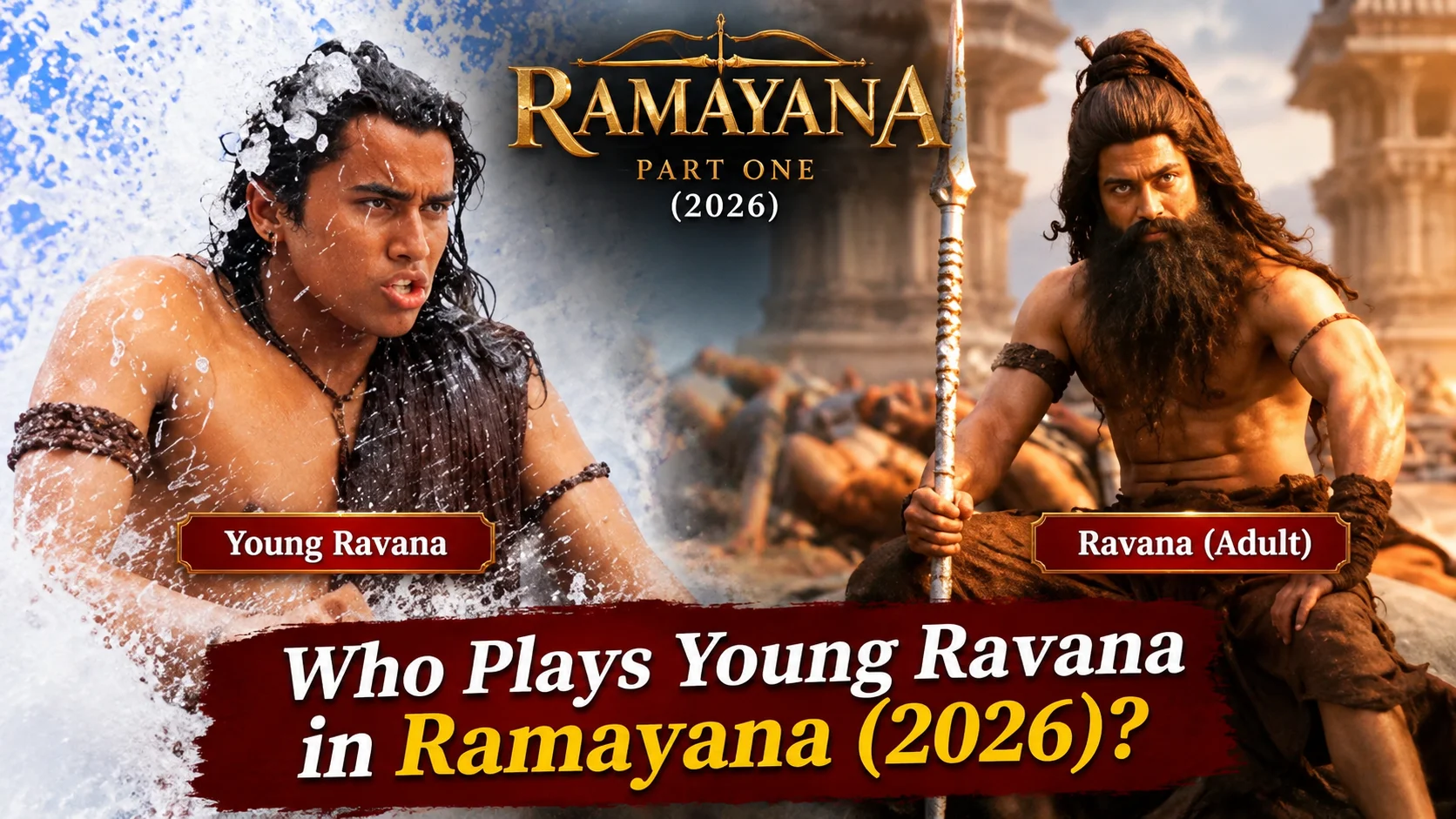
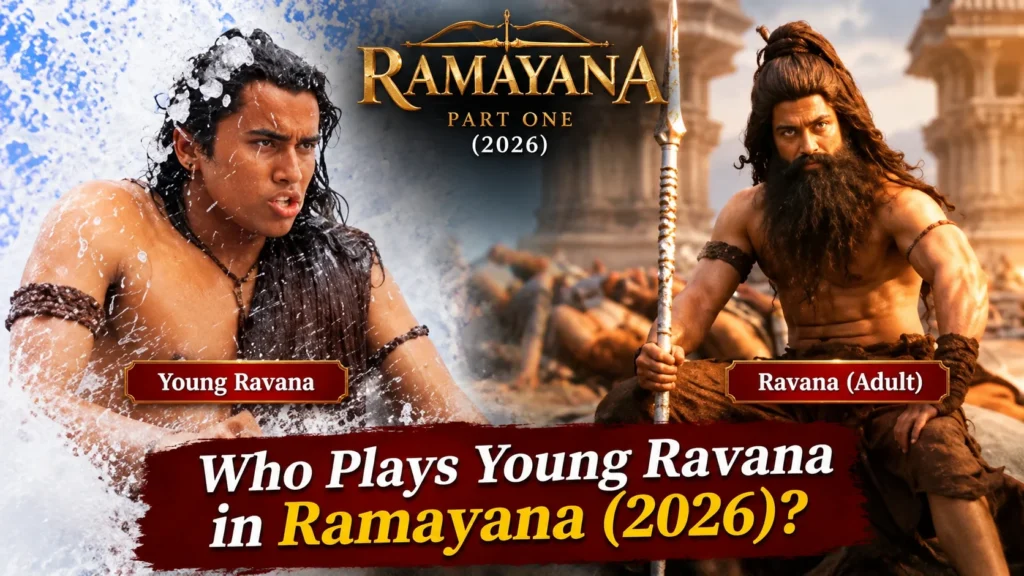
Original editorial artwork; not an official film still, actor photograph, or authenticated documentary image.
Ramayana Film Young Ravana Actor: The verified casting picture at a glance
Nitesh Tiwari directs Ramayana, with Ranbir Kapoor playing Rama, Sai Pallavi playing Sita, Yash playing the adult Ravana and Ravie Dubey appearing as Lakshmana. Those principal cast details are also reflected in the film’s Rotten Tomatoes listing. The production involves Prime Focus Studios, DNEG and Monster Mind Creations, according to the studio’s own release announcements. The movie’s international theatrical release date is November 5, 2026. These are useful anchors for placing the younger Ravana report in the correct project, rather than mixing it with an earlier Ramayana adaptation or another film featuring the same mythological figure.
The casting update comes from NDTV, which identifies Raghav Malhotra as Namit Malhotra’s elder son and reports that he plays young Ravana. It further reports, based on a source close to the film, that his physique resembles Yash’s strongly enough to support the choice. The wording matters. A claim attributed to an unnamed production source should not be rewritten as though Yash or the director personally confirmed every detail in an on-record interview.
At the time of this fact-check, the reviewed official studio statement confirms the film and its lead-team participation but does not provide a detailed public biography of Raghav or the number of minutes he appears. We therefore treat the NDTV identification as reported entertainment news, while recognizing a clear boundary around information that has not been independently documented.
Who is Raghav Malhotra?
The most concrete publicly reported information relevant to this article is that Raghav is the elder son of producer Namit Malhotra and was cast as the younger Ravana. This identity helps explain why searches for the actor’s name and searches for ‘Namit Malhotra son’ have become related. Beyond that, a responsible profile should be deliberately restrained. Family connection is verifiable through the cited report; age, schooling, training, representation and wider filmography require separate reliable evidence.
Profiles of young or emerging performers are sometimes padded with personal information that has no clear public source. A misleading page might invent a date of birth, claim that someone studied at a prestigious acting school, or assert that a particular performance was their professional debut. Those details can be copied by other websites and eventually look established even though they originated with guesswork. Epicofilm will not participate in that process. If a verified interview or credit listing subsequently appears, the profile can be updated with an explicit date and source.
There is also no need to turn a casting report into an intrusive examination of a producer’s family. The public-interest reason to discuss Raghav is his role in a released film and its relevance to audience questions. Personal material unrelated to that role does not improve the answer. A concise, accurate profile is often more valuable than a sensational biography that creates reputational risk for both subject and publisher.
Who plays the adult Ravana?
Yash is the adult Ravana in the 2026 film. He is widely known for his work in Kannada cinema and the KGF films, which helped bring his screen persona to large audiences beyond his original language market. The Ramayana role is a different creative challenge. Rather than portraying a contemporary fictional protagonist, he appears as an enormously significant character in an ancient storytelling tradition, one that many viewers know through literature, performance and religious culture.
The decision to cast a younger counterpart means the filmmakers must establish some continuity between performers if the film directly depicts the character across different periods of life. That continuity could involve physical appearance, posture, costume, voice or the way a scene is constructed. However, those are general filmmaking possibilities. Without a verified scene breakdown or firsthand viewing, they should not be described as specific techniques that were definitely used on this production.
The adult character’s familiarity to audiences also means any report about the younger actor has search value. A viewer who knows Yash is playing Ravana might reasonably wonder whether an image seen in promotional material features the same performer or someone else. The accurate answer is that an additional performer has been reported for the younger version; the precise depiction should be understood from credited footage, verified studio materials or reliable published criticism.
Why might a film cast two actors for the same character?
Casting a younger and older actor is an ordinary storytelling method when a film includes events from different stages of a character’s life. In some productions, the younger performer appears only briefly; in others, the earlier period becomes essential to the plot. Casting can emphasize resemblance so the audience recognizes the character immediately, or it may rely on costume, dialogue and context to make the connection clear. There is no single technique that all directors must use.
A film may also choose a different actor because extensive digital de-aging is costly, technically challenging or stylistically undesirable. That does not prove that digital de-aging was considered and rejected for Ramayana. It is simply a reason that explains why this type of casting exists in cinema. Readers should distinguish an explanation of general industry practice from a claim about private production decisions.
For a character as visually distinctive as Ravana, the casting choice can be particularly noticeable. Audience expectations are shaped by the adult actor’s appearance and persona. A credible younger portrayal should feel connected to the eventual adult characterization without necessarily imitating it. The best test will always be the finished scenes and performances, not a promotional comparison photo by itself.
Why the resemblance to Yash is part of the news
NDTV’s report cites a source close to the film describing a strong physical resemblance between Raghav and Yash. This helps explain how the news was framed, but it should not become an unqualified claim that the two look identical or that Raghav performed as a body double. The report uses the resemblance as an explanation offered by a source. It does not establish the full casting process or the duties associated with the role.
A body double and a younger character performer are different kinds of work. A double might substitute for a lead actor in certain shots, while a younger character actor may portray an earlier version of the fictional person in fully staged scenes. The fact that a source compares someone’s appearance to a body double does not, by itself, prove that the person was employed in that professional capacity. Small distinctions like this are exactly where entertainment reporting can become unintentionally misleading.
Readers also need to be careful with social-media collages. An image showing two faces side by side is not evidence of an official credit, and a fan-generated likeness comparison cannot independently establish who appears in a film. Where available, production credits, studio statements and established reporting offer stronger evidence than reposted captions.
What is Ravana’s place in the Ramayana tradition?
Ravana is one of the principal figures in the Ramayana, generally associated with the kingdom of Lanka and his conflict with Rama. His portrayal varies among traditions and regional retellings. He is often represented as a powerful ruler whose knowledge, spiritual devotion and formidable abilities coexist with pride and decisions that bring severe consequences. An article about his cinematic casting should respect that complexity rather than reducing him to an interchangeable fantasy villain.
For an audience new to the story, the broad contrast between Rama and Ravana can be understood through competing decisions, values and the use of power. But familiar viewers may bring much richer interpretations of both characters. Some traditions emphasize Ravana’s learning; others dwell more heavily on arrogance and wrongdoing. It would be inaccurate to declare that every retelling treats his early life in precisely the same way.
An adaptation may draw from particular versions of the epic or invent cinematic transitions between known events. Identifying a younger actor does not reveal which textual episodes or interpretive traditions the film uses. Without documented screenplay details, any confident claim about ‘young Ravana’s origin scene’ would be speculation. The thoughtful approach is to explain why younger portrayals can matter while keeping the actual film’s scenes separate from assumptions.
Does the casting prove the film contains a Ravana origin story?
No. A report identifying a younger version of a character is not enough to establish that the film contains a full origin story. The character might appear in a short flashback, a longer historical sequence, a brief transitional image or a scene whose dramatic purpose becomes clear only in the completed film. Describing one of those possibilities as confirmed would invent plot information.
This is an especially important distinction for a multi-part epic. Audiences understandably expect extensive world-building, but marketing and casting news often reveal less about structure than fans imagine. One credited role may attract many speculative videos that attempt to reconstruct the screenplay. If those videos offer no verifiable sources, their certainty should not be repeated in an editorial article.
An accurately written headline should therefore answer ‘Who plays young Ravana?’ rather than promise ‘The shocking origin story of Ravana revealed’ when no such revelation has been documented. Useful specificity is better than dramatic exaggeration. Search engines and human readers both benefit from pages that deliver the information they advertise.
The importance of the producer connection
Namit Malhotra is the producer associated with the project and Prime Focus Studios. The company’s official announcement describes a collaboration with DNEG and Monster Mind Creations and confirms a worldwide release strategy. His connection to Raghav is part of the NDTV story and therefore relevant context. But the family relationship alone cannot tell readers whether a casting decision followed a public audition, a private screen test or another production process.
A responsible article can discuss the legitimate questions that arise when someone related to a producer appears in a film. Audiences may be curious about opportunities, selection criteria and the performance itself. Yet journalistic fairness requires evidence before making accusations or dismissing the actor’s abilities. A family connection is a fact; a claim that the casting was unearned is an opinion needing a factual basis if it is to be expressed as a serious allegation.
The evidence currently available supports a limited conclusion: NDTV reports the role and relationship, and its source cites resemblance to the older actor. Additional details remain unverified in the material reviewed. This is not an attempt to avoid scrutiny; it is a commitment to separating what is known from what is merely possible.
Why cast news travels quickly before a film release
Major film launches generate many layers of search interest. Fans first look for the headline stars, then supporting roles, plot details, background music, release formats and critical reactions. As the movie reaches theaters, a previously minor casting detail can suddenly become the question people type into a search box. The trend demonstrates that readers want a direct answer; it does not prove a particular number of worldwide searches or show how many readers will visit any website.
Google Trends measures relative search interest. Its breakout labels are indicators of unusually rapid growth, not a reliable substitute for absolute search-volume data. The screenshot supplied for this project shows the young-Ravana query as a breakout topic. That makes it a sensible subject for a clear explainer, but the editorial goal should remain accuracy. A short factual answer near the top can satisfy the immediate question; further sections should add meaningful context rather than repeat the name indefinitely.
The most useful page also anticipates related confusion. Some readers may mistakenly think Raghav replaces Yash. Others may assume the young performer is playing Rama. A direct distinction between reported younger and established adult casting resolves those questions quickly. When new official credits appear, the page can be updated, and the date of the change should be visible.
How to interpret promotional photographs and fan edits
A publicity image can establish how a production wants a character to be seen, but it cannot reveal everything about the role. Fan-generated posters are even less reliable. They may combine unrelated images, create artificial facial similarities or use generative tools to produce scenes that never appeared in the film. That is a particular risk for a highly anticipated visual-effects production.
If Epicofilm publishes original artwork with this article, it should be captioned as a conceptual editorial illustration, not an official still of Raghav Malhotra or a photograph of his performance. A generated image may help explain the topic visually, but it is not evidence of a casting fact. The same principle applies to thumbnails on social media: decorative art should never be allowed to imply that an unverified event occurred.
For actual portraits or film stills, appropriate licensing, accurate attribution and careful captioning are necessary. An invented actor photo would be particularly damaging to a website that promises factual entertainment reporting. Where no authorized actual image is available, a typography-led design or symbolic illustration is the more responsible editorial choice.
Young Ravana and adult Ravana: a useful distinction
The distinction is straightforward but often lost in fast-moving coverage. Raghav Malhotra is reported to play a younger version of the character. Yash is the actor prominently credited as Ravana in the film’s main cast. Those two statements can both be true without implying that the younger actor has replaced or shared equal screen time with the star.
Entertainment headlines sometimes use phrases such as ‘the real Ravana actor’ or ‘Yash is not the only Ravana’ to attract clicks. Such framing creates confusion because a character can appear at different ages. A casting explainer should identify each performer’s function clearly and avoid ranking one against the other before any thoughtful performance assessment.
There is also a difference between a role being significant to the narrative and receiving a great deal of screen time. A brief younger-character scene can establish an important idea, while a prominent star may carry most of the ongoing plot. The relative importance of these performances should be evaluated from verified film material, not assumed from publicity attention.
What we can and cannot say about Raghav’s acting background
The available NDTV report identifies Raghav and his family connection, but does not supply a full independently verified career history in the text reviewed for this article. Therefore, this page does not provide an unverified birthday, school, social-media account, training institution, height, net worth, filmography or agency. Search demand for those items is not evidence that accurate answers exist in the public record.
If a later public interview documents acting preparation or an earlier credit appears in a reliable database, it can be added with attribution. Until then, unsupported details should be left blank rather than disguised as ‘according to sources’ with no traceable source. A reputable entertainment publisher is defined partly by what it declines to claim.
It is also fair to recognize the limits of public information about an emerging performer. New actors do not necessarily have extensive professional biographies online, and that absence should not be treated as suspicious. The most relevant test is their credited performance and reliable information about the production, not curiosity about unrelated private details.
The wider Ramayana cast and release context
Prime Focus Studios confirms that Ramayana: Part One premiered in Los Angeles on October 27 and was scheduled for worldwide cinemas on November 5, 2026. Its public materials identify Ranbir Kapoor, Sai Pallavi and Yash as part of the central promotional cast. Rotten Tomatoes lists Nitesh Tiwari as director, Ranbir Kapoor as Rama, Yash as Ravana, Sai Pallavi as Sita, Ravie Dubey as Lakshmana and Sunny Deol as Hanuman.
These details place Raghav’s reported casting within a much larger ensemble. The story is not a film solely about Ravana, and no young-actor announcement should be allowed to distort the rest of the production’s identity. The film is adapted from a major epic whose relationships and moral challenges extend across numerous characters. A supporting part can matter while remaining one component of that wider structure.
The international title difference also creates search confusion. A visitor may discover the role through a query containing Ramayana: Rise of a Legend while an Indian article calls the movie Ramayana: Part One. Adding both titles in plain text is enough to make the relationship clear; publishing duplicate casting articles for the two names would offer little additional editorial value.
Why this story is more than a celebrity-family headline
The broader interest lies in how epic adaptations build continuity across age, mythology and performance. Such films ask audiences to recognize familiar characters through new visual interpretations. Casting choices can help make a large narrative easier to follow, and small details may be meaningful to viewers already deeply connected to the source. The presence of a younger Ravana is therefore potentially relevant to storytelling, even if the specific scenes remain undocumented in the sources reviewed.
There is also a media-literacy lesson. Entertainment stories spread through websites, video channels, fan pages and search summaries. An early unsourced claim can quickly be repeated until readers mistake repetition for verification. The best defense is a clear source trail: identify who reported the information, the publication date, what was attributed to an unnamed source and which related questions remain unanswered.
For readers, this means treating the NDTV identification as the key sourced answer rather than accepting every biography that appears alongside it in search results. For Epicofilm, it means building trust through precise reporting instead of inflated certainty. This approach may be less sensational than rumor-driven coverage, but it is much more sustainable.
Final verdict: who is the young Ravana actor?
The supported answer is Raghav Malhotra, according to NDTV’s November 2, 2026 report. He is identified as the elder son of producer Namit Malhotra, while Yash plays Ravana in the principal cast. NDTV’s explanation of the physical resemblance comes from a source close to the film. Those are the facts that can be responsibly repeated from the cited coverage.
The evidence reviewed does not independently establish a detailed acting biography, the number of scenes, the precise narrative chronology or the audition history. Rather than filling those gaps with guesswork, this article leaves them open for future confirmation. If the film’s official credits or an on-record interview provide additional detail, the information can be revised and visibly dated.
Frequently asked questions – Ramayana Film Young Ravana Actor
1. Who plays Ramayana Film Young Ravana?
NDTV identifies Raghav Malhotra as the actor portraying a younger Ravana. The report was published on November 2, 2026. This page attributes the identification to that report rather than claiming a separate Epicofilm interview.
2. Who is Raghav Malhotra?
He is identified by NDTV as the elder son of Ramayana producer Namit Malhotra. The reviewed report connects him with the younger version of Ravana. Additional personal details should not be assumed without trustworthy sources.
3. Is Raghav Malhotra related to Namit Malhotra?
Yes. The cited NDTV coverage describes Raghav as Namit Malhotra’s elder son. This is the source for the relationship stated in the article.
4. Does Yash still play Ravana in the film?
Yes. Yash is the principal actor portraying Ravana. The presence of an actor playing the character at a younger age does not replace the adult casting.
5. Why was Raghav reportedly chosen?
NDTV attributed an explanation to a source close to the film, emphasizing his resemblance to Yash. That is not a full public account of the audition or selection process.
6. Does Raghav appear as Yash’s body double or Ramayana Film Young Ravana?
The source made a resemblance comparison, but the report describes Raghav as playing the younger Ravana. The comparison should not automatically be interpreted as confirmation of body-double duties.
7. Is there a confirmed Ravana origin story in the movie?
The casting report alone does not confirm a full origin story. A younger-character portrayal can take several narrative forms, and this article does not invent specific scenes.
8. How much screen time does young Ravana have?
The sources reviewed do not establish a reliable runtime for Raghav’s scenes. A precise figure should not be published without a verifiable source or a clearly disclosed firsthand viewing.
9. Is this Raghav Malhotra’s acting debut?
The sources reviewed do not establish that fact. Describing the performance as a debut without verified earlier credits would be speculative.
10. How old is Raghav Malhotra?
No verified age is provided in the sources reviewed here. Epicofilm does not publish a guessed birth year or age for an emerging performer.
11. Who directs Ramayana 2026?
Nitesh Tiwari directs the film, according to its official release materials and movie listings. The film features Ranbir Kapoor, Sai Pallavi and Yash in prominent roles.
12. When was Ramayana: Part One released?
The official Prime Focus Studios announcement gives November 5, 2026 as the worldwide theatrical release date. Local screening schedules and language options vary.
13. Is Ramayana: Rise of a Legend another movie?
No. It is the title used by Rotten Tomatoes for the 2026 film that Prime Focus Studios calls Ramayana: Part One. The two titles should not be confused with separate projects.
14. Who plays Rama and Sita?
Ranbir Kapoor plays Rama and Sai Pallavi plays Sita in the film. Those central cast details appear in the published movie listing.
15. Did Epicofilm interview Raghav or the producer?
No. This article is based on attributed reporting and official project information. It does not claim direct interviews or private casting knowledge.
16. Can I use AI-generated portraits as photographs of young Ravana?
No. A generated likeness should be labeled as conceptual artwork and must not be presented as evidence of what the actor looks like or how he appears in the film. Use licensed real imagery if factual identification is the purpose.
17. Why is the young Ravana actor trending?
The user-supplied Google Trends snapshot identifies it as a breakout query. That indicates rapidly increasing relative interest in the chosen period, not an independently verified absolute search count.
Sources and corrections policy
- NDTV casting identification (November 2, 2026): https://www.ndtv.com/entertainment/meet-the-young-ravana-in-ramayana-hes-producer-namit-malhotras-son-12269843
- Prime Focus Studios worldwide release announcement: https://www.primefocusstudios.com/news/ramayana-premieres-in-los-angeles-ahead-of-worldwide-release
- Rotten Tomatoes cast listing: https://www.rottentomatoes.com/m/ramayana_rise_of_a_legend
Corrections policy: Confirm any new biographies, scene details, quotes or credits before adding them. The original casting detail is attributed to NDTV, not falsely attributed to an official on-record interview. Research snapshot: November 5, 2026.
Editorial standard: Figures, ratings and availability can change; consult the dated sources linked in this article. Generated illustrations are conceptual, not documentary evidence.