
Native American Heritage Month takes place from November 1 to November 30, 2026, in the United States. The observance recognizes the histories, cultures and contributions of Native peoples, including American Indians and Alaska Natives. Native American Heritage Day falls on Friday, November 27, 2026, the day after Thanksgiving. For a film or television starting point, choose Chris Eyre’s Smoke Signals, Erica Tremblay’s Fancy Dance or the Oklahoma-set comedy Reservation Dogs. Each gives you a different way into contemporary Native storytelling. National Archives overview · Bureau of Indian Affairs timeline
In this guide
- 2026 dates and meaning
- How the observance began
- Six movies and shows to explore
- Where to look in the U.S.
- Plan a screening or discussion
- 16 frequently asked questions
When is Native American Heritage Month in 2026?
| Observance | Date |
|---|---|
| Native American Heritage Month | November 1–30, 2026 |
| Thanksgiving Day | Thursday, November 26, 2026 |
| Native American Heritage Day | Friday, November 27, 2026 |
Native American Heritage Month runs throughout November. Native American Heritage Day has a date that changes from year to year because it follows Thanksgiving. In 2009, Congress passed legislation establishing the Friday immediately after Thanksgiving as Native American Heritage Day. If you are making a classroom calendar or an event flyer, use the full month for the observance and reserve November 27 for the individual day. Bureau of Indian Affairs timeline
You may also encounter the names National American Indian Heritage Month and National American Indian and Alaska Native Heritage Month in government material. They reflect variations in the language used for the November observance. A museum, school or tribal nation may use its own wording for an event. When sharing an event, keep its official title so readers can find it and recognize who organized it. National Archives on observance names
What the month recognizes
The observance is a chance to learn about Native histories and contemporary life. A program might explore treaty records, Native language teaching, independent film, or the work of a regional artist. The variety matters because a single national observance brings attention to many different peoples and communities. A film set in one Oklahoma community cannot tell you how an Alaska Native community governs itself or what another nation calls its language.
For movie viewers, the easiest way to keep that specificity is to write down three things before hitting play: the place named by the film, the people credited with making it and the question that brought you to it. If you chose a story about a missing relative, you can follow that relationship first. If you chose a sitcom about a museum, notice who has the authority to write the exhibit label. You can learn something concrete from either experience without asking the work to represent everybody.
Native American Heritage Month history
The national month grew out of earlier efforts to gain public recognition. The U.S. Senate’s history traces state observances to New York in 1916. During the U.S. bicentennial, Congress authorized a Native American Awareness Week in October 1976. A federal American Indian Week followed in November 1986. These dates belong to the history of official recognition. Native political, artistic and community histories extend far beyond the timeline of government declarations. U.S. Senate history · Library of Congress overview
In 1990, Congress authorized a proclamation designating November 1990 as National American Indian Heritage Month. President George H. W. Bush issued Proclamation 6230 that November. Later congressional resolutions and annual presidential proclamations continued the recognition. If you are checking the origin for a school assignment, the Library of Congress research guide lets you distinguish the 1990 law from the proclamation it authorized. The distinction also explains why one source may give an August date for the legislation and another a November date for the proclamation. Library of Congress legislative documents · Bureau of Indian Affairs chronology
Why is the observance in November?
The Library of Congress summarizes the historical rationale behind the congressional choice in terms of the harvest season and thanksgiving. For a classroom or publication, attribute that explanation to the legislative history. Harvests, seasons and community practices vary across regions. If you want to describe a particular event or tradition, start with the people or institution responsible for that program and use the account they make available to the public. Library of Congress history and overview
How to use community names accurately
The Smithsonian’s National Museum of the American Indian advises using the terminology that communities use for themselves. In film writing, that can mean keeping the place or nation named in an official synopsis and checking a filmmaker’s own biography for how they describe their affiliation. A broad term such as Indigenous is useful when discussing work across countries or nations. A specific name is more informative when describing the story of a particular community. Smithsonian Native Knowledge 360° terminology guide
A character’s community, the setting and a filmmaker’s identity are separate pieces of information. You might know a film takes place on a named reservation while the director’s biography identifies them with a different nation or uses a broader term. Keep each fact tied to its own source. This gives readers more to work with than a general label and avoids guessing at a person’s identity from their role, name or appearance.
The archive and the cinema can answer different questions. A legal document can establish when an observance was designated. A filmmaker can show what a particular character notices in a room, what they choose to say in front of family and how they deal with a decision. For a November reading list, pair one public record with one work of art and ask what you can learn from the form of each. The exercise turns the origin date into a starting point for investigation.
Six films and shows for Native American Heritage Month
These picks cover a road movie, a family drama, two comedies and two documentaries. The first four give you different entry points into Native-led or Native-co-created screen storytelling. The documentaries widen the lens to Indigenous representation and popular music across North America. The list is organized by what you might want to watch and discuss.
| Title | Format | Start here for |
|---|---|---|
| Smoke Signals | Road movie | Friendship and conflicting family memories |
| Fancy Dance | Drama | An aunt and niece holding their family together |
| Reservation Dogs | Comedy-drama series | Teen friendships and community life in rural Oklahoma |
| Rutherford Falls | Sitcom | Museums, public memory and competing accounts of a town |
| Reel Injun | Documentary | A critical look at Hollywood’s portrayal of Native people |
| RUMBLE: The Indians Who Rocked the World | Music documentary | Indigenous influence in North American popular music |
1. Smoke Signals (1998)
Chris Eyre’s Smoke Signals follows Victor Joseph and Thomas Builds-the-Fire on a trip from Idaho to Arizona after Victor learns that his father has died. Thomas brings his own memories of Victor’s father, and the two men carry those memories differently. The film gives their disagreements room to breathe, making a long journey feel like a conversation that can restart every time the landscape changes. The American Film Institute identifies the film as Eyre’s theatrical debut. The Library of Congress selected it for the National Film Registry in 2018. AFI Movie Club · Library of Congress registry announcement
There is an easy viewing exercise here. Choose one moment in which Thomas tells a story and pay attention to how Victor responds before he speaks. Does he seem to know where the story is going? Is his reaction to the event, the person telling it or the way he himself appears in it? You can then turn to a scene in which Victor has more control over what is said. The contrast gives a group a way into the movie without starting with a broad question about whether either character is a reliable narrator.
Pick this as the first film if you want a self-contained feature and a conversation about how family stories travel. It also makes a good companion to Reel Injun. The feature gives you characters whose relationships matter in their own right, while the documentary provides a vocabulary for comparing the kinds of roles Hollywood historically made available. If you have only one evening, let the feature stand on its own and save the comparison for a later screening.
2. Fancy Dance
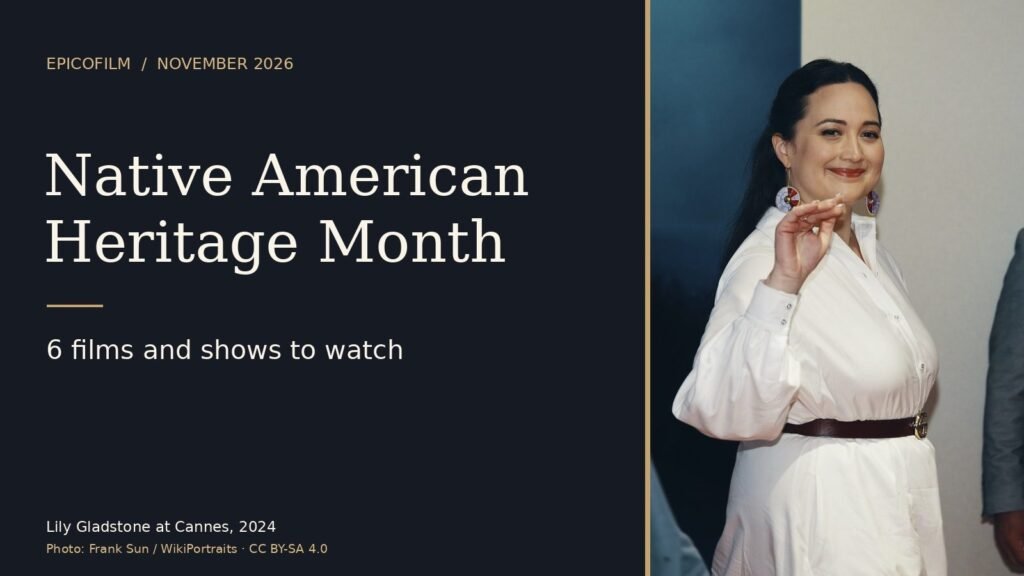
Erica Tremblay directs Lily Gladstone as Jax and Isabel Deroy-Olson as Roki. Jax is looking after her niece after her sister disappears. Their life on the Seneca-Cayuga reservation in Oklahoma gives the drama a specific home, and the prospect of a powwow gives Roki something concrete to anticipate while the adults around her deal with uncertainty. Apple’s film page provides the premise and credits, including Tremblay’s writing credit with Miciana Alise. Apple TV film overview · Apple TV credits
Start with the relationship when introducing the film. What does Roki think is going to happen next, and what does Jax believe she can promise? The answers may change from one scene to another. Following that difference makes it possible to discuss how the movie carries a serious subject through ordinary tasks, travel and family decisions. It also leaves room for viewers to see the moments of affection that can disappear when a film is introduced solely through its social context.
If you are choosing for a group, preview the film and give participants advance notice that it deals with a disappearance and the insecurity that follows. For a longer conversation, ask viewers to identify a moment when Roki acts on her own priorities. A question that starts with the niece’s choices can make the discussion more attentive to the balance between the two leads. Keep the official synopsis handy for participants who want to revisit the setting after the screening.
3. Reservation Dogs
FX describes Reservation Dogs as a half-hour comedy about Elora Danan, Bear, Willie Jack and Cheese, four Indigenous teenagers in rural Oklahoma. Sterlin Harjo and Taika Waititi co-created the series. Its format leaves space for individual characters and neighbors to take the foreground, so a first episode can be an introduction to a community that grows more detailed as the series continues. FX’s title page points U.S. viewers toward Hulu. FX’s official series page
Choose the pilot if you want a short introduction before committing to a feature. Watch how the four friends change their behavior depending on who else is around. A plan that feels plausible within the group can sound very different once an adult gets involved. For a conversation after the episode, ask where the group feels most at ease and which other people have a stake in what they do. You can then compare those impressions with a later episode that spends time with a different character.
Fans of comedy sometimes find the show through descriptions of its setting and miss how important the jokes are to understanding the friendships. Listen for when a joke opens a conversation and when it shuts one down. That distinction can help a group talk about grief without treating the funny scenes as breaks from the supposedly serious material. If people want to keep watching, let them choose a character they are curious about and notice how the series changes when that character gets more time.
4. Rutherford Falls
Rutherford Falls is a comedy co-created by Sierra Teller Ornelas, Ed Helms and Mike Schur. Its central friendship links Nathan Rutherford, who is deeply invested in his family’s place in the town’s history, with Reagan Wells, who is working to build a cultural center for the fictional Minishonka Nation. Public disagreements put those ambitions into the same room. Peacock has a U.S. title page for the series. Peacock series listing · Creator and cast credits
Pick it if your group is interested in monuments, museums or the way a town tells its story. Ask who has the budget, who has a platform and who has to persuade somebody else to get an idea moving. Those details can explain why a disagreement over a piece of local history affects people in different ways. A practical follow-up is to look at the website of a museum in your own town and see how the institution credits the people who helped design an exhibition.
The sitcom format also makes a useful pairing with Reservation Dogs. An early episode of each can prompt a discussion of how the shows introduce a place. Look at which locations characters visit on an ordinary day and which conversations require an official meeting. A group can compare the stakes of a joke between friends with a joke made in a public dispute. The comparison stays grounded in scenes viewers can point to rather than broad claims about all Native television.
5. Reel Injun
PBS presents Reel Injun as an examination of Hollywood’s portrayal of Native people, led by Cree filmmaker Neil Diamond. The documentary uses movie excerpts and interviews to look across eras of North American cinema. The title is the film’s own wording. When discussing it in a classroom, identify the title as such and use the names people and communities use for themselves in the rest of the conversation. PBS Independent Lens documentary page
Choose this when you want to study the images popular movies have circulated. A useful prompt is to pick one excerpt and describe what the image asks an audience to expect before anyone speaks. Then identify the film technique that produced that expectation. Framing, music, editing and which character gets to speak can all steer a viewer. After the documentary, bring those same questions to a feature made from a different perspective and compare what the camera makes possible for a character.
Because the film examines stereotypes, a group should expect to encounter examples of them in archival excerpts. Preview the material if you are screening for younger viewers. Give people enough context to distinguish an excerpt from the documentary’s analysis of it. If you use the official PBS trailer in a short session, leave time for a second source or scene so the discussion can move from identifying a problem to examining how contemporary filmmakers work.
6. RUMBLE: The Indians Who Rocked the World
This documentary examines Indigenous influence on popular music, with PBS crediting Catherine Bainbridge and Alfonso Maiorana as directors. It provides a different lens on screen representation because the subject is who made and shaped the music, how that history is remembered and how a documentary makes those connections audible. Choose it for a group that already enjoys exploring records, instrument styles or the origins of familiar genres. PBS Independent Lens film notes
Try building a listening session around one artist introduced by the documentary. Play a recording from an authorized source and ask people to describe a sound they recognize before discussing what they know about the musician. Follow with another recording connected by an interview or film segment. That gives the group something specific to hear rather than asking everyone to absorb a full music history in one sitting. Keep the artist and recording credits beside the playlist so people can find more work later.
The PBS pages for RUMBLE and Reel Injun also illustrate why an official program page is a good first stop. Even if a full film is unavailable in your area, a synopsis, credit list or trailer can tell you whether it suits your audience. A library catalog or the current distributor can then help you locate the complete documentary. Confirm which resource you actually have before advertising a screening.
Where to watch Indigenous films and shows in the U.S.
Use the official title pages as starting points. FX points to Hulu for Reservation Dogs, Apple lists Fancy Dance, and Peacock has a Rutherford Falls listing. Confirm the playable title in your account before subscribing or planning an event. A public title page can remain visible even when availability, prices or account requirements change.
For Smoke Signals, search the full title and 1998 in your library catalog or a U.S. storefront. The year will help you distinguish the film from other titles with similar names. For the two PBS documentaries, use the Independent Lens pages to verify the title and credits, then check for a current viewing option. A trailer page is handy for deciding what to watch. For a group event, confirm access to the full film as well as the permission appropriate to the venue.
When comparing options, look for captions, audio description and rental windows before settling on a date. For a library title, check whether you need a disc player or a participating library card. For people looking for more U.S. viewing ideas after this list, Epicofilm has a separate guide to underrated movies on Netflix U.S.. Use each title’s own provider link when checking where it plays.
How to plan a November screening or discussion
For a 45-minute session, pick a pilot or an official trailer and leave time for conversation. Write a one-sentence introduction with the title, credited creator and setting. Ask one question before playback, such as who gets to make the first important decision. Afterward, ask each person to name the scene that shaped their answer. A specific scene gives someone who disagrees something to respond to.
For a feature-length evening, pick Smoke Signals for family memory or Fancy Dance for a conversation about caregiving and uncertainty. Leave a short break before discussion. For a two-session program, use Reel Injun on the first night and a narrative title on the second. That lets people spend one session analyzing the older images and the next talking about characters, decisions and filmmaking on their own terms.
For a public event, consult the venue, library or distributor about the viewing rights it has arranged. If you advertise the event, state whether the program is a feature, an episode, or a clip and discussion. Include the run time from your specific edition and any accessibility information the venue has confirmed. A flyer can link to a creator’s or distributor’s official page rather than relying on an unattributed film image.
Outside the theater, check the public calendar of a Native-led organization, tribal museum or cultural center in your area. Look for an event that welcomes the general public and follow its photography or registration instructions. The Smithsonian’s educational materials and the National Archives offer additional context if there is no local event you can attend. When you find a resource worth sharing, give the organizer or author clear credit. Smithsonian Native Knowledge 360° · National Archives resources
Frequently asked questions
1. What month is Native American Heritage Month?
It is November in the United States. The observance covers the full calendar month, from November 1 through November 30.
2. When is Native American Heritage Month in 2026?
It begins Sunday, November 1, 2026, and ends Monday, November 30, 2026.
3. When is Native American Heritage Day in 2026?
It is Friday, November 27, 2026, the day after U.S. Thanksgiving.
4. Who first proclaimed the national month?
President George H. W. Bush issued the 1990 proclamation following the joint resolution passed by Congress. The Library of Congress documents both actions.
5. Why is the month observed in November?
The Library of Congress traces the congressional choice to the harvest season and thanksgiving. Specific seasonal practices vary by community and region.
6. Is the month the same as Indigenous Peoples’ Day?
They are separate observances. This guide covers the U.S. November heritage month and the Friday after Thanksgiving designated as Native American Heritage Day.
7. Does the observance include Alaska Native peoples?
Yes. Federal references have included National American Indian and Alaska Native Heritage Month among the names used for the November observance.
8. Which term should I use in a school project?
Use the community’s own terminology when you can verify it. For a discussion of several communities, an umbrella term can be helpful, followed by specific nation or community names where relevant.
9. What is a good first movie for the month?
Smoke Signals is a strong starting point for a feature-length story about friendship and family memory. Chris Eyre directed it, and the Library of Congress added it to the National Film Registry in 2018.
10. Which Native-led film stars Lily Gladstone?
Lily Gladstone plays Jax in Erica Tremblay’s Fancy Dance. Isabel Deroy-Olson plays her niece Roki.
11. Where can U.S. viewers look for Reservation Dogs?
Start with FX’s official series page, which points viewers to Hulu. Verify playback in your U.S. account.
12. What show should I watch to discuss museums and public history?
Rutherford Falls offers a sitcom-length starting point. Its story makes space for disagreements about who interprets and preserves a town’s history.
13. Which documentary explores Native representation in Hollywood?
Reel Injun examines a long history of portrayals through interviews and film excerpts. PBS Independent Lens provides background and a trailer.
14. Which documentary focuses on Indigenous musicians?
RUMBLE: The Indians Who Rocked the World explores Indigenous influence in popular music. PBS provides film and filmmaker information.
15. Can my school use this list for a screening?
Use it to choose a title, then preview the material, verify accessibility and ask the school or library what viewing permissions it has arranged for the planned audience.
16. How can I find a local Native American Heritage Month event?
Check public calendars from tribal museums, Native-led organizations and your library. Confirm the date, admission requirements and any visitor instructions with the organizer.