
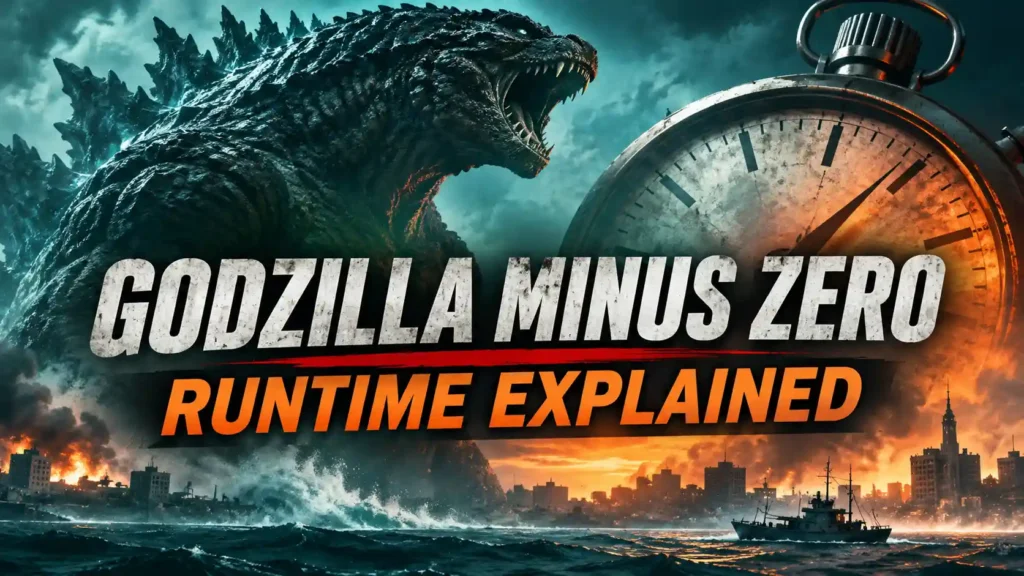

Godzilla Minus Zero Runtime: The verified movie length is 135 minutes, or two hours and fifteen minutes, across multiple official festival and theater listings. This guide explains what that means for your showtime, credits and IMAX booking.
Godzilla Minus Zero Runtime: The Confirmed Number
Godzilla Minus Zero runs for 135 minutes, or two hours and fifteen minutes, according to Film at Lincoln Center, the BFI London Film Festival and Rotten Tomatoes. The Smithsonian's IMAX listing gives the same duration. These are independent and mutually consistent listings, providing a stronger basis than an unsourced social post or a preliminary database placeholder.
The runtime tells you the length of the film, not the full time you will spend at a movie theater. Commercial showings may include trailers, advertisements and theater announcements before the feature starts. Those additions differ among cinemas and are not included in the quoted 135-minute running time.
For someone planning an evening out, the simplest calculation is to allow at least two hours and fifteen minutes for the feature plus additional time for the preshow, entering the theater and leaving afterward. Because the extra minutes vary, promising an exact departure time without the theater's information would be misleading.
The 135-minute listing applies to the standard version described by the official festival and theatrical resources consulted. It is not evidence that every future digital release, television edit or local presentation will always be identical. Check a particular showing if a precise ending time is essential.
How Long Is 135 Minutes in Hours?
A 135-minute runtime consists of 120 minutes plus 15 more, which equals two hours and fifteen minutes. That may sound obvious, but search listings often use different formats: 135 min, 2h 15m, or 2:15. All of those notations mean the same duration when they describe the full feature.
Someone with a screening listed for 7:00 PM should not automatically expect the final credits to finish exactly at 9:15 PM. That would only follow if the film began precisely at the advertised time with no preshow. In many theaters the posted session time marks the beginning of a program that contains trailers or advertisements, so your actual end time may be later.
The correct way to plan a transport connection or restaurant reservation is to ask the venue how long the preshow normally lasts and whether a late departure is acceptable. If you must leave by a strict time, an earlier session may be more reliable than trusting a simple addition of the listed runtime.
The 135-minute duration also includes the movie's credits under the conventional runtime listing. Articles that add another ten or fifteen minutes for credits on top of the formal duration risk double-counting. Any extra allocation should be described as a personal buffer, not as part of the official movie length.
Is Godzilla Minus Zero Longer Than Godzilla Minus One?
The new film's listed 135 minutes offers a substantial evening of storytelling and spectacle. Comparing it with the predecessor can be useful, but the earlier movie's running time should be obtained from a verified listing rather than guessed from memory. The specific question about whether a sequel is 'too long' is distinct from the arithmetic difference between two editions.
Length is not a measure of quality. A shorter film can feel sluggish if events have little consequence, while a longer film can maintain attention through clear staging and well-developed relationships. In monster cinema, pacing often involves a deliberate alternation between anticipation, investigation, human decisions and major visual encounters.
The critics' responses to Minus Zero illustrate why a runtime alone cannot settle the pacing question. Some reviewers praise the escalating scale and visual effects; others find the dramatic or thematic structure less focused than Godzilla Minus One. These are legitimate differences in reception rather than objective properties that can be measured in minutes.
For viewers who prefer a brisk, monster-only experience, a two-hour-and-fifteen-minute runtime may seem lengthy. For viewers who appreciate the Shikishima family's continuing storyline and historical context, that duration may be part of the appeal. The best recommendation depends on what each person wants from the movie.
What Time Will My Godzilla Minus Zero Screening End?
The calculation starts with the advertised showtime, adds the film's 135 minutes, and then includes whatever preshow buffer is appropriate for the specific cinema. This approach is more reliable than relying on a generic web page that claims to know when every theater's screening will end.
Suppose a theater lists a 6:30 PM showing. Two hours and fifteen minutes after 6:30 PM is 8:45 PM. If the feature begins after the scheduled start because of previews, its credits will finish later than 8:45 PM. The actual difference depends on the venue and the presentation format, not on the movie itself.
If you have a train, taxi reservation or childcare pickup immediately afterward, ask the theater directly about preshow length. A festival screening may also include an introduction or audience discussion, which can extend the event beyond the feature runtime. Do not assume that a festival event and a regular multiplex showing have identical schedules.
Accessibility can also matter. Someone who needs extra time to exit a busy auditorium should budget accordingly. The movie's official runtime is a useful starting point, but a practical timetable should include personal requirements and local logistics.
What Is the Relationship Between Runtime and IMAX?
Godzilla Minus Zero was made through the Filmed For IMAX program, with official materials describing specialized image capture and some expanded aspect-ratio sequences. This distinction primarily concerns how the movie looks and sounds in compatible theaters. It does not establish a separate longer IMAX storyline.
IMAX shows may have their own preshow presentations, and early-access screenings can occur on dates before the wider release. Toho and GKIDS scheduled IMAX early access on November 3, with a wide North American release beginning November 6. A date difference is not a runtime difference.
It would therefore be inaccurate to claim that the IMAX cut contains a confirmed extra chapter unless the distributor supplies evidence. We found verified official information about the shooting and presentation format, but not a supported announcement of an exclusive longer narrative version in IMAX.
For someone considering premium tickets, the relevant questions are screen format, sound, seat availability and price. The decision should not be based on a rumor that IMAX contains a hidden scene. Premium cinematography can enhance the experience without changing the official 135-minute duration.
Do Subtitles Add to the Running Time?
Godzilla Minus Zero is presented in Japanese with English subtitles in Film at Lincoln Center, BFI and Smithsonian theater listings. Subtitles make dialogue accessible to audiences who do not speak Japanese, but their presence does not ordinarily extend the film's runtime. The translated text is displayed while the original dialogue plays.
Some viewers worry that reading subtitles will make a long movie feel demanding. That is a personal comfort question rather than a difference in official duration. A good subtitled screening allows text to be read alongside faces, action and the wider composition. If visual accessibility or reading speed is a concern, consider the venue's accessibility options before booking.
An English-subtitled release should not be described as an English-language audio dub. The two formats are fundamentally different. Subtitles provide translated written dialogue while retaining the original voices; dubbing replaces or overlays the soundtrack with another language.
The verified US, BFI and festival listings establish Japanese audio with English subtitles. We have not found a reliable universal announcement that an English dub is available in every US theater. Runtime guides should avoid asserting such availability without proof.
Is There a Post-Credits Scene That Extends the Visit?
Several publications say there is no additional filmed scene after the credits. One report from Just Jared describes a possible Godzilla roar and footsteps after the complete credits. These reports are not identical: an audio cue is not the same thing as a bonus visual scene containing new story material.
The distinction matters for anyone trying to leave on time. If you wish to hear the last possible sound from the movie, plan to remain until the end of the credits. If you are only waiting for essential plot information in a newly filmed scene, the checked reports do not establish one.
The 135-minute runtime is the appropriate figure to use for the feature. You should not add an invented 'extra credits scene runtime' when there is no verified filmed sequence to time. If a specific cinema's presentation differs from the listings, trust its updated schedule for logistics.
Readers who want the spoiler-free explanation can consult the dedicated post-credits guide, which distinguishes the publications' claims without revealing the movie's ending. That keeps this runtime article focused on scheduling while still addressing a common practical question.
Why Runtime Listings Sometimes Disagree
Film databases, theater schedules and entertainment sites may occasionally display different numbers for the same title. Causes can include preliminary estimates, different versions, rounding, missing credit information, or simple data-entry errors. A discrepancy should prompt verification rather than immediate claims of an alternate cut.
For this film, the main credible sources consulted agree on 135 minutes. The agreement among festival, commercial and IMAX theater listings is a strong reason to publish that number confidently. If a future platform displays a different time, the editor should identify the source, date and format before changing the article.
A cinema might list its event as longer because a live introduction or discussion is included. That does not necessarily make the movie itself longer. Similarly, an accessible screening may include extra logistical time without changing the underlying feature. The detail matters to travelers, reviewers and anyone booking consecutive events.
A high-quality movie guide should separate four items: feature runtime, scheduled session start, preshow duration and any special event activities. Readers can then make their own plans without mistaking a venue-specific schedule for a confirmed edit of the film.
The Film’s Pace: What Reviewers Actually Say
The Rotten Tomatoes critical roundup collects enthusiastic accounts of the movie's visual spectacle as well as concerns about narrative focus. These opinions cannot be converted into a universal statement that the sequel is too long or perfectly paced. Different critics value sustained monster action, dramatic tension and human character development differently.
Some reviewers discuss a substantial buildup before the main creature confrontation, while others appreciate the time spent with characters and their dilemmas. Such responses explain why runtime searches often lead readers into review searches: the real question behind 'how long is it' may be whether that duration feels worthwhile.
The most honest answer is to report the 135-minute figure as fact and treat quality judgments as attributed opinions. Viewers who prefer continuous action may respond differently from those looking for emotional context or historical atmosphere. An editorial guide should help them set expectations without claiming to predict every individual's experience.
No number of minutes can substitute for analysis of the film's structure. The length of a sequence matters in relation to tension, character motivation and overall rhythm. A title with enormous effects does not automatically benefit from removing all quieter scenes.
Where to Find the Most Accurate Runtime Before Buying
Begin with the official festival or distributor listing when possible. Film at Lincoln Center, the BFI, Smithsonian IMAX and Rotten Tomatoes each provide a publicly checkable duration for Godzilla Minus Zero. If your venue advertises a special presentation, check its own listing for additional activities.
Avoid depending on social-media comments that describe a movie as 'three hours' without specifying whether that includes trailers, waiting or travel. Casual descriptions can be approximate, and an audience member's total time at the theater may differ substantially from the film's official length.
The movie's promotional site also identifies the release dates and director. It is a useful source for basic production information but should not replace a specific cinema's current showtime. Both types of information matter for planning a visit.
At publication, the consistently verified runtime is two hours and fifteen minutes. If an officially announced alternate version appears, the article can be updated with a clear distinction between editions rather than silently replacing the original number.
Practical Tips for a 135-Minute Movie
Choose a screening time that leaves enough flexibility afterward. For families or viewers with accessibility needs, consider seating position, breaks before the feature begins, and the theater's support facilities. The US film carries an R rating, which also matters when deciding who can attend under local admission policies.
Because the film is officially listed in Japanese with English subtitles, check that the screening you select has the desired caption presentation. A listing marked IMAX describes its visual format; it does not by itself guarantee a spoken English version or specialized accessibility features.
The running time is long enough that choosing a comfortable seat and arriving with time to settle can improve the experience. These suggestions are general viewing advice, not evidence that the film contains an intermission or that theaters will allow viewers to pause the screening.
For audiences attending with friends, agree on whether you plan to remain through the full credits. That avoids confusion at the end, particularly because reports of a possible audio cue differ. The sensible goal is a relaxed viewing experience guided by verified information rather than rumors about secret additions.
The Difference Between Session Length and Film Length
A ticket often displays a start time for a screening, but the experience may begin with advertisements, trailers, theater information and safety announcements. The film's listed 135 minutes should not be confused with the entire scheduled event. This is why two people can attend the same title at different cinemas and report different total time inside the auditorium.
The distinction becomes especially important when estimating parking charges, transport connections or the start of a meal reservation. A travel plan based solely on the published film runtime can fail even when the runtime itself is completely accurate. Allow extra time unless the venue specifies precisely when the feature starts.
Festival screenings may involve introductions and discussion sessions, which are separate from the movie. Premium formats may also have their own preshow material. These differences do not prove the existence of an alternate edit or new scene; they simply reflect the program surrounding the feature.
Why the Movie’s Two-Hour-Plus Length Can Be Worthwhile
An ambitious creature feature needs time to establish people and places before extraordinary events disrupt them. Some of the sequel's appeal, according to critics, comes from the contrast between human vulnerability and large-scale danger. A two-hour-and-fifteen-minute runtime allows space for those contrasting elements, even though reviewers disagree about the exact balance achieved.
Not every minute must contain a monster for the movie to deliver a strong genre experience. Suspense can arise from scientific planning, fearful anticipation and relationships under stress. Conversely, a lengthy buildup must still create meaningful tension or the audience may find it slow. These are matters of execution rather than fixed rules.
A runtime guide should therefore avoid promising that the film feels short to everyone. It can truthfully explain its duration, identify the range of critical responses and help people decide whether the commitment suits their viewing preferences.
Timing an IMAX or Premium-Format Visit
If you are attending an IMAX early-access screening, check the actual date shown on the booking page. The film had early access from November 3 in selected North American locations before its November 6 wide opening, and availability may differ among towns or venues.
The official Filmed For IMAX designation concerns photography and screen presentation. The name alone does not identify how many minutes of trailers will play before the feature. Nor does it establish a longer story cut. The correct logistical reference is the cinema's screening schedule.
Premium tickets can justify additional planning because arriving late may mean missing carefully staged opening imagery. Choose a seat with a clear view, confirm accessibility requirements in advance and leave time to enter before the session starts. The verified 135-minute runtime remains the baseline regardless of whether the auditorium is large or ordinary.
Credits, Exit Time and the Audio-Sting Dispute
A practical scheduling question arises at the very end. SlashFilm and The HoloFiles report no filmed post-credits scene, while Just Jared says a brief roar and footsteps are audible after the credits finish. The difference is relevant only if a viewer intends to stay for every last sound.
Neither account establishes a long additional action sequence that needs to be added to the listed feature runtime. A movie's ordinary credits are part of the feature's stated duration, and the possibility of an audio cue should not be converted into a separate invented number of minutes.
If you need to leave immediately, you can make that decision knowing what the sourced reports say. If you enjoy watching the full credits, the remaining uncertainty may be a reason to stay. The guide should present those options without falsely suggesting that everyone must remain to understand the plot.
How to Check Runtime After Release
Distribution metadata can be updated after a movie opens, so verifying a date-specific source is better than assuming an old search snippet is permanent. For Godzilla Minus Zero, the 135-minute runtime has appeared consistently across Film at Lincoln Center, BFI, Smithsonian and Rotten Tomatoes listings.
If a future streaming or home-media edition has a different duration, ask whether the edition includes alternate credits, introductions or an actual editorial change. Those distinctions should be reported from the distributor's official description rather than guessed from a rounded number.
For now, the strongest supported answer is unchanged: two hours and fifteen minutes. The page should prominently display that number, while giving readers the necessary practical context for showtimes and theater visits.
Detailed Planning Examples for Different Showtimes
If a movie begins exactly at 1:00 PM and runs 135 minutes, the film ends at 3:15 PM. The same calculation gives 5:45 PM for a 3:30 PM start, 8:15 PM for a 6:00 PM start, and 10:45 PM for an 8:30 PM start. Those examples assume that the feature itself starts at the stated time; they do not include preshow trailers, which can shift the real departure time.
A cinema might list a 6:00 PM ticket but begin the feature after advertising. If the preshow adds 15 minutes, the film would end about 8:30 PM rather than 8:15 PM. That 15-minute figure is an illustration, not a verified universal trailer length. Some venues have shorter preshows, some longer, and festival screenings may begin differently.
A viewer booking a restaurant at 8:30 PM after the 6:00 PM session risks a tight schedule. A later reservation provides more flexibility for walking out, using facilities and reaching the restaurant. Those concerns may seem minor, but they are precisely why people search for a film's runtime rather than merely reading a review.
For early-access IMAX showings, verify both the date and the venue because the release schedule differs from the wide opening. If you are visiting an unfamiliar auditorium, allow more time for parking, security and locating the correct screen. The film's technical presentation can be a reason to arrive early so you do not miss the opening.
Parents and caregivers should also consider the US R rating. The rating is a content classification, not a claim that the running time changes for younger viewers. Local ticket-admission rules and personal suitability concerns should be checked separately. The broader lesson is that one accurate number—135 minutes—can support several practical decisions without requiring invented estimates about the film itself.
A Final Runtime Checklist
Before purchasing a ticket, verify the listed 135-minute feature duration, the exact local session start, any additional festival activities, and your travel arrangements after the screening. These checks are more dependable than a universal claim about when the auditorium will empty. The duration remains the same verified movie statistic even though individual plans vary.
If you are visiting an IMAX venue, confirm the projection format rather than assuming every IMAX auditorium has identical capabilities. For subtitles, read the specific showtime label. If you intend to remain through all the credits because of the disputed end-audio reports, allow a little flexibility without treating that possible cue as an extra filmed scene.
Finally, distinguish an opinion about pacing from a fact about length. The film is two hours and fifteen minutes long according to the checked listings; whether it feels long is a question for each viewer and the critics whose reviews they find persuasive. That distinction makes the guide both practical and accurate.
Frequently Asked Questions
What is the Godzilla Minus Zero runtime?
135 minutes, according to Film at Lincoln Center, BFI and Rotten Tomatoes.
How many hours is Godzilla Minus Zero?
Two hours and fifteen minutes.
Does 135 minutes include the credits?
Runtime listings conventionally describe the full feature, including credits. Do not add the entire credits roll a second time.
Is Godzilla Minus Zero longer in IMAX?
There is no verified official confirmation of an IMAX-only longer story cut in the sources checked.
Will trailers make my screening longer?
Potentially yes. Theater trailers and advertisements can extend the total visit beyond the feature runtime.
What time will a 7 PM showing end?
The film itself is 135 minutes; if it starts exactly at 7 PM, that corresponds to 9:15 PM. Add your local theater’s actual preshow delay.
Is Godzilla Minus Zero in Japanese?
Yes. Official festival and theater listings specify Japanese audio.
Does it have English subtitles?
Yes, the verified festival and US theater listings specify English subtitles.
What is its US age rating?
R for violent content and bloody images, according to Rotten Tomatoes.
What year is the sequel set in?
1949, according to Film at Lincoln Center and BFI.
Was it filmed for IMAX?
Yes. Toho calls it the first Japanese production Filmed For IMAX.
When did it release in the US?
November 6, 2026, with selected early-access IMAX screenings from November 3.
Can I leave before the credits?
Several outlets report no additional filmed scene, though Just Jared describes a sound cue at the very end.
Is there an intermission?
The sources checked do not establish a standard intermission. Ask your cinema if it offers one.
How long is the movie without trailers?
135 minutes is the listed feature runtime. The number of preshow trailers is a theater-specific detail.
Does an English dub change the running time?
No universal English-dub release is verified in the consulted official listings. Do not assume a dubbed edition exists at every theater.
Why do different sites show different durations?
Potential reasons include rounding, event schedules or different editions, but the main verified listings for this film agree on 135 minutes.
Should I watch Godzilla Minus One first?
It is a direct sequel with continuing characters, so watching Minus One first is useful for understanding the emotional context.
Sources and fact-checking
Reporting cutoff: November 6, 2026. This is researched editorial coverage based on the linked sources; no first-hand screening or interview is claimed. Reports that conflict are identified as such.


Pingback: Is There an End Credit Scene in Godzilla Minus Zero? 1 Surprise
Pingback: Is There a Post Credit Scene in Godzilla Minus Zero? 1 Surprise
Pingback: Godzilla Minus Zero After Credits: 1 Surprising Reason to Stay
Pingback: Godzilla Minus Zero Post Credits: 1 Surprising Audio Tease
Pingback: Godzilla Minus Zero End Credits: 1 Surprising Sound