
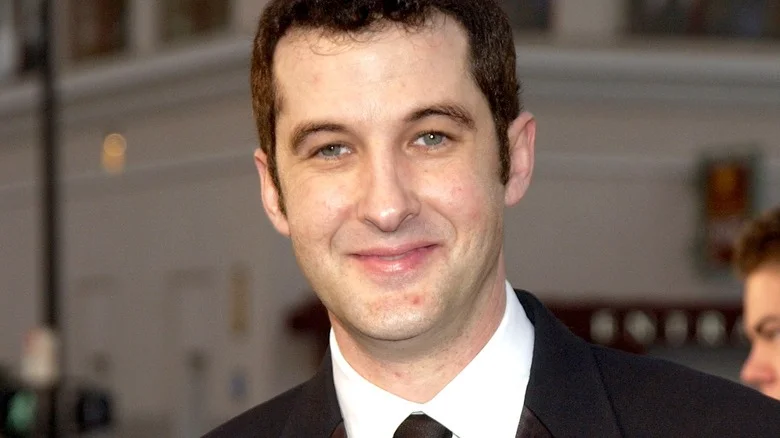

Anthony Clark, the comedian who played Greg Warner on CBS’s Yes, Dear, has died at 62. His former co-star Mike O’Malley announced the news on November 11, 2026, saying Clark had died the previous day. His longtime manager, Barry Katz, also confirmed his death to Us Weekly.
For viewers who knew him through weekday reruns or the original CBS broadcasts, the name brings back a particular kind of television comedy: two families, incompatible ideas about parenting, and a man whose attempts to keep life orderly rarely survived contact with his relatives. But Anthony Clark was an established stand-up before he became a familiar sitcom father. His work also included Boston Common, films, theater and a season hosting Last Comic Standing.
The reported cause of death is complications related to pneumonia. Us Weekly attributes that information to Deadline; it was not included in the initial announcement quoted by several other outlets. This article keeps that distinction clear rather than presenting a privately verified medical conclusion. The career overview and episode recommendations below draw on contemporary reporting and original CBS program archives.
Research checked November 12, 2026. This is a reported remembrance and viewing guide. Episode discussion is based on credited program descriptions, with our interpretation identified as such; it does not claim new interviews or firsthand access to the actor’s final days.
Anthony Clark death: What has been confirmed?
TheWrap’s report published November 11 identifies O’Malley’s social-media announcement as the source of the news. The actor remembered Clark’s ability to make people laugh and their history in Boston’s comedy scene. Importantly, the announcement came from someone who had worked alongside him for years, rather than an unidentified account reposting a rumor.
Reports place the death on Tuesday, November 10. The announcement followed on Wednesday, November 11. Readers seeing a November 12 headline should distinguish the date a story appeared from the date of the death itself. That is especially useful for an American story being read across different time zones.
| Question | Answer supported by the reporting |
|---|---|
| Who died? | Anthony Clark, the actor and stand-up comedian associated with Yes, Dear |
| How old was he? | 62 |
| When did he die? | November 10, 2026, according to reports based on O’Malley’s announcement |
| Who announced the news? | His former co-star Mike O’Malley |
| Who else confirmed it? | Longtime manager Barry Katz, speaking to Us Weekly |
| What is the reported cause? | Complications related to pneumonia, attributed by Us Weekly to Deadline |
| What role is he best known for? | Greg Warner on Yes, Dear |
The comedian Anthony Clark death coverage concerns the performer from that CBS series, not every person with the same name. A useful identifying combination is his name, the Greg Warner character and the show title. That avoids mixing unrelated obituary notices, photographs or biographies into a remembrance of the actor.
Anthony Clark cause of death: How did Anthony Clark die?
The most careful available answer is that complications related to pneumonia have been reported as the cause. Parade’s coverage, like Us Weekly’s, attributes the detail to Deadline. The original Deadline article was not accessible for direct review during this research, so the attribution remains explicit.
Other initial reports, including TheWrap’s account, said a cause had not been shared. Those statements do not necessarily describe an irreconcilable conflict: an announcement and a subsequent report can contain different amounts of information. The responsible approach is to identify what each source actually says, rather than silently treating an early omission as evidence against later reporting.
Questions such as “how did Anthony Clark die” are understandable when unexpected news arrives. They do not justify filling gaps with guesses about a hospital stay, earlier illness, medications or private treatment. No such details are asserted here. Nor does this article turn a report about pneumonia complications into medical advice for readers.
There is a similar limit around the actor’s final conversations. A friend remembering a recent phone call can tell us about that interaction. It cannot, by itself, establish the progression of an illness or provide a complete account of someone’s final weeks. Public recollections deserve to be understood at the scale at which they were offered.
Anthony Clark comedian: A career that began before sitcom fame
One reason Anthony Clark deserves more than a brief television-credit list is that his comic identity was already established before Yes, Dear. The sitcom made him recognizable to a large television audience, but it did not create his relationship with performing. His career connects the live-comedy room, acting training and the collaborative demands of scripted television.
An early profile in The Harvard Crimson, published in March 1992, describes a performer who had developed a Boston following while studying acting at Emerson College. It reports that he graduated in 1986 and won the American Collegiate Talent Showcase. The profile also discusses his television comedy appearances and his interest in stage and film acting.
That older reporting is valuable because it records a career in progress. It was written before the later sitcom roles became the default way of introducing him. It allows readers to see that a familiar television actor once had several possible directions in front of him, rather than an inevitable path toward a single character.
The distinction between stand-up and acting matters here. A stand-up comic usually carries an audience’s attention under their own name. A sitcom actor has to make room for a fictional person, other performers and a repeatable dramatic situation. Success in one form can help with the other, but the two jobs ask different things of a performer.
For a new viewer exploring Anthony Clark, it makes sense to keep both identities visible. A television scene can introduce his work quickly, while an authorized recording of his stand-up gives a different frame. Neither has to be treated as the only authentic version of the artist. Each belongs to the career being remembered.
Emerson College, Boston comedy and finding an audience
Emerson’s own history of comedy places Clark within a wider student-performance tradition. It lists him among the members of the troupe This Is Pathetic and connects the college’s comedy culture with clubs, sketch groups and later screen careers. The same history recognizes his starring role in Boston Common.
The institutional context adds something that an obituary headline cannot. A successful performer develops in rooms where material can be tried, revised and tried again. Student productions and local clubs provide opportunities to discover which instincts survive an encounter with an audience. That is a useful way to understand a comedy career without pretending every early performance was a guaranteed breakthrough.
Anthony Clark’s connection with Boston also helps explain why O’Malley’s tribute began before their sitcom partnership. His public remembrance described seeing Clark perform in the city before they became friends. A colleague’s appreciation of the live performer is a different kind of recognition from remembering a shared television credit.
For fans, this offers a practical route into the earlier work. Look for an identified performance, an original interview or a credited broadcast appearance. Check the title and date where possible. A short clip with a newly added caption may be entertaining, but its upload date is not automatically the date the performance happened.
It is also possible to appreciate the career without treating a city’s comedy scene as a contest with a single winner. A local circuit contains performers with different styles, audiences and ambitions. Clark’s later visibility does not make the other people in that network background figures; it shows one route from that network into national television.
Yes, Dear TV show: The role that made Greg Warner familiar
The Yes, Dear TV show premiered on CBS on October 2, 2000. Its basic premise centered on two couples with sharply different approaches to family life. Anthony Clark played Greg Warner, Jean Louisa Kelly played his wife Kim, Mike O’Malley played Jimmy Hughes, and Liza Snyder played Christine Hughes, Kim’s sister. Those character assignments are documented in CBS’s original program description.
The show’s household setup gave ordinary disagreements room to expand. Parenting standards, money, personal space and the desire to look competent could become sources of conflict. Greg’s professional success did not guarantee that he could manage his domestic life, while Jimmy’s different instincts gave the series another way to approach the same problem.
That is a useful starting point for understanding the Anthony Clark character. Greg was not simply a collection of worried reactions. His place in the premise depended on the distance between how life ought to work in his mind and how it actually worked around him. In a family comedy, that distance can sustain a story long after the initial misunderstanding has been explained.
The series ran for six seasons between 2000 and 2006, with 122 episodes, according to contemporary obituary coverage. Its length matters because it gave viewers time to become familiar with the relationships rather than only the premise. A recurring character can become memorable through accumulated small encounters, not only a celebrated scene.
New viewers do not need to treat the series as homework. Start with an episode that establishes the family relationships, then sample one that puts Greg in a different position. That approach reveals more than a collection of isolated reaction clips, because the surrounding situation explains what each character wants from the others.
Yes Dear Anthony Clark and Mike O’Malley: Different characters, shared history
For people searching “Yes Dear Anthony Clark,” the connection with Mike O’Malley is central. Clark was Greg; O’Malley was Jimmy. Confusing those roles removes much of what made the pairing work as a sitcom structure. The characters could confront the same domestic problem from different assumptions about responsibility, status or what counted as a sensible solution.
Their real-life relationship should be kept separate from that fictional friction. O’Malley’s tribute described admiration, friendship and a recent conversation. It did not present their onscreen disagreements as a documentary account of working together. That is an easy distinction to lose when a familiar character has been part of a viewer’s life for years.
As an editorial reading of the show’s premise, Greg and Jimmy are especially useful because neither perspective has to solve every problem. One character can be right about a rule and wrong about how to handle a person. Another can be relaxed about a difficulty and still underestimate its consequences. That shifting balance gives a family comedy more flexibility than a permanent division between the sensible one and the fool.
Anthony Clark’s role therefore makes more sense beside the ensemble than in isolation. The lead actor supplies a recognizable center, but the scene also depends on how the other performers challenge or support it. Remembering the actor does not require turning a four-person comedy into a one-person vehicle.
When revisiting the show, try following a scene from each character’s point of view. What does Greg want? What does Jimmy think the problem is? What changes when Kim or Christine enters? These questions are viewing suggestions, not claims about an actor’s private intentions, and they can make an ordinary family disagreement more interesting to watch.
Beyond Yes, Dear: Boston Common, Soul Man and other acting work
Before Greg Warner, Anthony Clark played Boyd Pritchett in Boston Common. The NBC sitcom ran in 1996–1997. TV Guide’s series listing describes a Virginia man bringing his sister to Boston for college. It is a different starting point from a suburban parenting comedy, even though both place a character in relationships he cannot entirely control.
Comparing the two roles is more useful than assuming the earlier show was merely preparation for the later one. A series about a new environment asks how someone fits into an unfamiliar social world. A domestic sitcom asks what happens when people who already know one another still disagree about everyday life. Those are distinct comic engines.
CBS’s archived cast biography also lists Soul Man, Ellen and film credits including Dogfight, The Thing Called Love and The Rock. These credits give readers a broader map of the work without requiring an unsupported claim that every appearance was equally important or equally available today.
Anthony Clark also appeared in The Grapes of Wrath on Broadway, as noted in that biography. A stage credit belongs in the overview because acting careers can move across forms. Being remembered mainly for television does not mean a performer’s training, interests or earlier work were confined to the small screen.
The best way to explore those credits is to choose a format you already enjoy. If you like ensemble sitcoms, begin with the television work. If you know a film in the list, check the credited role and the surrounding scene. If you are interested in live performance, seek an identified stage or stand-up record. A career can be approached from several directions without needing a definitive ranking.
Anthony Clark and Last Comic Standing
In 2006, Anthony Clark hosted the fourth season of Last Comic Standing. A contemporary premiere report from reality blurred, dated May 30, 2006, identifies him as the host. That is a useful period source for a credit sometimes reduced to a passing mention in later biographies.
Hosting a comedy competition is a separate job from playing Greg Warner. A host introduces performers, keeps the event moving and maintains a relationship with viewers across transitions. The attention repeatedly moves away from the host and toward contestants. Familiarity can help, but the format does not ask the host to become the protagonist of a scripted family story.
This chapter connects naturally with his earlier stand-up background. It places Anthony Clark within a television format built around live comic performance, while using skills different from a club set. A career overview becomes more informative when it explains those differences instead of treating all television appearances as interchangeable.
For viewers seeking this material now, check that a clip belongs to the correct season and identifies the host accurately. The series had different hosts across its run. A general Last Comic Standing compilation is not necessarily an Anthony Clark appearance, just as a title card added by an uploader is not a substitute for a program credit.
A Yes, Dear viewing guide: Seven episodes with clear starting points
The following selections are an editorial introduction, not a ranking of the best episodes or a claim that these were Clark’s personal favorites. Their premises and credits are documented in original CBS releases. The comments about what to notice are our interpretation of those premises. Brief plot details follow, but the guide avoids inventing dialogue or describing unverified scene-by-scene performances.
1. “Guarding Greg”: Friendship outside the family routine
In CBS’s description of “Guarding Greg”, Greg accepts an invitation into Jimmy’s circle of friends through a poker game. That setup offers a straightforward way to see the relationship outside a purely domestic disagreement. The question becomes not just whether Greg and Jimmy can coexist, but what happens when one enters the other’s social territory.
As a viewing prompt, watch how belonging changes the stakes. Someone may want the benefits of friendship while being uncomfortable with the habits of a group. A polite invitation can therefore create more trouble than an open argument. This is a useful episode premise for viewers interested in the social awkwardness around Greg’s need to fit in.
It also gives a newcomer a reason to pay attention to the supporting players. A family sitcom can expand its world by showing the people one character knows elsewhere. Anthony Clark’s Greg can then be understood in a setting where the usual household rules do not automatically apply.
2. “Natural Born Delinquents”: The cost of being in charge
“Natural Born Delinquents” gives Greg a discipline problem involving his nephews. CBS’s synopsis describes him taking responsibility after Jimmy and Christine’s approach begins affecting his own household. The premise turns a confident judgment about other parents into a practical test of whether he can do the job better.
Our reason for including it is the gap between criticizing a method and carrying out an alternative. That gap is recognizable well beyond parenting. People can be certain about what someone else should do until they have to manage the same situation themselves. The episode’s documented setup places Greg directly in that uncomfortable position.
For a returning viewer, it is an opportunity to follow the consequences of authority rather than simply choose which couple is right. For a new viewer, it makes the families’ contrasting habits immediately understandable. The parenting disagreement is the entry point; the reversal of confidence is the broader comic possibility.
3. “The Owner’s Suite”: Trying to impress a parent
CBS’s release for “The Owner’s Suite” describes Greg inviting Jimmy and their fathers to a Los Angeles Lakers game, where his attempt to impress his dad goes wrong. The guest list includes Tim Conway, Vicki Lawrence and Jerry Van Dyke, with Gray Davis and Jeanie Buss appearing as themselves.
The appeal of that premise is the way a grown adult can become anxious about a parent’s reaction. Professional access and a prestigious invitation may look impressive on paper, yet they cannot guarantee how a family member will behave. It gives Greg’s concern with appearances a setting beyond the home.
Watch for the difference between the evening Greg imagines and the evening the situation permits. That is a useful way to follow the story without reducing it to a list of famous guest appearances. Anthony Clark remains part of an ensemble here, with the visiting characters changing the pressures around his character.
4. “I Wish That I Had Sammy’s Girl”: Competition by proxy
The fifth-season opener “I Wish That I Had Sammy’s Girl” turns the children’s relationships into a contest between the parents. CBS’s announcement describes the couples competing over whose son is more popular with a little girl. It is a concise example of an adult concern being projected onto a child’s experience.
This selection is useful because its conflict does not require a newcomer to know years of continuity. The parents want their child to come out ahead, and that desire makes their own behavior less reasonable. A small childhood situation acquires adult stakes that the children did not necessarily create.
Our suggested focus is the point at which affection becomes competition. When does helping a child start to serve a parent’s pride? The premise gives the viewer a way to explore that question through comedy, while the four-person ensemble prevents it from becoming only Greg’s problem.
5. “The New Neighbors”: A change in the family map
“The New Neighbors” introduces a possible change in where the families live. CBS identifies Shelley Long and Alan Thicke as guest stars playing prospective neighbors. The situation puts the adults’ preferences into conflict: the same house can represent opportunity to one couple and inconvenience to another.
As an editorial choice, it belongs in this guide because it shows how a recurring comedy can alter its physical setup while preserving its relationships. Moving a disagreement from a shared household to neighboring properties does not make the underlying family tensions disappear. It changes the practical boundaries through which those tensions operate.
For Anthony Clark viewers, this is a chance to notice how Greg’s wish for control extends to his surroundings. The episode’s documented premise also gives the other couple motives of their own. Everyone can want a better arrangement while meaning something different by “better.”
6. “Greg’s a Mooch”: When the familiar balance reverses
The sixth-season premiere “Greg’s a Mooch” places Greg in an unfamiliar position: unemployed and living with Jimmy and Christine. CBS’s description says Kim and Jimmy initially encourage him to enjoy time off, then become concerned when he grows too comfortable. Dave Feherty guest stars.
This is a particularly helpful companion to an earlier episode because it changes the expected distribution of responsibility. A character associated with order and professional identity now has to be understood through dependence and leisure. The setup offers a reversal without requiring the viewer to assume Greg has become an entirely different person.
The useful question is what remains recognizable when status changes. A character’s habits may persist even after the circumstances that once justified them have shifted. For a newcomer sampling Anthony Clark, the contrast helps show why a long-running role can offer more than one version of the initial premise.
7. “Greg and Jimmy’s Criminals”: Confidence meets consequences
In “Greg and Jimmy’s Criminals”, a workplace mentoring program brings Greg and Jimmy into competition over helping prisoners prepare for release. CBS credits Trace Adkins and Travis Tritt as guest stars. The synopsis describes the men’s confidence outrunning their understanding of the situation.
Our reason for choosing it is the way rivalry can turn a supposedly generous act into a test of personal pride. A character may begin by wanting to prove a point and only later confront the responsibilities involved. That is an interpretation of the published premise, not a claim that the episode offers a complete account of real rehabilitation programs.
This selection also takes the pair beyond the household while keeping their competitive relationship intact. If you began with a domestic episode, it makes a useful comparison. The setting changes, but the need to win an argument can still push the characters toward a problem they did not anticipate.
What to notice in Anthony Clark’s comedy without inventing a personal portrait
A remembrance can appreciate a performer without claiming private knowledge. In Anthony Clark’s case, the documented work provides several clear avenues: live stand-up, a leading role in a college-set sitcom, a long family-comedy run and television hosting. Each form gives the viewer a different relationship with the person on screen.
One useful distinction is between delivering a joke and reacting to someone else’s line. In an ensemble comedy, the listener in a scene helps determine whether the next turn has somewhere to go. A pause, an attempt to maintain composure or a change of attention can matter as much as the sentence that draws the immediate laugh.
Another is between a character’s confidence and the audience’s confidence. Greg may believe he understands a situation while the viewer can already see complications ahead. The pleasure of that arrangement is not simply waiting for him to be wrong. It is following how a person protects a sensible picture of himself as the evidence becomes less cooperative.
These are general ways to approach sitcom performance, not claims about Anthony Clark’s rehearsal habits. Without interviews or production documentation, an outside writer should not invent how many takes he needed, whether a moment was improvised or what he said between scenes. A convincing account of craft does not need fictional backstage access.
The same restraint applies to the person behind Greg Warner. A character’s anxiety, competitiveness or parenting choices do not establish the actor’s own personality. A remembered performance can feel intimate because it has been seen repeatedly, but familiarity with a role is different from knowing the person who played it.
For fans returning after many years, this distinction can make the experience richer. You can recognize a favorite character while noticing the collaborative work that made the scene possible. Anthony Clark’s name remains central to the remembrance, with room for the writers, directors and fellow performers whose work surrounds his.
Anthony Clark: What happened after the familiar television years?
Searches for “Anthony Clark what happened” often combine two separate questions: the current death news and the longer gap between someone’s most familiar television role and the present. The death report can be answered with dates and attributed statements. A complete account of every later year would require a different depth of reporting.
This article therefore does not convert reduced visibility into an invented story of professional trouble or private hardship. A performer being less visible to one audience does not establish why. Nor should an old biography written while a series was on air be read as a current account of residence, work or personal circumstances.
There are documented later credits worth recognizing, including the 2006 hosting role. Beyond the verified material discussed here, the appropriate next step is to consult identified records or a reliable new interview, not to fill the intervening years with assumptions. The limits of a public account can be stated without making those limits sound mysterious.
That matters for Anthony Clark because the announcement has brought new readers to a career many others already knew through reruns. Someone discovering him today deserves a clear introduction, not a manufactured disappearance narrative. The work itself supplies enough reason to remember him without attaching an unsupported explanation to every period outside the spotlight.
Where to look for Yes, Dear and other Anthony Clark performances
Streaming rights and storefront listings change, so a viewing guide should not promise a subscription service without a current, region-specific check. Apple TV’s Anthony Clark catalog page provides a starting point for identifying credits, while program guides can help distinguish shows and episodes. A catalog entry is not, by itself, proof that every title is playable in your country.
For Yes, Dear, search the full show title and confirm the cast. Generic searches for the two ordinary words can return unrelated material. Check whether the result is a series page, a purchase offer, a broadcast listing or merely a database description. Those are different kinds of result, and only some provide an actual legal viewing option.
For stand-up, prefer an authorized performer, broadcaster, distributor or rights-holder upload where available. A clip’s title should identify Anthony Clark rather than simply label someone “the Yes, Dear guy.” Clear credits make it easier to locate a complete performance and avoid mixing him up with another comedian or actor.
If you are introducing his work to someone else, send a specific title and an authorized link instead of an uncredited repost. Explain whether you are recommending a sitcom episode, a film appearance or stand-up. That small amount of context makes a recommendation more useful and keeps the performer’s name attached to the work.
Tributes and remembering the performer beyond a headline
O’Malley’s public remembrance emphasized the comedian he admired before they became co-stars. That perspective is a reminder that colleagues experience a career from inside relationships that viewers see only in fragments. The PEOPLE report also describes a tribute from Nick Swardson, who remembered a long friendship and time opening for Clark.
Parade’s report includes comments attributed to Yes, Dear executive producer Greg Garcia about their continued conversations and shared sense of humor. These recollections add human context while remaining the speakers’ own accounts. They should not be expanded into imagined conversations, private final messages or a claim that every colleague has issued a statement.
For an audience, remembrance can be simpler. You might return to an episode you watched with family, discover an earlier role or introduce the name Anthony Clark to someone who recognizes his face. A personal memory of the work is valuable without being presented as evidence about his private life.
The most respectful tribute is often also the clearest: name the performer, identify the work and keep uncertain information attributed. An actor’s death can be reported accurately while the larger article gives readers something to explore after the immediate news has passed.
Frequently Asked Questions
Has Anthony Clark died?
Yes. Mike O’Malley announced the death of his former Yes, Dear co-star on November 11, 2026, saying he had died the previous day. Longtime manager Barry Katz also confirmed the death to Us Weekly. This article concerns the actor and stand-up comedian who played Greg Warner, not another person sharing the name.
When did Anthony Clark die?
Contemporary reports identify November 10, 2026, as the date of death. The public announcement followed on November 11, and some articles appeared on November 12. Readers should distinguish a publication date or local time zone from the date stated in reporting about the death itself.
How old was Anthony Clark?
He was reported to be 62. That age appears in the contemporary news coverage used for this remembrance. It is appropriate to use the reported age rather than construct a new account from an unrelated obituary, an unverified social post or a biography about another person with the same name.
What is the Anthony Clark cause of death?
Us Weekly and Parade report complications related to pneumonia, attributing the information to Deadline. The initial announcement quoted by other outlets did not provide a cause. This article preserves that attribution and does not claim access to medical records, a death certificate or a separately verified family medical statement.
How did Anthony Clark die?
The reported explanation is complications associated with pneumonia. Beyond that attributed reporting, this article does not assert a treatment timeline, hospital location, earlier diagnosis or other private health information. A friend’s tribute and a news report should not be expanded into details that neither source actually supplies.
Who did Anthony Clark play on Yes, Dear?
He played Greg Warner, one of the four central adult characters. Greg was married to Kim Warner, played by Jean Louisa Kelly. The contrast between their family’s approach and that of Jimmy and Christine Hughes supplied the central setup of the CBS comedy, as documented in the network’s program descriptions.
Was Mike O’Malley also in Yes, Dear?
Yes. Mike O’Malley played Jimmy Hughes opposite Clark’s Greg Warner. He also announced Clark’s death and remembered knowing his stand-up work before they became friends. Their fictional characters’ disagreements should not be confused with O’Malley’s account of their real-life friendship and professional association.
What was the Yes, Dear TV show about?
The CBS sitcom followed two couples with contrasting parenting styles and expectations about family life. Its central adult cast included Clark, O’Malley, Jean Louisa Kelly and Liza Snyder. The show used the relationships among the couples and their children to turn ordinary domestic problems into recurring comic conflicts.
Was Yes, Dear a CBS or NBC show?
Yes, Dear aired on CBS. Boston Common, an earlier sitcom starring Clark, aired on NBC. Mixing the two credits can lead to incorrect descriptions of his career. The original CBS press materials provide a direct source for identifying Yes, Dear’s network, premiere and central cast.
How long did Yes, Dear run?
The series ran for six seasons from 2000 to 2006, with 122 episodes according to contemporary coverage. Its CBS premiere was October 2, 2000. That original run is separate from any later rerun schedule, streaming listing or newly uploaded clip that a viewer might encounter now.
Who were the other main Yes, Dear actors?
Alongside Clark and O’Malley, Jean Louisa Kelly played Kim Warner and Liza Snyder played Christine Hughes. The two women are sisters in the show’s family setup. Keeping the actor names and character names distinct makes it easier to follow the premise and to find the correct series in a catalog.
Was Anthony Clark in Boston Common?
Yes. He played Boyd Pritchett in the NBC sitcom Boston Common, which ran in 1996–1997. The show’s premise involved a Virginia man accompanying his sister to Boston for college. It provides a useful earlier television starting point for viewers who know him mainly as Greg Warner.
Did Anthony Clark host Last Comic Standing?
Yes. He hosted the fourth season in 2006. Contemporary coverage of that season’s premiere identifies him as the host. Because the competition used different hosts across its run, a general compilation or series listing should not be assumed to feature Clark without checking the season and credits.
Where did Anthony Clark develop his comedy career?
Boston was an important part of his early career, alongside his acting studies at Emerson College. A 1992 Harvard Crimson profile documents his local following, college-comedy recognition and performing work. Emerson’s own comedy history also lists him within its student-troupe tradition and recognizes his later television work.
What films and other shows featured Anthony Clark?
CBS’s archived biography lists film appearances including Dogfight, The Thing Called Love and The Rock, as well as television credits such as Soul Man and Ellen. Those are selected credits, not a complete filmography. Check a specific title’s cast and availability before assuming a catalog listing provides a playable copy.
Did Anthony Clark also perform on stage?
Yes. His archived CBS biography includes The Grapes of Wrath on Broadway among his stage work. That credit is one reason to describe him as an actor as well as a stand-up comedian. It does not imply that he personally received every award associated with the production.
Which Yes, Dear episodes are good starting points?
The seven editorial selections here include “Guarding Greg,” “Natural Born Delinquents,” “The Owner’s Suite,” “I Wish That I Had Sammy’s Girl,” “The New Neighbors,” “Greg’s a Mooch” and “Greg and Jimmy’s Criminals.” Their premises are supported by original CBS releases; the list is an introduction rather than an official ranking.
Where can I watch Anthony Clark’s work legally?
Start with current series or film listings in your own country and confirm the cast, season and purchase or subscription terms. Availability changes, and a database page does not guarantee playback. For stand-up clips, prefer authorized performer, broadcaster, distributor or rights-holder sources with clear credits where available.
Why are people searching for Anthony Clark now?
The immediate news is his death and the tributes that followed from colleagues and friends. Readers are also rediscovering Yes, Dear and his earlier comedy work. Search interest can help identify questions people have, but the answers about his life and death should come from attributed reporting and documented career records.
Have funeral or memorial arrangements been confirmed here?
No verified arrangements are provided in this article. Readers should check an authenticated family, representative or venue announcement before relying on a date, donation request or attendance instruction. An obituary publication date or social-media tribute should not be treated as an invitation or an official notice of services.
Remembering Anthony Clark through the work
The news brings a long career into a short headline, but the work gives readers a way to move beyond that headline. Anthony Clark can be rediscovered through a comedy-club performance, a Boston Common episode, a film credit or the familiar family disagreements of Yes, Dear. None needs to stand for every part of his life.
For a first-time viewer, start with a clear credit and a complete performance where possible. For a returning fan, choose an episode whose premise you remember, then try one that places Greg in a different position. The value lies in recognizing the performer behind the familiar character and giving the surrounding work a little more attention.
Visit EpicoFilm’s homepage for more entertainment reporting and viewing guides.






Pingback: Dane Cook Documentary: Shocking Story Behind Funny Money