
Disco singer Rochelle Fleming passes away at 72, according to an announcement shared by her manager on behalf of her family. The founding lead voice of First Choice died in Philadelphia on November 5, 2026. The announcement gave her age as 72. No cause of death was disclosed in the reports reviewed for this article. Pollstar’s report identifies the family’s announcement as its source.
The Rochelle Fleming death news has prompted listeners to return to records that connect Philadelphia soul, disco and house. This Rochelle Fleming obituary looks beyond the announcement to the music: what made the First Choice singer important, which Rochelle Fleming songs offer the best introduction, and how to understand the Rochelle Fleming legacy without reducing it to one hit.
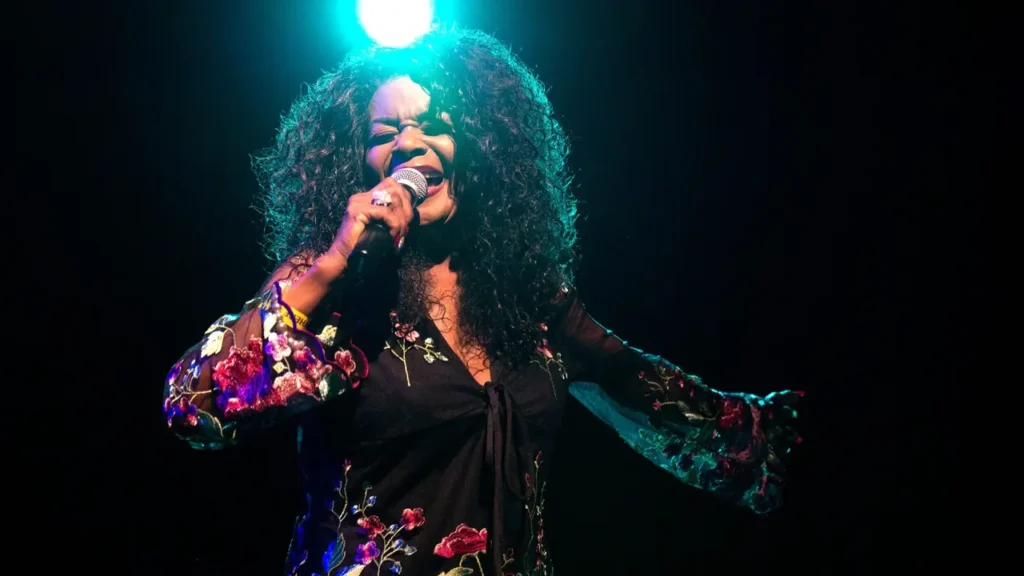
Last researched: November 12, 2026. This is a reported remembrance and listening guide, not an account based on interviews with her family. Historical context and listening suggestions are distinguished from confirmed news. The accompanying conceptual image is an editorial illustration, not a photograph of the singer.
Disco singer Rochelle Fleming passes: What has been confirmed?
The central facts are straightforward. Rochelle Fleming’s manager, George Iz Correia, shared an announcement through the singer’s official social account on behalf of the Fleming/Finney family. Reports identify the deceased as Rochelle Fleming-Finney, the artist known professionally for her work with First Choice. The statement placed her death in Philadelphia and said arrangements to celebrate her life would be announced later.
FOX’s reporting also attributes the news to the manager’s announcement. Reports differ about when the social post first appeared, so this article does not assign a definitive posting date. The date of death given in that announcement is November 5; a publication date on a subsequent obituary is a different thing.
There is additional institutional acknowledgment. BMG published a tribute on November 9, identifying her as First Choice’s founding member and lead singer. That statement matters because the company represents part of the group’s catalog through Salsoul. It provides a direct acknowledgment from an organization connected with the recordings, alongside news coverage of the family statement.
| Question | Information supported by the reviewed reporting |
|---|---|
| Who died? | Rochelle Fleming-Finney, professionally known as Rochelle Fleming |
| What was she known for? | Founding membership and lead vocals in First Choice |
| Date of death | November 5, 2026, according to the family announcement as reported |
| Place | Philadelphia, Pennsylvania, according to that announcement |
| Reported age | 72, as stated in the announcement and contemporary reports |
| Cause of death | Not disclosed in the reviewed announcement/reporting |
| Memorial arrangements | The announcement said details would follow; none are asserted here |
A brief factual distinction is worth preserving: the family-reported age is the basis for the headline. Some biographical databases contain inconsistent birth or death details. This article does not calculate a competing age from those entries or present an unverified birthday as established fact. The announcement and the person’s music are more important than reproducing a database discrepancy.
Rochelle Fleming obituary: The person behind a familiar voice
For many listeners, recognition may arrive before the name does. A vocal phrase in a DJ set, an old soul compilation, or a new recording built around a familiar musical element can lead someone back to First Choice. That is one reason a music obituary needs to identify the singer as carefully as it identifies the song.
The phrase “disco singer” is accurate as a broad description, but it is incomplete. Rochelle Fleming worked in a musical world where soul vocals, group harmonies, club arrangements and record-making craft overlapped. Treating those categories as sealed boxes makes her career harder to understand. A record could belong on R&B radio and still become essential to a dance floor.
There is also a difference between remembering an artist and inventing a personal portrait. The recordings allow a listener to discuss a public performance. They do not give an outside writer access to private conversations, final wishes or family experiences. This remembrance therefore focuses on documented career information and practical ways to explore the catalog.
A useful starting point is the relationship between a featured voice and a vocal group. The lead singer gives a recording its recognizable center; the other voices, arrangement and rhythm section help create the setting in which that center works. Appreciating Rochelle Fleming does not require turning First Choice into a solo project with a different name. The group identity belongs in the story.
That perspective also helps new listeners avoid a common mistake with older music: assuming the most easily searchable remix is necessarily the version that first introduced the artist. Different releases can foreground different elements. A careful introduction makes room for the original group recordings, later mixes and the singer’s own subsequent work.
How the First Choice singer emerged from Philadelphia
AllMusic’s group biography places First Choice’s beginnings among Philadelphia school friends and identifies an earlier group name, the Debonettes. It describes the connection with local radio personality Georgie Woods and the creative network around Norman Harris and Allan Felder. The point is a local path into recording, rather than the sudden appearance of a finished act.
Rochelle Fleming and her collaborators developed within a city where singers, musicians, songwriters, radio personalities and producers could shape one another’s opportunities. It is more useful to understand that network than to imagine every important recording emerging from a single person’s isolated inspiration. The singer’s contribution remains central without erasing the people around her.
The group’s early breakthrough came with “Armed and Extremely Dangerous” in 1973. For a contemporary UK perspective, Official Charts maintains the single’s chart-history page. It is a useful primary chart reference for readers checking the record’s reach, rather than relying on an unsourced number repeated on a playlist description.
Subsequent First Choice records helped establish a recognizable catalog rather than a single-song identity. The title “Smarty Pants,” the dramatic framing of “The Player,” and the later dance-floor recordings give a new listener several different entry points. There is no need to crown one track the only legitimate introduction. Different songs answer different questions about the group.
Rochelle Fleming’s place in this story is best understood through continuity. The early success explains why the group already had a public identity before the later Salsoul-associated material became so important to club listeners. Discovering the later recordings first should be an invitation to move backward through the catalog, not a reason to ignore the earlier chapter.
Philadelphia soul, disco and the setting for Rochelle Fleming’s career
Philadelphia soul is not simply a synonym for disco. The Encyclopedia of Greater Philadelphia’s account of soul music describes a wider musical history involving recording, radio and changing audiences. Its value here is context: First Choice belonged to a living regional musical culture, not a genre category created only for retrospective playlists.
A listener can explore that context by attending to the relationship between the vocal and the arrangement. Ask what the instrumental layers are doing when the singer begins a line. Does the backing leave space, answer the voice, or push the phrase forward? These questions are more revealing than treating lush instrumentation as background decoration.
The Smithsonian’s discussion of disco’s development identifies Philadelphia soul’s contribution to the fuller, string-rich sound associated with dance music. This does not mean every Philadelphia record sounded alike. It helps explain why a vocalist’s identity and a carefully constructed instrumental setting need to be considered together.
For Rochelle Fleming, this context makes the transition between a soul single and a club favorite easier to follow. The emotional point of a performance does not disappear because the record invites dancing. A forceful delivery, a conversational turn of phrase or a well-placed response can carry meaning even when the rhythm is the first thing that catches attention.
It is equally important to avoid making musical history too neat. Artists do not necessarily record with a future textbook label in mind. A listener looking backward may hear connections among styles that were still taking shape at the time. Describing those connections is useful; pretending each record was created to fulfill a predetermined historical role is not.
Rochelle Fleming’s career invites this more flexible kind of listening. Follow the recordings from one setting to another, and the genre labels become helpful signposts instead of rigid instructions. Soul, disco and house can explain different parts of the record’s life without competing for exclusive ownership of the voice.
Rochelle Fleming songs: Seven starting points for new listeners
The following sequence is an editorial listening suggestion, not a ranking of commercial success, a complete discography or a claim that these are the singer’s personal favorites. The track titles are documented in the sources linked throughout this article. The listening questions are our own way of helping a newcomer engage with the music.
“Armed and Extremely Dangerous”
Begin with the breakthrough rather than a later reconstruction of it. The single introduces the early First Choice identity and gives a listener a reference point for everything that follows. You do not need to know its chart history before pressing play, but knowing that it was an early success helps explain its place in a career overview.
On an initial listen, follow the lead vocal without trying to analyze every instrument. On a second listen, shift attention to the supporting voices and the way the arrangement makes room for the main line. This is a simple exercise, but it prevents a familiar title from substituting for actual attention to the performance.
Rochelle Fleming should remain a named presence in that experience. Old recordings are often introduced through a compilation title, a genre label or a producer credit. Those can be useful routes into the music, but they should not make the vocalist disappear. The early single is a reminder that the catalog was built around identifiable performers, not anonymous samples waiting for later use.
“Smarty Pants”
Move next to another early First Choice title. The purpose is not to prove that the group could repeat a breakthrough. It is to hear how a different song premise changes the performance a listener is being asked to follow. Two tracks from the same act can invite quite different relationships between singer and audience.
Try listening without opening a lyric page. Notice where a phrase is emphasized and where a pause changes the sense of the next line. A singer’s communication involves timing as well as vocabulary. You can learn a great deal from the placement of a word without reproducing any of the song’s lyrics.
This is also a good moment to distinguish a song’s character from the artist’s biography. A bold or playful performance is not evidence that a singer behaved the same way in private life. Rochelle Fleming’s work can be appreciated as performance without turning a musical persona into an unsupported personal story.
“The Player”
“The Player” offers another route into the group’s established repertoire. Search results and catalog entries may present a title with a part number or a mix designation. Before comparing recordings, check which version is being offered. A different running time does not necessarily mean a platform has uploaded the wrong song.
For this selection, focus on how the main vocal relates to the song’s dramatic premise. Does the performance sound like an account being delivered to someone, a response, or a statement directed outward? These are listening prompts rather than claims about what the artist intended. They encourage the listener to hear a performance as a sequence of decisions.
Rochelle Fleming songs are sometimes encountered as isolated highlights in larger disco collections. Hearing several First Choice recordings together restores context. You begin to notice the continuity of a group voice while leaving space for the individual character of each song, which is more rewarding than treating every track as an interchangeable dance-floor mood.
“Doctor Love”
“Doctor Love” is a natural bridge into the group’s later 1970s material. AllMusic’s Rochelle Fleming biography connects the recording with the Gold Mind/Salsoul chapter. For a newcomer, that label history is useful orientation, but it should not become an entrance exam before the music can be enjoyed.
Listen once for the central vocal and again for the balance between the vocal and the repeated instrumental framework. Dance recordings reward the second approach because a detail that seems secondary at first may help carry the track over time. The singer is part of that ongoing motion, not simply a feature placed on top of it.
Rochelle Fleming’s name belongs beside the record because a hook is still a performance. When a melody or vocal phrase becomes familiar through repeated club use, familiarity can make the original work seem inevitable. Returning to the group recording helps reverse that habit: someone had to deliver the part that later listeners came to recognize.
“Let No Man Put Asunder”
This is an essential selection for understanding why First Choice continued to matter beyond the original disco period. Resident Advisor’s remembrance identifies the track as a lasting point of contact with early house music. It is worth approaching both as a song in its own right and as a recording with an extended afterlife.
Start with an identified First Choice version, then compare a clearly credited remix if one is available in your chosen catalog. Pay attention to what changes: the length of an introduction, the spacing around a vocal entrance, the return of a section, or the balance between voice and rhythm. Do not assume the longest version is automatically the original.
The Rochelle Fleming legacy becomes easier to understand when these versions are heard as related works rather than competing replacements. A later mix can offer another perspective on a performance. The original recording still provides the foundation that lets a listener recognize what the reworking has retained, emphasized or reorganized.
“Love Thang”
“Love Thang” is another useful selection because its history reaches listeners who may approach First Choice through a much newer artist. The connection with Kaytranada’s “10%” provides a practical comparison, but the source recording deserves a complete listen before it becomes an exercise in locating a borrowed element.
Try separating two questions: what do you enjoy about the earlier recording, and what does the later recording do with the material it uses? Those questions have different answers. One concerns the experience of the whole First Choice track; the other concerns a new production’s relationship to earlier music. Neither needs to cancel the other.
Rochelle Fleming’s contribution should not be described as valuable only because somebody later sampled the record. Sampling can help introduce an earlier performance to a new audience. It does not retroactively create the performance’s worth. A listener can acknowledge a later connection while still allowing the original song to stand independently.
“Double Cross”
Finish this short introduction with “Double Cross,” then resist the urge to treat seven selections as a complete account. The point of an entry playlist is to open a catalog. It should leave you with a clearer sense of what you want to explore next, whether that means an album, another original single or a documented remix.
For this final selection, listen to the group identity as much as the lead. Track how the main voice and the surrounding arrangement establish a shared shape. If you have been focusing closely on the singer, deliberately switching attention can reveal how much a memorable recording depends on relationships among its parts.
A Rochelle Fleming listening session can then become less about collecting recognizable titles and more about understanding a body of work. Return to the first track after the seventh. You may notice a connection you missed initially, or simply find that the earlier selection makes more sense now that you have heard a wider range of material.
Why Delusions deserves an album-length listen
A collection of singles is an efficient introduction, but it is not the only useful way into First Choice. Apple Music lists Delusions in the group’s catalog, while AllMusic maintains a separate album entry. These listings help distinguish an album from later compilations assembled around familiar titles.
For Rochelle Fleming listeners discovering the music after the death announcement, the album format offers a different kind of attention. A single is often encountered as a self-contained event. An album asks you to stay with an act through changes in pace, emphasis and mood, including material that may not appear in a short introductory playlist.
Check the edition before drawing conclusions about sequence. A bonus version can include additional material or alternate mixes that were not part of the original album program. That does not make the edition unsuitable for listening. It means the listener should know whether they are hearing the original sequence, an expanded presentation or a compilation.
One practical approach is to play the identified album tracks first and save the bonus material for another session. This avoids treating every item in a digital package as if it occupied the same place in the original release. It also gives alternate versions a fair hearing rather than making them compete with the main program for immediate attention.
Rochelle Fleming’s voice can be followed across that larger span without turning the session into a technical investigation. Notice which performance makes you want to replay a passage and which song changes your expectations of the group. Those are useful discoveries even when you do not have the vocabulary of a musician, producer or record collector.
Rochelle Fleming legacy: How a voice travels into house music
A recording’s history does not stop when its first promotional campaign ends. A song can continue through DJs, dancers, collectors, reissues, covers and newly produced music. Resident Advisor connects First Choice’s enduring recordings with this club afterlife. That is a more meaningful account of influence than a vague statement that an artist “inspired everyone.”
The difference between a remix, a sample and a cover matters. A remix reworks material from an existing recording; a sample uses recorded material within another work; a cover is a new performance of an existing composition. Individual releases can involve more complicated combinations, but these distinctions offer a useful starting point when reading credits.
Rochelle Fleming’s recorded voice can therefore have several different kinds of later presence. In one case, listeners may hear an original performance reorganized. In another, a later musician may draw from a musical element in a new context. In a cover, the original singer’s recording is not necessarily present at all, even when the earlier song provides the connection.
This is why the word “influence” should lead to specifics. Which recording is involved? What kind of relationship is documented? Who is credited on the later release? Asking those questions makes the history more interesting and gives the earlier artist recognition that a casual reference to “a disco sample” would withhold.
The Carnegie Hall timeline of disco explains the importance of extended dance records and the DJ’s role in shaping a listening environment. Its historical framework helps explain how a performance could move beyond the short-song format without losing its identity. A voice could become part of a longer musical conversation on a dance floor.
For a present-day listener, the best response is curiosity with clear attribution. When a later track sends you toward an earlier one, follow the connection in both directions. Rochelle Fleming’s place in dance music is not made smaller by hearing her alongside newer work, provided the earlier recording and the people who made it remain visible.
The Kaytranada connection and a careful Grammy distinction
A specific example can make the broader discussion easier to follow. Contemporary coverage connects First Choice’s “Love Thang” with Kaytranada’s “10%,” featuring Kali Uchis. Hypebeast’s report on the video identifies the earlier recording used in the newer track. That is a traceable musical relationship, rather than a resemblance guessed from a brief clip.
The Recording Academy’s 2021 category record identifies “10%” as the Best Dance Recording winner, credited to Kaytranada featuring Kali Uchis. This should not be rewritten as a claim that Rochelle Fleming personally won that Grammy. An earlier recording’s connection to an award-winning track and an individual artist’s own award history are different statements.
The distinction does not diminish the earlier music. It makes the story more precise. Listeners discovering a later hit can follow a documented path toward First Choice while keeping the credits for each release intact. Accuracy is especially important when a remembrance is likely to be condensed into social captions, short videos or a single headline.
For an approachable comparison, listen to the First Choice recording in full, then the newer track in full, rather than jumping repeatedly between tiny excerpts. Afterwards, ask what survives as recognizable material and what belongs to the later production’s separate identity. Rochelle Fleming’s catalog becomes part of a richer listening experience when the source recording is more than a footnote.
Beyond First Choice: Solo recordings and later chapters
The group recordings are the obvious introduction, but they do not contain the whole professional story. Pollstar’s obituary identifies solo releases including “Love Itch,” “Danger!” and “Suffer (The Consequences).” It also notes later reunions. These details provide a reason to keep exploring rather than ending the story at an early group breakup.
When searching for Rochelle Fleming songs from this period, pay close attention to artist credits. A service may place a solo release, a featured appearance and a group recording in different parts of its catalog. Conversely, a compilation may bring them together under one broad artist heading. The organization of a platform is not itself a definitive biography.
A useful listening sequence is to hear one identified solo recording after several First Choice tracks. Do not expect it to recreate the earlier group setting. The point is to notice continuity and difference without assuming that a singer should remain frozen in the arrangement, label relationship or recording format through which you first discovered her.
Rochelle Fleming’s later work also makes a wider point about musical careers. Public attention often compresses an artist into the years that produced the most familiar songs. A more respectful remembrance leaves room for the recordings and performances that followed, even when a short news report cannot document every stage of that work.
This article does not identify a final performance or final recording. Those claims require a complete, current record of activity, not a guess based on the last item found in a quick search. A career can be acknowledged as ongoing across later decades without turning incomplete catalog information into a definitive endpoint.
Tributes from music peers and the catalog community
Tributes help show how a public career is being remembered, but they should be attributed rather than written as if every artist or listener has offered the same response. RTÉ reported a remembrance from Sister Sledge, placing the response within a shared Philadelphia musical connection. This article does not invent additional reactions or private exchanges.
BMG’s own tribute emphasizes the lasting life of First Choice recordings and identifies the company’s connection with part of the Salsoul catalog. That is a particular institutional perspective: remembrance from people involved in preserving and circulating recorded music. It sits alongside the manager’s announcement, rather than replacing the family as the source for personal details.
Rochelle Fleming’s manager also shared personal reflections, as described in PEOPLE’s reporting. Private grief should not be expanded into a story beyond what the person chose to make public. A careful article can acknowledge the relationship and the response without repackaging every intimate detail as entertainment.
For fans, listening and sharing a properly credited recording is one practical form of remembrance. A short note identifying the artist, group and track is more useful than an uncaptioned clip that strips away the very name being commemorated. The music remains accessible through legitimate catalogs, while personal arrangements remain the family’s information to announce.
A practical listening plan for returning fans and newcomers
If the news is your first encounter with Rochelle Fleming, avoid the pressure to understand everything in one sitting. A manageable introduction can begin with three group recordings, followed later by an album and an identified remix. The aim is attention, not completion. You can build a more detailed understanding over several short listening sessions.
Start with the credited First Choice version on a legitimate service. Apple Music’s artist page and Beatport’s First Choice catalog are useful starting points for checking artist and release information. Catalog availability, versions and purchase options can vary by country, so check your own account rather than assuming every edition is universally available.
Use the first session to hear songs as complete performances. During a second session, compare one alternate mix with a clearly identified earlier version. During a third, explore a solo recording. This order gives the original group identity room to settle before a later production or catalog label changes the frame through which you hear it.
Rochelle Fleming’s music can also be explored with another person. Each listener can choose a different focus: the lead voice, the supporting vocals, the rhythm or the arrangement. Compare what stood out afterwards. The exercise works because listening is selective; two people can notice different parts of the same recording without one having the “correct” response.
Keep a small note of versions you enjoyed. Record the artist credit, title, mix name and release source, not just a vague description such as “the long one.” This becomes especially helpful when a service offers several similarly titled tracks. It also makes recommendations more useful to friends who are trying to locate the same recording.
Finally, leave room for songs outside the introductory list. A guide is a route into a catalog, not permission to ignore everything else. The Rochelle Fleming legacy is better served by thoughtful discovery than by a race to play the same three familiar selections and declare an entire career understood.
Why remembering the vocalist matters
Dance music is often described through the people arranging, mixing or selecting it. Those contributions deserve recognition. So does the person whose recorded performance gives a track its human center. When a voice survives across many versions, the singer’s identity can become less visible precisely because the performance has become so widely familiar.
Rochelle Fleming offers a reason to correct that imbalance in ordinary listening habits. Read the artist line, check the group credit and follow the recording back to an identified release. This is not a demand that every listener become an archivist. It is a small way to make sure musical recognition also becomes recognition of the people involved.
There is a practical benefit as well. Once a singer’s name is known, a listener can find more than the one track that first caught their attention. A name opens connections across groups, solo releases, guest appearances and later catalog editions. An anonymous hook closes those possibilities; an attributed performance opens them.
The PBS history of disco places the music within Black, Latino and LGBTQ communities and discusses its influence beyond its commercial peak. That context matters because records live through audiences and social spaces, not only through industry classifications. A remembrance can recognize those communities without claiming every listener had the same experience.
Rochelle Fleming’s contribution can therefore be remembered at several scales: the individual performance, the group recording, the musical network around it and the later listeners who found it. None requires a sensational final chapter. The documented work offers a substantial reason to return to the music with the singer’s name clearly attached.
Frequently Asked Questions
Disco singer Rochelle Fleming passes: Is the news confirmed?
Yes. Contemporary reporting attributes the announcement to her manager, acting on behalf of her family, and BMG has published an official tribute. The reports reviewed identify the singer as Rochelle Fleming-Finney, professionally known for First Choice. This article relies on those attributed statements rather than an unverified social-media rumor or an anonymous repost.
When did Rochelle Fleming die?
The family announcement, as reported by Pollstar and other outlets, gives November 5, 2026, as the date of death. Subsequent articles were published on later dates. Those publication dates should not be confused with the date stated in the announcement, and this article does not adopt conflicting dates found in some biographical listings.
How old was Rochelle Fleming?
Rochelle Fleming’s age was reported as 72 in the announcement and in contemporary news coverage. That is the basis for the age used here. Some databases contain inconsistent biographical details, so a precise birth date is not asserted. A family-reported age is identified as such rather than silently replaced with a calculation from conflicting records.
What was the cause of Rochelle Fleming’s death?
No cause was disclosed in the announcement or the contemporary reports reviewed for this article. It would be inappropriate to infer a medical explanation from her age, older photographs or unrelated online comments. Any later update should be attributed to a reliable source authorized to provide that information, rather than presented as a guess.
Who was the First Choice singer?
Rochelle Fleming was a founding member and the lead voice associated with the Philadelphia soul and disco group First Choice. The group is known for recordings including “Armed and Extremely Dangerous,” “Doctor Love” and “Let No Man Put Asunder.” Her group work provides the central starting point for understanding the career discussed in this remembrance.
Which Rochelle Fleming songs should a newcomer try first?
The seven selections in this guide are “Armed and Extremely Dangerous,” “Smarty Pants,” “The Player,” “Doctor Love,” “Let No Man Put Asunder,” “Love Thang” and “Double Cross.” This is an editorial introduction to group recordings, not a sales ranking or complete discography. After those selections, an album-length listen and an identified solo recording offer useful next steps.
Why is “Let No Man Put Asunder” important?
The recording is a documented connection between First Choice and later club culture. Resident Advisor discusses its continuing presence in DJ sets and reworkings, while BMG includes it among the group’s enduring recordings. A useful introduction compares identified versions and keeps the First Choice credit visible instead of treating a familiar vocal as anonymous material.
What album includes “Doctor Love” and “Let No Man Put Asunder”?
Both recordings are associated with First Choice’s 1977 album Delusions. Current services may present an expanded or bonus edition, so check the edition’s track list before assuming all included versions belonged to the original album sequence. The group’s album can be found through legitimate catalog listings, including the Apple Music link provided above.
Did Rochelle Fleming also make solo recordings?
Yes. Rochelle Fleming’s career included releases beyond the original First Choice group catalog. Pollstar identifies “Love Itch,” “Danger!” and “Suffer (The Consequences)” among those recordings. When searching, check the artist and version credits carefully, since solo records, group recordings and later compilations may be organized differently by different music services.
What connects First Choice with Kaytranada’s “10%”?
Reporting on the newer recording identifies a sample connection with First Choice’s “Love Thang.” Kaytranada’s track features Kali Uchis. Listening to the full earlier recording before the newer one is a useful way to understand the connection without reducing the source song to a short fragment or assuming the two recordings serve the same musical purpose.
Did Rochelle Fleming win the Grammy awarded to “10%”?
The Recording Academy identifies the 2021 Best Dance Recording winner as Kaytranada featuring Kali Uchis for “10%.” The documented connection with an earlier First Choice recording should not be rewritten as a personal Grammy win for Fleming. This distinction preserves the credits of the award-winning release while still acknowledging the earlier music involved.
Is the Rochelle Fleming legacy limited to disco?
No single genre label explains the entire catalog’s life. Rochelle Fleming’s group work is discussed in relation to Philadelphia soul, disco and later house music, with further interest generated through remixes and sampling. Those connections can be explored without claiming that she personally created each genre or that every later record carries her original vocal.
Have memorial or funeral details been announced?
The announcement quoted in the reports reviewed said arrangements to celebrate her life would be shared later. This article does not list an unverified venue, date, donation page or attendance instruction. Anyone seeking current arrangements should check an authenticated family or representative announcement and confirm that any later information refers to this singer.
Where can listeners explore First Choice legally?
Legitimate catalogs such as Apple Music and Beatport provide artist or release listings linked in this guide. Availability depends on your country, account and the particular edition or mix. Use official artist or label uploads where available, and avoid assuming an uncredited upload has the correct title, performer identification or permission to distribute the recording.
How can fans share a respectful tribute?
Name the artist and group, identify the song and link to a legitimate recording or verified announcement. Avoid circulating a guessed cause of death or presenting an unrelated photograph as hers. A personal memory can be clearly framed as your own experience with the music, without claiming knowledge of family circumstances or private conversations.
Remembering Rochelle Fleming through the records
The immediate news is a loss for the people who knew her and for listeners who recognize her voice. The longer story is a catalog that remains worth exploring on its own terms: early singles, group albums, solo work and the later musical relationships that carried the recordings into new settings.
A Rochelle Fleming remembrance need not choose between the facts of the announcement and the pleasure people found in the music. It can report the former accurately and make room for the latter through careful listening, clear credits and a willingness to discover more than one familiar title.
For someone arriving at the name for the first time, start with a complete First Choice recording. Follow it into another song, an album or a documented remix. That is a practical way to turn a passing headline into recognition of the voice and work behind it.
More entertainment coverage
Visit EpicoFilm’s homepage for more entertainment reporting.