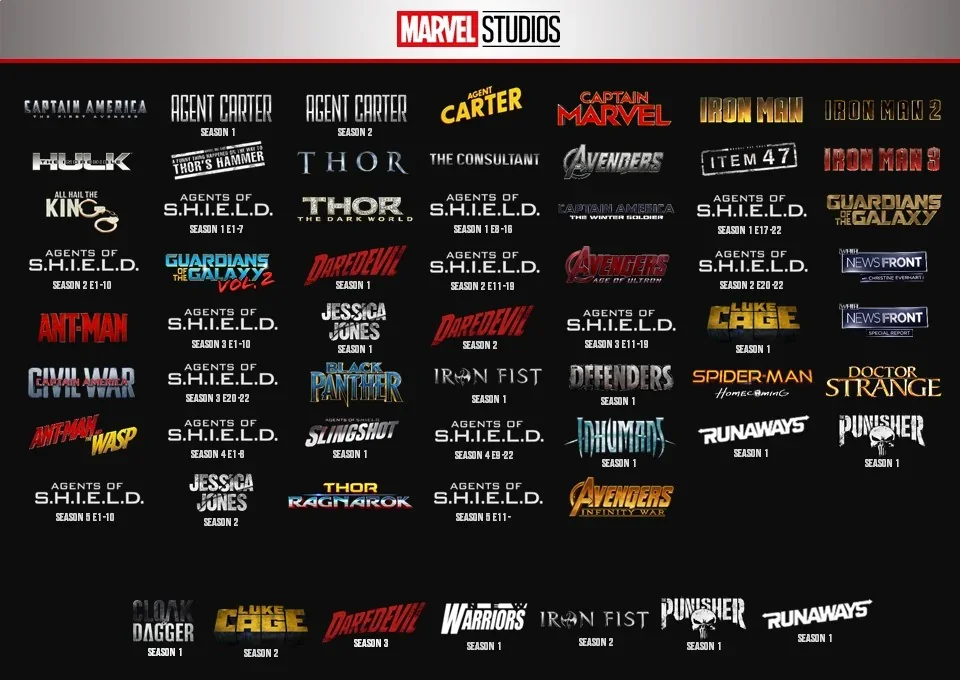

MCU release order is the clearest starting point for most first-time viewers: begin with Iron Man (2008), then follow the films and shows in their original release sequence. Marvel chronological order instead rearranges those stories around events inside the fictional universe. Both approaches can work, but MCU release order better preserves introductions, reveals and the context of post-credit scenes.
This beginner MCU guide explains how to watch MCU movies without turning your marathon into homework. It compares the Infinity Saga watch order with the broader Marvel cinematic universe timeline, explains where Disney+ shows fit, and separates an approachable first watch from a detailed chronological rewatch. Use the official platform guides linked below to check individual titles and current regional availability.
Quick Answer
For absolute beginners, watching the MCU in theatrical MCU release order—beginning with 2008’s foundational Iron Man—is the standard starting point recommended by official platforms like Disney+. This approach preserves vital post-credit scene setups, organic character introductions, and the natural evolution of cinematic technology. On the other hand, if you prefer following historical in-universe timelines—beginning with ancient eras or World War II before leaping forward—switching to a chronological order (tracked by entertainment databases like Rotten Tomatoes) offers a unique perspective for second-time viewers or continuity completionists.
As the franchise has grown from the foundational building blocks of the Infinity Saga into the sprawling Multiverse Saga, integrating Disney+ episodic shows, vintage one-shots, and expanding animated series has made mapping the timeline increasingly complex. Weighing the pros and cons of MCU release order versus historical continuity will ensure your viewing journey is as engaging and seamless as possible.
Understanding the MCU Watch Order Debate
Embarking on a journey through the Marvel Cinematic Universe (MCU) is a massive undertaking. Spanning nearly two decades, dozens of feature films, streaming series, animated projects, and special presentations, the franchise represents one of the most ambitious interconnected storytelling experiments in cinematic history. For a first-time viewer, simply deciding where to press play can feel like a logistical puzzle. The central dilemma facing newcomers boils down to a fundamental choice: should you experience the franchise in the exact order the projects premiered in theaters, or should you rearrange them to follow the internal historical timeline of the fictional universe?
Why MCU Release Order Preserves Introductions
The most straightforward and widely recommended starting point for beginners is the theatrical MCU release order. This path mirrors the exact journey experienced by audiences who followed the franchise in real time from its inception. According to guidelines provided by platforms like Disney+, release order serves as the primary baseline for both newcomers and fans preparing for new theatrical rollouts.
Watching in MCU release order means experiencing the universe’s evolution organically. You start where the creators started: with Iron Man (2008), moving through Phase One titles like The Incredible Hulk (2008), Iron Man 2 (2010), Thor (2011), and Captain America: The First Avenger (2011), before culminating in the first major team-up, The Avengers (2012). This approach preserves the natural progression of filmmaking technology, audience expectations, and overarching narrative reveals. When a post-credits scene teases a future film or a new cosmic threat, you experience that tease in the precise historical context in which it was intended to be seen, avoiding accidental spoilers for plot twists or character fates established in earlier-released projects.
The Appeal of the Chronological Timeline
On the other side of the debate is the chronological watch order, which rearranges the viewing schedule to track the internal chronology of the MCU universe rather than real-world premiere dates. This method attempts to map out the fictional history of Earth and the wider cosmos from past to present.
While Iron Man officially launched the franchise in cinemas, it is not the earliest story set within the fictional universe. For instance, Captain America: The First Avenger (2011) takes place decades earlier, during World War II in 1942. Furthermore, tracking resources such as Rotten Tomatoes reveal that the chronological timeline extends even further back into antiquity; the animated series Eyes of Wakanda (Season 1) features historical narratives and lore dating as far back as 1260 B.C.
Chronological watch lists also incorporate various television series, streaming specials, and short films—such as the Agent Carter series and associated shorts—interspersing them between feature films to create a continuous, uninterrupted historical narrative.
Weighing the Experience for First-Time Viewers
Choosing between these two viewing strategies depends heavily on what kind of viewer you are. MCU release order protects the intended mystery boxes of the franchise, ensuring that cinematic tricks, character introductions, and universe-shaking reveals land with the exact emotional weight the writers and directors designed. It also prevents newer television shows or mid-franchise prequels from disrupting the natural pacing of the overarching narrative sagas.
Conversely, chronological order appeals to viewers who prefer historical narrative continuity—watching a World War II origin story before jumping to modern-day technological marvels. However, chronological viewing can occasionally dilute the impact of post-credits scenes, which often reference release order rather than immediate in-universe chronology. Understanding these differences allows you to choose the path that best suits your preferred style of storytelling exploration.
What Is MCU Release Order?
For anyone diving into the Marvel Cinematic Universe for the first time, the MCU release order approach offers the most straightforward entry point. Simply put, watching the MCU in MCU release order means experiencing the films and television series in the exact sequence they debuted in theaters or premiered on streaming platforms. This is the method officially recommended by platforms like Disney+ for new viewers and fans looking to catch up ahead of theatrical premieres.
Rather than jumping back and forth across decades of in-universe history, release order maps your viewing journey directly to how the real-world audience experienced the franchise over more than a decade and a half. It mirrors the exact creative evolution of Marvel Studios, ensuring that you witness filmmaking technology, character introductions, and overarching narrative stakes grow organically.
The Architecture of the Infinity Saga
The MCU release order is structurally divided into massive storytelling blocks known as Sagas, which are further broken down into individual Phases. The foundation of the entire franchise is the Infinity Saga, spanning from 2008 through 2019 and encompassing Phases One, Two, and Three.
Phase One establishes the core Avengers team members and trains the audience in the post-credits scene tradition. It begins with Iron Man (2008), which launched the shared universe, and proceeds through:
- The Incredible Hulk (2008)
- Iron Man 2 (2010)
- Thor (2011)
- Captain America: The First Avenger (2011)
- The Avengers (2012)
Following this initial setup, Phase Two and Phase Three expand the cosmic and terrestrial boundaries of the universe. Phase Two features sequels like Iron Man 3 (2013), Thor: The Dark World (2013), and Captain America: The Winter Soldier (2014), alongside team expansions like Guardians of the Galaxy (2014) and Avengers: Age of Ultron (2015), concluding with Ant-Man (2015). Phase Three raises the stakes significantly, running from Captain America: Civil War (2016) through the culmination of the Infinity Stones storyline in Avengers: Endgame (2019), while introducing breakout hits like Black Panther (2018) and Captain Marvel (2019) along the way.
Entering the Multiverse Saga
Following the conclusion of the Infinity Saga, the franchise transitioned into the Multiverse Saga, which introduces complex temporal mechanics, alternate realities, and a massive expansion into episodic television on Disney+.
Phase Four’s theatrical film lineup starts with Black Widow (2021) and unfolds through theatrical releases and streaming series like Shang-Chi and the Legend of the Ten Rings (2021), Eternals (2021), and Black Panther: Wakanda Forever (2022). As detailed in guides from entertainment databases like Rotten Tomatoes, subsequent phases continue to balance traditional theatrical rollouts with interconnected streaming content.
Why Beginners Should Consider MCU release order
Choosing MCU release order protects you from major narrative spoilers. Marvel Studios deliberately designed post-credit sequences and narrative drops to tease the projects that were slated to come out next in the real world. If you watch out of release order, a post-credits scene might spoil the resolution of a movie set earlier in the fictional timeline.
Furthermore, MCU release order allows you to appreciate the technical growth of the franchise. Special effects, budget scales, and directorial styles evolved rapidly from the grounded, practical tone of 2008’s Iron Man to the cosmic scale of later crossover events. Experiencing that progression naturally prevents the jarring whiplash of jumping between modern, high-budget digital spectacles and earlier foundational entries.
Infinity Saga Watch Order: The Three Phases
For beginners diving into the Marvel Cinematic Universe, the Infinity Saga represents the massive, foundational block that establishes the core heroes, cosmic mechanics, and overarching threats of the franchise. According to official guidelines like those outlined by Disney+, experiencing this saga in theatrical MCU release order is the standard recommended path for newcomers. This method ensures you experience the narrative twists, character introductions, and post-credit setups precisely as audiences did during their original theatrical runs.
Phase One: Laying the Groundwork
Phase One establishes individual heroes before bringing them together into a unified team. This initial block sets the tone of the franchise, blending grounded technology with early hints of cosmic mythology.
- Iron Man (2008): The film that launched the entire cinematic universe, introducing Tony Stark and setting the modern blueprint for Marvel adaptations.
- The Incredible Hulk (2008): Continuing the early universe-building with Bruce Banner’s radioactive struggles and military pursuit.
- Iron Man 2 (2010): Expanding Stark’s world and introducing key framework elements for broader S.H.I.E.L.D. involvement.
- Thor (2011): Introducing Asgard and mythological cosmic elements to a previously Earth-centric cinematic landscape.
- Captain America: The First Avenger (2011): Stepping back to World War II to introduce Steve Rogers, establishing the historical roots of the franchise’s overarching conflicts.
- The Avengers (2012): The monumental crossover event that concluded Phase One, uniting the standalone heroes against a massive alien threat in New York.
Phase Two: Expanding the Universe
Following the success of the first team-up, Phase Two broadens the horizons of the MCU. It explores the psychological aftermath of the New York invasion, introduces new cosmic ensembles, and destabilizes internal security structures on Earth.
- Iron Man 3 (2013): Dealing with Tony Stark’s personal fallout and anxiety following the events of The Avengers.
- Thor: The Dark World (2013): Furthering Asgardian lore and exploring ancient cosmic forces.
- Captain America: The Winter Soldier (2014): A espionage thriller that fundamentally shifts the status quo of modern government oversight within the franchise.
- Guardians of the Galaxy (2014): Venturing deep into the cosmic side of the universe with an entirely new, music-driven ensemble cast.
- Avengers: Age of Ultron (2015): The second major team-up film, testing the internal cohesion and morality of the Avengers.
- Ant-Man (2015): Closing out Phase Two by introducing shrinking technology, quantum mechanics, and a distinct heist-oriented narrative tone.
Phase Three: The Climax of the Infinity Saga
Phase Three spans from Captain America: Civil War (2016) through Avengers: Endgame (2019), representing the expansive final block of the Infinity Saga. This phase incorporates critical titles like Black Panther (2018) and Captain Marvel (2019), steadily raising the stakes across multiple isolated and interconnected storylines.
Watching Phase Three in release order preserves the intended emotional weight of shifting hero alliances, geopolitical conflicts, and the escalating tension of universal threats. Every standalone movie and crossover event during this multi-year stretch builds directly toward the narrative convergence of the saga’s final chapters, making theatrical MCU release order essential for tracking how the universe evolved in real time.
Navigating the Multiverse Saga
While the Infinity Saga established a clear, largely theatrical roadmap for the Marvel Cinematic Universe, the subsequent era—known as the Multiverse Saga—fundamentally changed how stories are consumed. For beginners tackling the franchise in MCU release order, this phase introduces a massive expansion not just in narrative scope, but in medium. Alongside traditional theatrical releases, the Multiverse Saga integrates serialized streaming television directly into the core narrative timeline.
According to official distribution guides such as Disney+, maintaining the release order becomes essential during this stretch to understand how character arcs, post-credit scenes, and overarching cosmic rules unfold across both film and episodic formats.
The Shift to Streaming and Phase Four Kickoff
Phase Four marks a departure from the clean theatrical pacing of the first three phases. Following the conclusion of the Infinity Saga, Marvel Studios utilized streaming platforms to explore secondary characters and introduce entirely new concepts between major cinematic events.
Phase Four officially opens with Black Widow (2021). Although set chronologically earlier in the timeline (taking place shortly after Captain America: Civil War), watching Black Widow in MCU release order provides the intended viewing experience for audiences who followed the theatrical pipeline in real-time. It bridges the gap between past tragedies and the post-Endgame landscape.
Following this initial entry, Phase Four rapidly broadens its cinematic universe through varied theatrical releases that introduce fresh mythologies.
Expanding Horizons: Shang-Chi, Eternals, and Sequels
As Phase Four progresses, the MCU release order guides viewers through entirely new corners of the universe, introducing martial arts fantasy and ancient cosmic beings before returning to familiar franchises.
- Shang-Chi and the Legend of the Ten Rings (2021): Introduces mystical elements and a brand-new lead hero to the overarching tapestry.
- Eternals (2021): Explores millennia-old cosmic entities shaping human history, pushing the scale of the universe far beyond Earth-bound conflicts.
- Black Panther: Wakanda Forever (2022): Serves as an emotional and narrative capstone to Phase Four, dealing with grief and legacy following the passing of Chadwick Boseman, while expanding the geopolitical landscape of the MCU.
As documented in comprehensive trackers like Rotten Tomatoes, viewing these films in the sequence they premiered in theaters ensures that world-building rules—such as the introduction of new metals, magical artifacts, and cosmic threats—are revealed to the audience organically, rather than out of historical sequence.
Keep the Phase Three ending distinct from the Avengers story’s climax: MCU release order continues after Endgame with Spider-Man: Far From Home (2019), which Sony identifies as the Infinity Saga’s closing chapter. For the next phase, Marvel identifies WandaVision as the start of Phase Four. A film-only list and a combined film-and-television list therefore have different opening entries.
Entering Phase Five and the Multiverse Expansion
Moving past Phase Four, the Multiverse Saga accelerates into Phase Five, cementing alternate realities, variant timelines, and multiversal stakes as the primary driving force of the franchise.
Phase Five kicks off with theatrical tentpoles like Ant-Man and the Wasp: Quantumania (2023), which pivots the MCU away from localized threats toward macroscopic antagonists that span multiple realities. For beginners, sticking to the release order through these later phases prevents narrative whodunits and confusion regarding character status quo.
Because the Multiverse Saga relies heavily on audience familiarity with previous cinematic events—and now, key streaming series events—watching in MCU release order ensures that you experience the franchise’s evolving rules of reality in the exact sequence the filmmakers intended. While chronological watchlists offer a fascinating historical perspective of the in-universe timeline, the MCU release order remains the safest harbor for newcomers attempting to make sense of an expanding multiverse.
Marvel Chronological Order: What Changes?
Watching the Marvel Cinematic Universe in chronological order means arranging every feature film, television series, animated project, and special presentation according to when its events take place within the fictional in-universe timeline. Instead of following the real-world calendar of theatrical premieres and studio production schedules, this method maps out a continuous historical narrative from ancient history through the modern day and beyond.
This approach fundamentally alters how viewers experience character introductions, technological advancements, and overarching cosmic conflicts. Because Marvel Studios frequently jumps backward and forward across decades—and occasionally centuries—to explore specific backstories, a chronological watch-through places historical context right at the forefront.
Shifting the Starting Point: From 2008 to Ancient History
The most immediate difference a viewer notices when switching from release order to chronological order is where the journey begins. While Disney+ highlights 2008’s Iron Man as the traditional entry point for MCU release order, the in-universe timeline stretches back much further.
For live-action feature films, Captain America: The First Avenger (2011) serves as the earliest major stepping stone, anchoring its primary narrative during World War II in 1942. However, comprehensive tracking guides—such as data compiled by Rotten Tomatoes—reveal that the timeline begins significantly earlier through animated storytelling. Projects like the first season of Eyes of Wakanda feature historical narratives and lore dating back as far as 1260 B.C., introducing viewers to centuries of Vibranium-related history long before modern heroes don their suits.
By starting with these historical foundations, viewers watch the evolution of human civilization, secret societies, and cosmic artifacts develop sequentially. Major world-altering events, such as the ancient deployment of Infinity Stones or secret historical conflicts, are witnessed in their original temporal context rather than as expositional flashbacks delivered years later.
Integrating Television, Shorts, and Special Presentations
Another defining characteristic of the chronological watch order is the heavy integration of episodic television, direct-to-video short films, and streaming specials. While MCU release order generally groups films into multi-year cinematic phases, chronological order weaves serialized storytelling directly between feature-length movies.
For example, early-era chronological lists frequently incorporate historical tie-ins like the Marvel One-Shot: Agent Carter short film and the subsequent television series of the same name. These projects slot neatly alongside World War II and post-war milestones, expanding upon government agencies like the Strategic Scientific Reserve (SSR) and the early foundations of S.H.I.E.L.D. before modern heroes like Tony Stark or Thor ever appear.
Because the MCU spans multiple decades of in-universe history, subsequent entries—such as Captain Marvel (2019), which is set in the 1990s—fall years before chronologically later-released films like those set in the modern post-Blip era. This structure prevents viewers from experiencing jarring tonal or technological leaps, ensuring that retro-futuristic elements, Cold War espionage, and futuristic space travel unfold in an organic historical progression.
Benefits and Considerations for Beginners
Approaching the franchise chronologically offers a distinct storytelling rhythm. It allows viewers to trace the progression of specific items, such as the Tesseract or various Infinity Stones, from their ancient origins through various historical eras. Characters who appear as veterans or mentors in modern-set films are first introduced in their prime or during their formative years.
However, adopting a strict chronological approach requires navigating a complex web of streaming platforms, physical media, and varied runtimes. Because newer streaming series and animated anthologies frequently flesh out gaps between major cinematic releases, maintaining an accurate chronological watch list demands careful attention to timeline placement guides. For first-time viewers, balancing feature films with episodic television in exact timeline order can occasionally disrupt the pacing established by original theatrical rollouts, making it essential to weigh personal storytelling preferences against structural complexity.
Marvel Cinematic Universe Timeline: Earliest Events
When you pivot from traditional release order to an in-universe chronological watch-through, the entry point of the Marvel Cinematic Universe shifts dramatically. While the franchise officially kicked off in cinemas with 2008’s modern-day tech-thriller Iron Man, sorting the timeline by historical events drags the narrative anchor back decades—and in some cases, thousands of years—before Tony Stark ever engineered his first suit in a cave.
Shifting the Starting Point: Captain America’s World War II Origins
For viewers sticking strictly to MCU release order, the foundational blocks are straightforward: you experience the MCU in the exact sequence the films and television projects premiered. However, chronological viewing immediately disrupts this setup. According to details outlined in tracking guides such as the Rotten Tomatoes MCU guide, the earliest-set major live-action feature film in the overarching timeline is Captain America: The First Avenger (2011).
Released originally near the end of Phase One—long after audiences had already met Thor, Iron Man, and the Hulk—Steve Rogers’ origin story takes place primarily during the height of World War II, anchored around 1942. Watching this film near the very beginning of a chronological run establishes deep-seated lore right out of the gate. Viewers are immediately introduced to the Tesseract (later revealed as the Space Stone), early iterations of government defense agencies through the Strategic Scientific Reserve, Howard Stark’s pioneering technological contributions, and the foundational conflict against Johann Schmidt and Hydra.
For a beginner, this alters the narrative texture entirely. Instead of starting with a standalone, billionaire-driven tech story in a contemporary setting, a chronological watch begins with a period war drama infused with sci-fi mythology. It reframes how you view later technological leaps and government oversight in subsequent modern-day films.
Diving Deeper Into Antiquity: Exploring Ancient History
The chronological timeline doesn’t stop at the mid-20th century. As Marvel Studios expanded its storytelling framework onto streaming platforms like Disney+, the scope of the universe’s recorded history widened to include ancient eras, mythical realms, and forgotten epochs.
Projects that integrate deeper historical context—such as the animated series Eyes of Wakanda—push the in-universe starting point back significantly further than any live-action feature film has dared to go. Entertainment database metrics indicate that stories featured within the first season of Eyes of Wakanda incorporate historical accounts dating as far back as 1260 B.C. Incorporating these episodic and animated entries into a strict chronological viewing list reveals centuries of secret history regarding vibranium, isolated civilizations, and ancient protectors who safeguarded humanity long before modern costumed heroes ever went public.
The Narrative Trade-Off for Beginners
Starting a marathon with the universe’s earliest historical events offers a distinct flavor of storytelling, but it introduces specific quirks for newcomers. When you watch projects like Captain America: The First Avenger or ancient-era historical segments first, you absorb the universe’s lore as a sprawling, multi-generational epic. Cosmic objects and historical bloodlines gain immediate weight because you witness their introduction long before seeing their modern-day ramifications.
At the same time, this approach requires adjusting to rapid stylistic and technological shifts right at the start of your journey. Moving from ancient historical framing or 1940s gritty war aesthetics directly into futuristic cosmic settings or contemporary New York City can occasionally disrupt the natural pacing for a beginner, contrasting sharply with the smooth, decade-by-decade evolution experienced through the standard MCU release order outlined on platforms like Disney+. Weighing these earliest historical milestones against your personal viewing preferences is essential before committing to a strictly chronological path.
How to Watch MCU Movies Alongside Disney+ Shows
When the Marvel Cinematic Universe launched in 2008, following the franchise meant simply tracking feature films from theater to theater. Today, the viewing landscape has expanded dramatically. Disney+ has transformed the MCU into a multimedia tapestry spanning multi-episode streaming series, animated projects, television specials, and short films. For beginners, figuring out where these episodic additions fit into a watch order—whether following theatrical premieres or the in-universe timeline—presents a unique logistical puzzle.
Understanding how television and short-form content interact with the core movies requires examining how both major watch styles handle supplemental storytelling. While feature films remain the narrative anchors of the franchise, skipping Disney+ releases can leave gaps in character arcs, particularly during the Multiverse Saga where television series directly set up major cinematic events.
The Shift from Feature Films to Episodic Storytelling
In release order, television series and streaming specials generally fall in line with their broadcast or streaming premiere dates relative to the movie slate. For instance, when Disney+ series began rolling out during Phase Four, they debuted alongside or immediately following specific feature films, allowing audiences to experience the franchise roughly in the order the studio produced it. This approach preserves the real-world evolution of Marvel’s special effects, tone, and overarching narrative reveals.
Conversely, chronological watch lists treat streaming series with the same historical rigor applied to feature films. Because shows can be set at any point in the past, present, or future of the universe, platform curators weave individual episodes or entire seasons between movie milestones. This means a viewer following a strict chronological path might pause their movie marathon to watch hours of television before returning to the theatrical timeline.
Handling Marvel One-Shots and Television Specials
Long before dedicated streaming series became a staple of the franchise, Marvel utilized direct-to-video short films known as Marvel One-Shots to flesh out background details between major movie releases. Projects like the original Agent Carter short film offered glimpses into post-World War II espionage before inspiring a multi-season television series.
In a MCU release order format, these shorts typically align with the home media release dates of the specific feature films they accompanied. In a chronological watch path, however, shorts and television specials are slotted into precise historical gaps. For beginners, these shorter entries can feel like optional viewing, but they often introduce concepts, organizations, or supporting characters that reappear in later feature films.
Navigating Animated Additions and Deep Lore
The expansion into animation has further complicated watch orders by pushing the boundaries of when and where stories can take place. While live-action projects generally anchor themselves to recognizable decades of the 20th and 21st centuries, animated series and anthologies explore vastly different eras.
Data compiled by entertainment guides like Rotten Tomatoes highlights how far back chronological timelines can stretch when incorporating animated projects. For example, series such as Eyes of Wakanda feature historical narratives and deep-lore background stories stretching back centuries—such as events dating to 1260 B.C.—long before modern industrial technology or traditional superhero origins take shape.
For beginners, deciding whether to incorporate these expansive animated deep dives right away depends entirely on personal preference. Those following MCU release order typically view animated series as companion pieces to watch after establishing a firm grasp of the core live-action films. Meanwhile, strict chronological purists may encounter ancient historical world-building very early in their journey, completely altering their introduction to the universe compared to someone starting with 2008’s Iron Man.
Beginner MCU Guide: Which Order Should You Choose?
Deciding how to tackle an interconnected cinematic universe spanning dozens of films and television shows can feel overwhelming for newcomers. When choosing between the traditional theatrical path and a historically mapped timeline, your decision ultimately depends on whether you prefer narrative mystery or seamless historical context.
Weighing the First-Time Viewing Experience
For absolute beginners diving into the franchise for the first time, official platforms like Disney+ primarily recommend the standard release order. This path mirrors the exact way audiences experienced the franchise in theaters between 2008 and the present day. Watching films in the sequence they premiered preserves the natural evolution of cinematic technology, special effects, and filmmaking styles over more than a decade and a half.
More importantly, MCU release order protects the narrative tricks, intentional ambiguities, and post-credits scenes designed by the creators. When Marvel Studios released Captain America: The First Avenger in 2011, it arrived three years after Iron Man. Viewers at the time already understood the modern state of S.H.I.E.L.D., Nick Fury’s initiative, and the broader stakes of the Infinity Stones. Jumping back to 1942 felt like an intentional historical flashback rather than an introductory history lesson. Similarly, prequel films like Captain Marvel or Black Widow are structured to provide thematic background right when the overarching narrative benefits from emotional context, rather than sitting at the very beginning of a marathon watch session.
The Appeal of the Historical Timeline
On the other hand, exploring the universe through a chronological lens offers a distinct storytelling rhythm. According to tracking data compiled by outlets like Rotten Tomatoes, mapping the narrative chronologically shifts the viewing experience from a meta-textual journey of real-world release dates to an expansive, sprawling history of a single fictional universe.
Beginning with ancient historical events or mid-century period pieces allows viewers to watch the technological and societal evolution of the Earth-616 universe unfold linearly. For instance, jumping straight from World War II-era adventures into modern-day clashes provides a continuous through-line for specific legacy items, faction rivalries, and generational characters. However, this method requires frequent jumping between different eras, shifting tone, and adjusting to vastly different production eras early in the watch schedule—transitioning abruptly from modern streaming series back to older feature films and then forward again.
Practical Guidance for New Viewers
To determine which path aligns best with your viewing habits, consider the following practical distinctions:
- Choose MCU release order if: You want to experience the franchise exactly as it was built, avoid accidental spoilers for overarching franchise reveals, and appreciate how Marvel Studios evolved its interconnected storytelling techniques over time.
- Choose Chronological Order if: You are revisiting the franchise with some prior knowledge, prefer history-based continuity, or enjoy watching fictional timelines unfold from their earliest in-universe origins forward.
Ultimately, neither method is definitively “wrong.” The cinematic universe is robust enough to support both approaches, provided viewers understand that chronological watchlists require frequent shifts between feature-length theatrical releases, short films, and platform-exclusive streaming series right from the start.
Frequently Asked Questions
How should a beginner watch the MCU?
Beginners can choose between MCU release order, which follows theatrical premiere dates, and chronological order, which follows the internal in-universe timeline. According to official guides on Disney+, starting with the theatrical release order is often recommended for newcomers and fans catching up before a new theatrical premiere. Alternatively, the chronological approach rearranges the viewing schedule to track historical events within the cinematic universe, offering a different perspective on character evolution and world-building from start to finish.
What is the difference between MCU release order and chronological order?
MCU release order lets you experience the movies and shows in the exact order they came out in theaters or on streaming, while chronological order arranges them by the historical timeline of the story. As outlined by entertainment databases like Rotten Tomatoes, MCU release order preserves the real-world cinematic progression, capturing how special effects, post-credit setups, and overarching plots naturally developed over the years. Chronological order, by contrast, jumps backward and forward through different eras of history to place prequels and historical flashbacks in their proper in-universe sequence.
Does Disney+ recommend a specific watch order?
Disney+ provides official guides and highlights release order as a straightforward starting point for beginners and those catching up before new theatrical releases. Because the platform hosts the vast majority of the franchise’s streaming library alongside the feature films, these curated collections help viewers navigate the expansive catalog. Whether you are following the standard MCU release order or exploring specific character arcs, the platform serves as a primary hub for organizing your viewing experience across the Infinity Saga and Multiverse Saga.
What movie starts the MCU in MCU release order?
Iron Man (2008) is the very first film in MCU release order, kicking off Phase One of the Infinity Saga. Directed by Jon Favreau and starring Robert Downey Jr., this foundational blockbuster established the tone, continuity, and interconnected storytelling model for the entire cinematic universe. Following its theatrical debut, Phase One continued through subsequent character introductions like Thor and Captain America before culminating in the original team-up event, The Avengers, setting a new standard for modern franchise filmmaking.
What movie starts the MCU in chronological order?
While Iron Man launched the universe in theaters, Captain America: The First Avenger (2011) is the earliest live-action feature film, taking place during World War II. In a chronological viewing schedule, this period piece serves as the true historical starting point for the modern live-action narrative, detailing Steve Rogers’ transformation into a supersoldier in 1942. Moving this film to the beginning alters the viewing experience by establishing historical context regarding the Tesseract and early strategic defense initiatives long before contemporary adventures begin.
Are there projects set even earlier than World War II in the timeline?
Yes, according to tracking data from sources like Rotten Tomatoes, animated series such as Eyes of Wakanda feature stories dating back as far as 1260 B.C. These historical expansions push the boundaries of the cinematic universe far beyond the twentieth century, incorporating ancient lore and mythic eras into the overarching continuity. For viewers constructing a deep chronological watch list, including these animated projects provides a comprehensive look at the ancient civilizations and artifacts that shaped the modern world.
What are the three main phases of the Infinity Saga?
The Infinity Saga is divided into Phase One (starting with Iron Man and ending with The Avengers), Phase Two, and Phase Three (concluding with Spider-Man: Far From Home). These three structural blocks span over a decade of cinematic storytelling, chronicling the gradual assembly of Earth’s Mightiest Heroes and their ultimate conflict across space and time. Each phase builds upon the last, introducing pivotal Infinity Stones and expanding the cosmic and terrestrial boundaries of the franchise leading up to the massive conclusion of the saga.
Where does Phase Four begin in MCU release order?
Phase Four began on Disney+ with WandaVision (2021); Black Widow (2021) was its first theatrical film. This distinction matters when combining movies and shows in one viewing sequence. Following the dramatic conclusion of the Infinity Saga, Phase Four transitioned the universe into a new era marked by post-Endgame fallout, multiverse exploration, and the introduction of numerous television series on streaming platforms. This phase broadened the scope of storytelling, focusing on both legacy characters taking on new mantles and entirely fresh faces entering the interconnected fold.
How do Disney+ shows fit into the MCU release order?
Disney+ shows generally release alongside the theatrical slate during the Multiverse Saga, expanding character arcs introduced in the films. When following the MCU release order provided by platforms like Disney+, these episodic series air in tandem with cinematic releases, offering deeper dives into supporting characters and complex narrative concepts. Chronological watch lists weave these television episodes and special presentations directly between feature films based on where their specific in-universe events occur.
Do I need to watch Marvel One-Shots?
Marvel One-Shots and short presentations like Agent Carter provide extra context and background details, though they are optional for a basic viewing run. These short-form projects were originally packaged with home media releases to flesh out minor characters, organizational developments, and unseen gaps between major feature films. While they add delightful flavor and minor continuity nods for dedicated fans, casual viewers can easily enjoy the primary narrative arcs without pausing to track down every short.
Will chronological order spoil future plot points?
Watching chronologically can sometimes alter post-credit scene payoffs or introduce prequel projects that assume familiarity with later-released films. Because prequels and flashback-heavy projects are designed with the audience’s prior knowledge of the modern timeline in mind, viewing them first may dampen the impact of twists or surprise reveals intended by the original filmmakers. Beginners who prefer pure theatrical suspense and intended narrative pacing often find that MCU release order protects these surprises more effectively.
Is MCU release order better for avoiding confusion?
MCU release order preserves the way audiences originally experienced the franchise’s cinematic evolution and technological progression. By watching films and shows in the order they debuted, viewers witness the gradual expansion of visual effects, world-building rules, and overarching mysteries just as the creators intended. This approach ensures that references to past events align naturally with when those events were first revealed to the public, minimizing narrative whiplash for newcomers.
Where do I find official streaming watch orders?
Official curated watch lists are available directly on platforms like Disney+ and entertainment guides like Rotten Tomatoes. These digital resources help fans sort through dozens of interlocking titles, specials, and episodic series without getting overwhelmed by complex timeline branches. Utilizing these official guides ensures you catch every major crossover event and character introduction in a structured, verified format.
Can I skip certain movies in the MCU?
While many films contribute to overarching crossover events like Avengers: Endgame, viewers can tailor their watch lists based on their favorite characters. The expansive nature of the franchise means that certain standalone trilogies or cosmic adventures can be skipped or deferred if a viewer is primarily interested in specific heroes or teams. However, keeping up with major ensemble films and core saga entries is generally recommended to fully understand the stakes of subsequent crossover projects.
Are animated series considered part of the main MCU timeline?
Yes, projects like Eyes of Wakanda expand the historical depth and lore of the Marvel Cinematic Universe. Animated entries and special presentations contribute to the broader tapestry of the fictional world, offering historical context and exploring corners of the universe that live-action films have yet to visit. Integrating these projects into your viewing strategy depends entirely on whether you want a lean cinematic experience or an exhaustive dive into every corner of the franchise history.
Final Thoughts
Choosing between MCU release order and chronological order ultimately comes down to personal viewing preference and how you want to experience the overarching narrative. For absolute beginners, following MCU release order—as outlined by platforms like Disney+—remains the most reliable path. This method ensures you experience the franchise the way audiences did over more than a decade, preserving post-credit stingers, character introductions, and overarching mystery box reveals without narrative whiplash.
On the other hand, diving into the timeline via chronological watch lists—such as those compiled by Rotten Tomatoes—offers a fascinating historical perspective. Jumping from ancient eras depicted in newer projects like Eyes of Wakanda straight to World War II-era adventures in Captain America: The First Avenger can be a rewarding second-watch experience or a fun experiment for continuity enthusiasts. However, it can occasionally spoil character fates or disrupt the organic evolution of special effects and tone established across the Infinity and Multiverse Sagas.
Your best next step is to evaluate your own viewing goals. If you want a smooth, puzzle-piece narrative rollout with built-in theatrical pacing, stick to MCU release order. If you are revisiting the universe or deeply invested in historical in-universe placement, map out the timeline carefully and enjoy the journey.
More From EpicoFilm
- Ramayana 2026 Release Date: Trailer, OTT & Languages
- ゴジラ マイナス ゼロ (Godzilla Minus Zero): Japanese Title, Cast & Release Guide